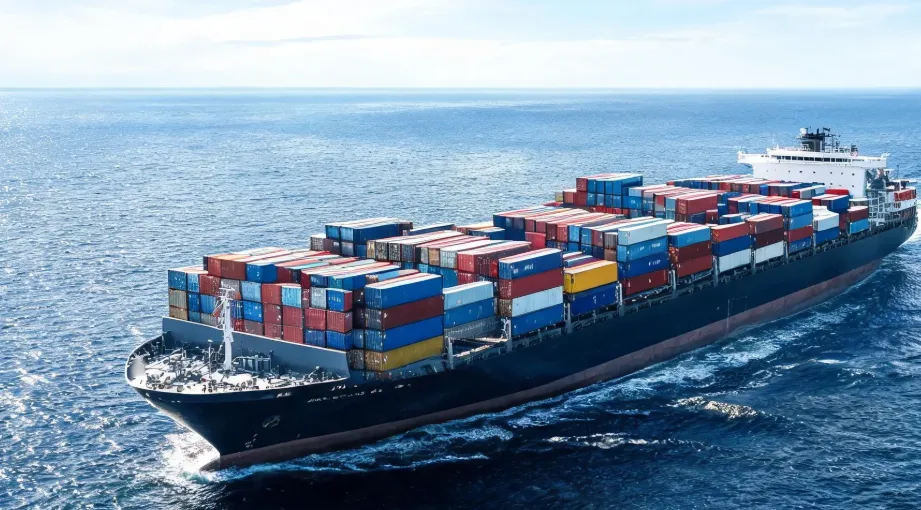
If you are importing from China to Canada, import duties are almost certainly one of the biggest line items on your invoice that you do not fully understand — and the most common source of surprise costs. Between the base MFN tariff, the GST/HST charged on top, anti-dumping and countervailing duties on targeted products, and a regulatory system that moved fully onto the CARM platform, a shipment that “should” cost $10,000 in freight can easily carry an extra $1,500–$3,500 in duties and taxes you never budgeted for.
The good news: Canadian import duties are formula-driven, published, and — with the right preparation — largely predictable. This guide, based on 15 years of hands-on freight forwarding experience at Dantful.US International Logistics, walks you through exactly how Canada taxes Chinese imports in 2026, how to calculate your true duty bill before you ship, and the legal strategies that save importers 20–40% on total landed cost. For the full picture of moving goods across the border, see our shipping from China to Canada guide.
How Canadian Import Duties Work: The 30-Second Primer
When your goods arrive in Canada, the Canada Border Services Agency (CBSA) assesses two categories of charges:
- Customs duties — calculated on the transaction value of your goods at the applicable tariff rate (usually the MFN rate for Chinese goods).
- GST or HST — the federal sales tax (5% GST, or the harmonized rate in participating provinces), charged on the duty-paid value of your goods.
The formula is simple:
Duty = Transaction Value × Tariff Rate GST/HST = (Transaction Value + Duty) × 5%/HST rate
But “simple” hides a lot of complexity — which rate applies depends on your HS code, and Chinese goods are subject to several special duty regimes that don’t apply to most other trading partners. We break down every layer below.
2026 Tariff Rates on Chinese Imports: What Actually Applies
Base MFN Tariffs
Canada applies Most-Favoured-Nation (MFN) tariff rates to goods from China, since China is a WTO member and Canada has no free-trade agreement with it. MFN rates vary by product, but for typical consumer and industrial goods they range from 0% to 25%, with most manufactured goods falling between 3% and 10%. Examples of common China-to-Canada products and their approximate MFN rates:
| Product Category | Typical MFN Rate (2026) |
|---|---|
| Consumer electronics | 0% – 8% |
| Furniture | 5% – 9.5% |
| Apparel & footwear | 7% – 18% |
| Toys & games | 0% – 8% |
| Auto parts | 6% |
| Machinery & equipment | 0% – 9.5% |
| Textiles & fabrics | 8% – 18% |
| Steel products | 0% – 12% |
Expert tip: Your actual rate is determined by your HS code (the 10-digit Canadian tariff classification), not by the product name. Two similar-looking products can differ by 10 percentage points or more.
Special Duties Targeting Chinese Goods
Since 2024, Canada has joined a broader Western effort to rebalance trade with China, and several special duty regimes now apply that can dramatically change your bill:
- 100% tariff on Chinese electric vehicles — announced October 2024, applied to all EVs made in China, including those from Western brands manufactured there.
- 25% tariff on Chinese steel and aluminum — also from October 2024, covering a broad range of steel and aluminum products.
- 25% surtax on batteries, semiconductors, critical minerals and solar panels — a second tranche announced in late 2024 and phased in through 2025–2026.
- Anti-dumping (AD) and countervailing (CVD) duties — long-standing measures on specific products like certain steel pipes, aluminum extrusions, and disposable aluminum containers, with rates that can exceed 100% for named exporters.
If your product falls into any of these categories, work with an experienced freight forwarder before quoting prices to your customers — the duty math can flip your entire margin. Our freight forwarder from China to Canada guide explains how to vet a partner who actually understands these regimes.
GST and HST: The Tax Layer Everyone Forgets
Beyond customs duty, every commercial import into Canada is subject to GST (5%) or the provincial HST rate, calculated on the duty-paid value (goods + freight + insurance + duty). The rate depends on the province where the goods are imported:
| Province | Tax Type | Rate |
|---|---|---|
| Alberta, BC, Manitoba, Saskatchewan, Nunavut, NWT, Yukon, Quebec | GST only (Quebec adds QST separately) | 5% |
| Ontario | HST | 13% |
| New Brunswick, Newfoundland & Labrador, Nova Scotia, PEI | HST | 15% |
Example: A $10,000 shipment (goods value) with $1,500 freight, $300 insurance, and $500 duty imported into Ontario: GST/HST = ($10,000 + $1,500 + $300 + $500) × 13% = $1,599. That is $1,599 of tax on top of your $500 duty — and it is why “duty” and “taxes” should always be budgeted together.
Importers who are GST/HST registered can typically claim the GST/HST paid as an input tax credit on their next return — so registration is not optional paperwork, it is a cash-flow decision. See our shipping cost from China to Canada guide for how duties and taxes fit into your total cost picture.
Calculating Your Duty: Step-by-Step with a Real Example
Let’s walk through a complete calculation for a typical 2026 shipment — furniture from Foshan to Toronto:
| Line Item | Value |
|---|---|
| Goods value (FOB) | $12,000 USD |
| Freight (sea, LCL) | $1,200 USD |
| Insurance | $180 USD |
| Duty-paid value (convert to CAD) | ~$19,500 CAD |
| MFN duty rate (furniture, HS 9403) | 9.5% |
| Customs duty | ~$1,853 CAD |
| HST (Ontario, 13%) on (value + duty) | ~$2,776 CAD |
| Total duties + taxes | ~$4,629 CAD |
That $4,629 CAD — roughly 22% of your goods value — is the number your customers’ pricing actually depends on. If you are using a DDP (Delivered Duty Paid) service, these costs are built into your per-unit price; if you are clearing your own cargo, you must budget them explicitly. Our LCL shipping from China to Canada guide covers how consolidation affects the freight side of this math.
CARM: Canada’s New Digital Customs Platform (Mandatory Since 2024)
In 2024, Canada completed its transition to the CBSA Assessment and Revenue Management (CARM) platform — the single biggest change to Canadian customs in decades. By 2026, CARM is fully mandatory for commercial importers, and if you are not set up on it, your cargo simply does not release. Key things to know:
- Every importer needs a CARM account (a business account on the CARM Client Portal) — even if you use a customs broker, the account is registered to you.
- Financial security is required — importers must post a security bond (cash, surety bond, or bank guarantee) covering their estimated duties and taxes.
- All declarations, payments and communications happen through the portal — CBSA no longer processes paper-based commercial entries for regular importers.
- Broker access — your customs broker can act on your behalf in the portal, but you remain legally responsible for the accuracy of everything filed.
The transition to CARM has caught many first-time importers off guard — shipments have been held for weeks simply because no one had a registered CARM account. If you are new to Canadian importing, our how to ship from China to Canada step-by-step guide walks you through the account setup alongside the rest of the process.
HS Codes: The Single Most Important Number in Your Shipment
Your HS code is the 10-digit Canadian tariff classification that determines your duty rate — and it is where most duty overpayments (and most penalties) come from. The stakes are real:
- Overpaying: Importers routinely overpay because they use a broad 6-digit code instead of the precise 10-digit Canadian code. On a $50,000 annual import bill, a 3-percentage-point rate difference is $1,500 a year in avoidable duties.
- Underpaying: Misclassifying to a lower rate is considered false declaration — CBSA can assess duties retroactively for up to 4 years, plus interest and penalties of 25–100% of the duty evaded.
- CARM’s automated screening makes incorrect classifications easier to catch than ever — vague descriptions and inconsistent codes are flagged automatically.
Expert tip from Dantful.US: Before your first shipment, have a professional confirm your HS codes and create a “tariff profile” — a saved list of your products and their codes. It costs a few hours of work once and eliminates a lifetime of classification guesswork.
Low-Value Imports and Courier Shipments: The De Minimis Rules
For e-commerce sellers shipping small parcels, Canada’s de minimis rules set the threshold below which simplified rules apply:
- Duty-free threshold: Goods valued at CAD $20 or less are exempt from customs duty.
- Tax-free threshold: Goods valued at CAD $40 or less are generally exempt from GST/HST — though this is under active review.
- Courier Low-Value Shipment (LVS) program: Commercial goods valued at CAD $3,300 or less can clear through a simplified, low-cost process via couriers like DHL, FedEx and UPS.
Importantly, 2026 policy proposals have discussed lowering the tax-free threshold for e-commerce imports to level the playing field with domestic retailers. If you sell to Canadian consumers online, monitor these changes closely — they can shift your per-order costs overnight. Our express shipping from China to Canada article covers the courier side of this equation.
Common Duty Mistakes That Cost Importers Thousands
Based on hundreds of real shipments we’ve audited, these are the mistakes that show up again and again:
| Mistake | Typical Cost |
|---|---|
| Wrong HS code (too broad) | 3–10% overpaid duty on every shipment |
| No CARM account / financial security | Cargo held at port, $200–$500/day storage |
| Under-declared value | Retroactive assessment + 25–100% penalty |
| Forgetting AD/CVD applies to your product | 30–200% surcharge on arrival |
| Ignoring HST on duty-paid value | Unbudgeted 5–15% tax on arrival |
| Not registering for GST input credits | Lost 5–15% recoverable cash flow |
The pattern is clear: almost every expensive mistake happens before the goods ship, not at the border. That is why experienced importers do their duty homework at the quoting stage — or hand the entire problem to a forwarder who does it for them.
7 Legal Ways to Cut Your Import Duties (Without Risk)
You cannot negotiate tariffs, but you can legally reduce your duty bill in several proven ways:
- Get your HS codes exactly right — precise 10-digit classification is the #1 legal “discount” available. Savings: 3–10%.
- Use the right Incoterm — declaring a realistic transaction value (arm’s-length pricing) without inflating freight components. Over-allocating freight to your shipment inflates the duty-paid value.
- Claim duty refunds (drawbacks) — if goods are imported and then exported within 4 years (even after processing), you can claim a duty drawback.
- Leverage USMCA content — goods with qualifying North American content can enter at preferential rates even when shipped from China, if the origin rules are met (rare but real for multi-country supply chains).
- Consider US routing — in limited scenarios, routing through the US under specific programs changes the tax treatment; discuss with a customs professional before relying on this.
- Use a DDP service — professional forwarders structure the shipment to minimize the taxable base while staying fully compliant.
- Plan around duty remission programs — specific programs (e.g., for manufacturers importing inputs) can remit duties on goods that are further processed and exported.
For most small and mid-sized importers, #1 and #6 deliver the biggest wins — and both are exactly what a competent China-based freight forwarder handles as standard practice. Our door-to-door shipping from China to Canada guide explains how DDP pricing embeds duty management.
Frequently Asked Questions
Q: How much is import duty from China to Canada?
A: Most Chinese consumer and industrial goods face MFN rates of 3–10%, but rates range from 0% to 25% depending on the HS code, and targeted products (EVs, steel, aluminum, batteries, semiconductors) face special surtaxes of 25–100%. Add 5% GST or 13–15% HST on the duty-paid value.
Q: Who pays import duties in Canada — buyer or seller?
A: Under standard FOB/CIF terms, the importer of record (the Canadian buyer) is legally responsible for duties and taxes, even if the seller handles logistics. Under DDP terms, the seller’s freight forwarder includes duties in the quoted price.
Q: Do I need a customs broker to import from China to Canada?
A: Not legally, but practically yes — unless you are an experienced importer, CBSA’s CARM system and the complexity of classification make a licensed customs broker the standard choice. A full-service forwarder like Dantful.US includes brokerage in its door-to-door service.
Q: What is the duty-free threshold for importing to Canada?
A: Goods valued at CAD $20 or less are duty-free; goods at CAD $40 or less are generally GST/HST-exempt. Commercial shipments above the threshold require formal clearance (or the courier LVS process up to CAD $3,300).
Q: Are duties calculated on the purchase price or shipping costs?
A: Canadian duties are calculated on the transaction value — essentially the price paid for the goods (excluding international freight and insurance for duty purposes in most cases, though this varies by valuation method). GST/HST, however, is charged on the duty-paid value, which includes freight, insurance and duty.
Q: Can I get a refund on import duties?
A: Yes — through the duty drawback program, you can claim a refund of duties paid on goods that are subsequently exported from Canada within 4 years, including after processing.
Plan Your Duty Budget Before You Ship
Import duties from China to Canada are not a surprise to be discovered at the border — they are a formula you can master. With the right HS codes, a registered CARM account, and an accurate understanding of MFN rates, special surtaxes and GST/HST, your landed cost becomes a number you know before you book a single container.
Need help calculating your exact duty exposure? Contact Dantful.US with your product list and HS codes (or no codes at all — we’ll classify them for you) and we’ll return a complete landed-cost breakdown, including duties, taxes and freight, within one business day.