

Are you looking to unlock new business opportunities by learning how to ship from China to Canada efficiently and cost-effectively? Navigating the complex world of freight, customs clearance, and logistics can be challenging for many importers. In this comprehensive guide (updated for Q1 2026), we’ll walk you step by step through the entire shipping process, explain essential shipping methods, and share expert tips to streamline your China-Canada shipping experience.
Introduction to Shipping from China to Canada
Shipping goods from China to Canada is a core activity for many importers, cross-border e-commerce sellers, manufacturers, and supply chain managers. Both countries are global trade powerhouses. Understanding the logistics process, market trends, and options available is critical to ensuring efficiency, compliance, and cost-effectiveness in your international shipments.
Why Ship Goods from China to Canada?
There are several compelling reasons why businesses and individuals choose to ship from China to Canada:
- China is the world’s largest manufacturing hub, offering a wide range of products at competitive prices and flexible manufacturing capabilities.
- Canada is a significant consumer market with robust demand for electronics, apparel, machinery, home goods, and more.
- Favorable trade relations and an established logistics infrastructure between the two countries enable streamlined shipping and customs processes.
- Many Canadian businesses rely on Chinese suppliers to maintain product diversity and supply chain resilience.
For importers, e-commerce sellers, and manufacturers, sourcing from China helps reduce production costs, access innovative products, and enhance competitiveness in the Canadian market.
Overview of the China-Canada Freight Market
The freight market between China and Canada is dynamic and evolving. Annual bilateral trade exceeds $100 billion, with thousands of containers moving between major ports and airports every week. The main shipping routes connect key Chinese ports like Shanghai, Shenzhen, Ningbo, Qingdao, and Xiamen with major Canadian gateways such as Vancouver, Toronto, and Montreal.
Shipping methods include:
- Sea Freight: Most cost-effective for large shipments.
- Air Freight: Fast, suitable for urgent or high-value goods.
- Rail Freight: Emerging option via Russia and Europe, increasingly popular for certain cargoes.
- Express/Courier Shipping: Fastest for small parcels.
Trends shaping this market include growing e-commerce demand, the need for resilient global supply chains, and the adoption of digital logistics solutions for real-time tracking and management.
Choosing the Best Shipping Method: Air, Sea, Rail, or Express
Selecting the optimal shipping method from China to Canada depends on several factors: cargo size/weight, urgency, budget, and the nature of your goods. Based on our 15 years of experience in the China-Canada route, here’s a detailed comparison to guide your decision-making:
Comparing Ocean Freight, Air Freight, and Rail Shipping
| Shipping Method | Typical Transit Time (2026 Q1) | Suitable for | Estimated Cost (2026 Q1) | Key Ports/Airports | Recommended Cargo Volume |
|---|---|---|---|---|---|
| Ocean Freight | 16–28 days (FCL/LCL) | Bulk goods, non-urgent | $850–$1,450 / 20′ Container | Shanghai, Shenzhen → Vancouver, Montreal | >2 CBM or >300 KG |
| Air Freight | 3–5 days | Urgent, high-value goods | $3.80–$6.20 / KG | PVG, CAN, PEK → YVR, YYZ, YUL | 45–500 KG, time-sensitive cargo |
| Rail Freight | 18–22 days | Mid-size, semi-urgent | $1,100–$1,700 / TEU | Via Trans-Siberian to Europe, then to Canada | Palletized, not time-critical |
| Express/Courier | 2–4 days | Documents, samples, e-commerce | $5.20–$7.80 / KG | Door-to-door (DHL, FedEx, UPS, EMS) | <30 KG, small parcels |
Notes:
- Ocean Freight is ideal for cost-sensitive, large shipments. FCL (Full Container Load) and LCL (Less than Container Load) are available.
- Air Freight is chosen for speed and reliability, especially for electronics, perishables, or urgent orders.
- Rail Freight is a newer option, combining cost-effectiveness of sea and the speed of air, but with limited availability and routes.
- Express/Courier is best for small, time-critical parcels, offering full tracking and customs support.
For readers interested in specific details such as how long sea shipping takes between the two countries, see How long does sea shipping take from China to Canada.
Pros and Cons of DDP, DAP, and Other Delivery Terms
When booking your shipment, you will encounter various Incoterms that define responsibilities and risks:
| Term | Stands for | Seller’s Responsibility | Buyer’s Responsibility | Pros | Cons |
|---|---|---|---|---|---|
| EXW | Ex Works | Minimum | Maximum | Flexible, buyer controls process | Buyer must handle full export/import |
| FOB | Free On Board | To origin port | From origin port onward | Widely used, balanced risk | Buyer handles ocean freight, import |
| CIF | Cost, Insurance & Freight | To destination port | Import customs & delivery | Insurance included, predictable pricing | Excludes destination charges |
| DAP | Delivered at Place | Up to named place | Import customs clearance | Seller arranges most logistics | Buyer manages import clearance |
| DDP | Delivered Duty Paid | All-inclusive (to door) | None (just receive goods) | Hassle-free, all charges included | Higher cost, seller manages all risks |
- DDP (Delivered Duty Paid): Seller (or freight forwarder) takes care of the entire shipping process, including customs clearance and all duties/taxes in Canada. This is ideal for new importers or those wanting a hassle-free experience.
- DAP (Delivered at Place): Seller arranges delivery to the named location, but the buyer handles import duties and customs clearance.
- FOB and CIF are often used when the buyer wants more control or has their own freight arrangements.
At Dantful.US International Logistics, we offer flexible delivery terms, including DDP, DAP, FOB, and CIF, tailored to your business needs and risk preferences. For more information on specific FOB solutions for this route, visit FOB shipping from China to Canada.
When to Use Courier or Express Shipping
Courier or Express services (like DHL, FedEx, UPS, and EMS) are best suited for:
- Small parcels, documents, or samples under 30 KG.
- Urgent e-commerce orders (Amazon FBA, Shopify, etc.).
- Shipments requiring fast customs clearance and door-to-door tracking.
- High-value or sensitive items.
Advantages of express shipping:
- Fastest transit times (as low as 2–4 days from China to Canada).
- End-to-end tracking and reliable customer support.
- Simplified customs procedures (often handled by the courier).
Downsides include higher costs per kilogram and restrictions on certain goods (e.g., batteries, liquids, hazardous items). For bulk shipments or heavy cargo, air or sea freight is generally more cost-effective.
Dantful.US International Logistics provides one-stop solutions for all shipping modes, including Sea Freight, Air Freight, Rail, Express, and specialty services like Amazon FBA, Warehousing, Customs Clearance, and Door-to-Door delivery. As a dedicated team specialized in the China-to-Americas route, we help you choose the optimal shipping option based on your budget, timeline, and cargo profile, ensuring seamless delivery from China to Canada.
If you are considering alternatives or nearby routes, you might also benefit from understanding Shipping from China to USA, as similar logistics solutions often apply.
By understanding these shipping methods and delivery terms, you can optimize your freight strategy, minimize risks, and ensure your goods arrive safely and cost-effectively in Canada. For tailored advice or a free quote, contact our team at Dantful.US International Logistics, your trusted expert for the China-Canada route.
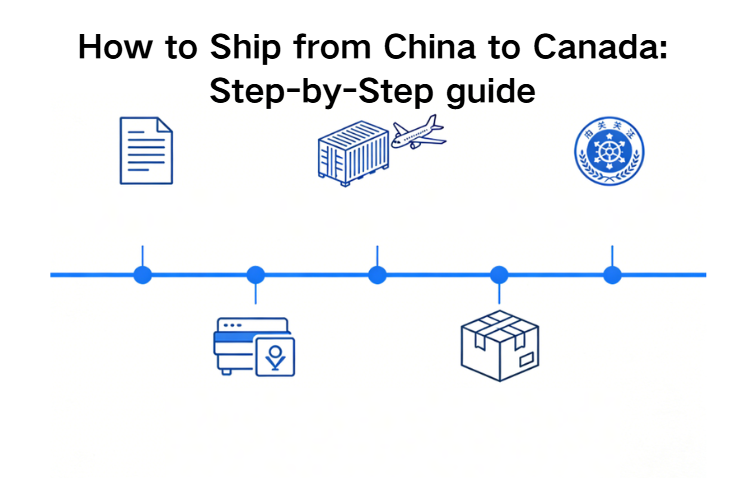
Step-by-Step Guide: The Complete Process of Shipping from China to Canada
Shipping from China to Canada involves multiple steps, each critical for ensuring a smooth and cost-effective logistics process. Below, I provide a detailed, professional breakdown of each phase, drawing on the expertise of Dantful.US International Logistics—a specialized team focused on the Americas market, providing cost-effective and one-stop logistics services.
Step 1: Preparing Your Goods—Packaging, Labeling, and Documentation
Proper preparation of your goods is fundamental to prevent damages, delays, and compliance issues.
Packaging:
Use export-grade materials. For sea freight, goods should be protected against moisture and vibration, while for air freight, lighter packaging reduces costs.
Palletize cargo when possible for easier handling.
For FCL (Full Container Load), ensure cargo fits within container dimensions:
Container Type Capacity (CBM) 20FT 28 40FT 56 40HQ 68 45HQ 78
Labeling:
- Each package must be clearly labeled with the consignee’s information, destination, handling instructions, and compliant barcodes (if required).
- Mislabeling can cause customs clearance issues or delivery errors.
Documentation:
Essential documents include:
- Commercial Invoice
- Packing List
- Bill of Lading (B/L) or Air Waybill (AWB)
- Export License (if applicable)
- Certificates of Origin (if required for trade agreements)
Accuracy in documents is crucial for smooth customs clearance.
Step 2: Selecting a Reliable Freight Forwarder or Logistics Partner
Choosing the right logistics partner is a strategic decision.
- Look for a company with a solid reputation, clear communication, and a strong network in both China and Canada.
- Verify their knowledge of customs regulations, shipping routes, and capacity for multimodal solutions (sea, air, rail, road).
- Dantful.US International Logistics offers integrated services: Sea Freight, Air Freight, Rail Freight, Road Freight, Amazon FBA, Warehousing, Customs Clearance, Insurance, Door-to-Door, OOG, Consolidated Freight, and Breakbulk solutions.
- Check if your forwarder can provide tracking, insurance, and flexible delivery options.
For readers exploring different logistics providers, our detailed guide on Freight Forwarder from China to Canada offers more insights on choosing the right partner.
Step 3: Booking and Scheduling Your Shipment
Efficient booking ensures your cargo moves as planned.
- Plan shipments in advance, especially during peak seasons (e.g., before Chinese New Year).
- Reserve space with carriers (shipping lines, airlines, rail operators).
- Confirm schedules, estimated departure, and arrival dates.
- Ensure all documents are ready for submission to avoid booking cancellations or delays.
Step 4: Customs Clearance in China—Requirements and Procedures
Before goods can leave China, they must clear export customs.
- Submit the commercial invoice, packing list, contract, and export declaration to Chinese Customs.
- Certain goods may require additional certificates (e.g., CCC certification for electronics).
- Pay attention to restricted/export-controlled goods.
- Working with an experienced forwarder like Dantful.US guarantees compliance and reduces the risk of delays.
Step 5: International Transit—Tracking and Managing Your Shipment
Once your goods are in transit:
- Monitor shipment status using tracking systems provided by your logistics partner.
- Dantful.US offers real-time tracking for sea, air, rail, and courier shipments.
- Stay updated on estimated arrival times and possible disruptions (port congestion, weather delays, customs inspections).
- Maintain open communication with your logistics partner for proactive solutions to unforeseen issues.
Step 6: Customs Clearance in Canada—Key Documents and Import Duties
On arrival in Canada:
Prepare these key documents:
- Commercial Invoice
- Bill of Lading/Air Waybill
- Packing List
- Canada Customs Invoice (CCI) (for shipments valued over CAD 2,500)
- Import permits or certificates (for regulated goods)
Pay applicable import duties and GST/HST taxes based on product classification under the HS Code.
If unsure, work with a licensed customs broker or your freight forwarder, like Dantful.US, for accurate compliance.
Step 7: Final Delivery to Your Address or Warehouse
After customs clearance:
- Arrange for last-mile delivery—options include trucking, rail, or courier depending on shipment size and urgency.
- For Amazon FBA or e-commerce, your forwarder can deliver to fulfillment centers.
- Inspect your goods upon receipt; report discrepancies or damages immediately.
Understanding Shipping Costs and Transit Times
Shipping costs and lead times from China to Canada depend on multiple factors. Understanding these variables helps optimize your logistics budget and timeline.
Factors Influencing Freight Costs from China to Canada
According to our professional team’s analysis, the following factors most significantly impact your shipping costs:
| Factor | Impact on Cost |
|---|---|
| Shipping Mode | Sea is cheapest, air is fastest but costliest. Rail is mid-range. |
| Cargo Volume & Weight | Higher volume/weight lowers unit cost in sea freight. Air freight is charged by chargeable weight (whichever is higher: gross or volumetric). |
| Origin & Destination Ports | Major ports offer competitive rates. Remote locations may incur extra charges. |
| Incoterms (DDP, DAP, FOB) | Determines who pays for shipping, insurance, and customs. |
| Surcharges | Fuel, peak season, security, special handling, and customs fees. |
| Cargo Type & Value | Hazardous, oversized, or high-value goods increase costs. Insurance is also needed. |
| Delivery Speed | Express or expedited services cost more. |
Typical Lead Times for Different Shipping Methods
Based on our operational data from 2026 Q1, here are the typical lead times:
| Shipping Method | Estimated Transit Time (2026 Q1 Updated) | Typical Use Cases |
|---|---|---|
| Sea Freight (FCL) | 16–28 days (e.g., Shanghai to Vancouver) | Large, non-urgent shipments |
| Sea Freight (LCL) | 22–35 days | Small to medium shipments |
| Air Freight | 3–5 days | Urgent or high-value goods |
| Rail Freight | 18–22 days (mainly to Central/Eastern Canada) | Cost-effective for large shipments |
| Express/Courier | 2–4 days | Samples, small packages, e-commerce |
Transit times may vary due to customs processing, weather, and seasonal fluctuations.
For more details about shipping costs, see our page on How much is shipping from China to Canada.
Tips for Reducing Shipping Expenses
- Plan Ahead: Avoid peak seasons and book early for better rates and space availability.
- Consolidate Shipments: Combine multiple shipments to benefit from LCL or FCL pricing.
- Optimize Packaging: Use space efficiently to reduce volumetric charges.
- Negotiate Rates: Long-term partnerships with logistics providers like Dantful.US unlock preferential pricing.
- Choose the Right Mode: Match your delivery needs with the most cost-effective shipping method.
- Use Door-to-Door Services: For small businesses or individuals, this can minimize unexpected costs and simplify the process.
- Work with Professionals: Dantful.US offers transparent pricing, consolidated freight, and expert customs support.
By following this step-by-step guide and understanding the cost and time variables, importers, exporters, and e-commerce sellers can ensure efficient, secure, and cost-effective shipping from China to Canada. If you need personalized support, Dantful.US International Logistics is here to streamline your entire supply chain process.
Customs Clearance in Canada: Avoiding Delays and Penalties
Required Documents and Customs Regulations
Clearing customs in Canada is a critical step in the international shipping process when importing from China. As an importer, ensuring compliance with Canada Border Services Agency (CBSA) requirements is essential to avoid delays, fines, and the risk of your cargo being held.
Key Documents for Customs Clearance
| Document Name | Description | Who Provides |
|---|---|---|
| Commercial Invoice | Details of the transaction, including buyer, seller, description of goods, and value. | Supplier/Shipper |
| Bill of Lading / Air Waybill | Evidence of the contract of carriage and shipment details. | Freight Forwarder/Carrier |
| Packing List | Specifies the contents, weight, and dimensions of each package. | Supplier/Shipper |
| Certificate of Origin | Proves where the goods were manufactured; can affect duties under trade agreements. | Supplier/Chamber of Commerce |
| Import Permits (if required) | Some items require permits, e.g., food, medical or restricted goods. | Importer |
| Customs Declaration (B3 form) | Submitted to CBSA for customs assessment and duty calculation. | Importer/Customs Broker |
| Other Certificates | E.g., phytosanitary, health certificates for specific commodities. | Relevant Authority |
To comply with Canadian regulations, the documentation must be accurate and complete. Misinformation can lead to shipment holds or penalties. It’s also vital to ensure goods are classified correctly under the Harmonized System (HS) code, as this affects duties and admissibility.
CBSA enforces import regulations concerning product standards, labeling requirements (bilingual in English and French), and safety compliance. Restricted or prohibited items must not be shipped without proper authorization.
Duties, Taxes, and Import Restrictions
Importing goods from China to Canada incurs several charges:
- Duties: Calculated based on the HS code and the value for duty (usually the transaction value).
- Goods and Services Tax (GST): Generally 5% of the value for duty plus duties.
- Provincial Taxes: Some provinces may levy additional taxes (e.g., HST or PST).
- Other Fees: May include excise taxes, anti-dumping duties, or environmental levies.
Example of Duties and Taxes Calculation
| Item | Calculation Basis | Example Value USD | Example Rate | Example Amount (CAD) |
|---|---|---|---|---|
| FOB Value | Invoice Value | $10,000 | – | $10,000 |
| Duty | HS Code Rate | $10,000 | 6% | $600 |
| GST | (FOB + Duty) | $10,600 | 5% | $530 |
| Total Payable (approximate) | Duty + GST | – | – | $1,130 |
Note: Actual rates depend on your product’s HS code and province of import. Always check with a customs broker or CBSA for the most up-to-date rates.
Import Restrictions
Some items are subject to quotas, licensing or outright prohibition. Commonly restricted items include:
- Food and agricultural products
- Pharmaceuticals and medical devices
- Firearms and weapons
- Chemicals and hazardous materials
Verify your cargo’s admissibility through the Automated Import Reference System (AIRS) or consult with a licensed customs broker prior to shipping.
How to Work with Customs Brokers
Navigating Canadian customs can be complex, especially for first-time importers. A licensed customs broker can:
- Prepare and submit all necessary documents on your behalf
- Classify your products correctly using the HS code
- Calculate duties, taxes, and fees accurately
- Liaise with CBSA to resolve any queries or inspection issues
- Advise on compliance, import restrictions, and cost-saving opportunities
At Dantful.US International Logistics, our team partners with experienced customs brokers in Canada who are specialized in the Americas market to ensure your goods clear smoothly and efficiently. By choosing a professional freight forwarder like us, you benefit from a seamless, compliant, and transparent shipping experience.
Essential Tips for a Smooth Shipping Experience
Insurance, Tracking, and Risk Management
International shipping from China to Canada involves risks such as loss, damage, theft, or delays during transit. To protect your cargo and business interests:
- Insurance: Always secure cargo insurance tailored to the value and nature of your goods. This covers events beyond your control, such as accidents, weather incidents, or theft.
- Tracking: Choose logistics partners that offer end-to-end shipment visibility. Modern tracking systems allow you to monitor your cargo in real time, reducing uncertainty and enabling proactive management.
- Risk Management: Assess all risks and prepare contingency plans. Diversify shipping routes, maintain open communication with your forwarder, and document all transactions.
At Dantful.US International Logistics, we offer comprehensive insurance, advanced tracking, and robust risk management solutions as part of our one-stop logistics services.
Common Mistakes and How to Avoid Them
Based on our experience helping thousands of clients, many importers, especially those new to China-Canada shipping, encounter these avoidable pitfalls:
Incomplete or Incorrect Documentation: This leads to customs delays or cargo hold-ups.
- Solution: Double-check all paperwork or use an experienced freight forwarder.
Misclassification of Goods: Incorrect HS codes can result in overpaying duties or penalties.
- Solution: Consult a customs broker to verify correct product classification.
Underestimating Transit Times: Not accounting for customs clearance, seasonal delays, or port congestion.
- Solution: Add buffer time and consult your forwarder for realistic schedules.
Ignoring Insurance: Not purchasing insurance exposes you to total loss.
- Solution: Always insure valuable or sensitive shipments.
Choosing the Wrong Shipping Mode: For example, using air freight for bulky, low-value cargo increases costs unnecessarily.
- Solution: Analyze your cargo and seek advice from logistics experts.
Best Practices for First-Time Importers
If you are new to shipping from China to Canada, follow these best practices for a seamless experience:
- Start Small: Begin with less-than-container load (LCL) shipments to test processes and partners.
- Work With Reputable Partners: Select a reliable freight forwarder, like Dantful.US International Logistics, with proven China-Canada experience.
- Understand Incoterms: Clarify delivery terms (e.g., DDP, DAP) to know your responsibilities and avoid surprise costs.
- Stay Informed: Keep updated on Canadian import regulations and tariffs.
- Budget Wisely: Account for all costs—shipping, customs, storage, and last-mile delivery.
- Leverage Technology: Use digital platforms for document management and shipment tracking.
- Communicate Clearly: Maintain regular contact with suppliers, forwarders, and brokers to preempt issues.
For those shipping smaller batches, our resource on LCL Shipping from China to Canada provides additional guidance.
FAQs
Q1: What is the cheapest way to ship from China to Canada? A: Sea freight is usually the most cost-effective option for large shipments, especially FCL or LCL. For smaller, urgent shipments, air freight or express courier may be considered.
Q2: How long does it take for goods to ship from China to Canada? A: Typical transit times (2026 Q1 updated):
- Sea Freight (FCL/LCL): 16–28 days (port to port)
- Air Freight: 3–5 days
- Express/Courier: 2–4 days Note: Customs clearance, origin/destination handling, and peak season may extend these timelines.
Q3: What are the estimated shipping costs for 20ft, 40ft, and 40HQ containers from China to Canada? A: Based on our 2026 Q1 market analysis, here are the estimated Sea Freight costs for standard containers from major Chinese ports (like Shanghai or Shenzhen) to Canadian ports (like Vancouver):
| Container Type | Estimated Cost (2026 Q1) |
|---|---|
| 20ft Container (FCL) | $850 – $1,150 |
| 40ft Container (FCL) | $1,150 – $1,450 |
| 40HQ Container | $1,250 – $1,550 |
Note: These rates are for reference only and can vary based on fuel surcharges, peak season demand, and specific route availability. For a precise quote tailored to your cargo, please contact our Dantful.US team.
For a complete overview of options and further reading, check our main guide: Shipping from China to Canada.
Leave a reply