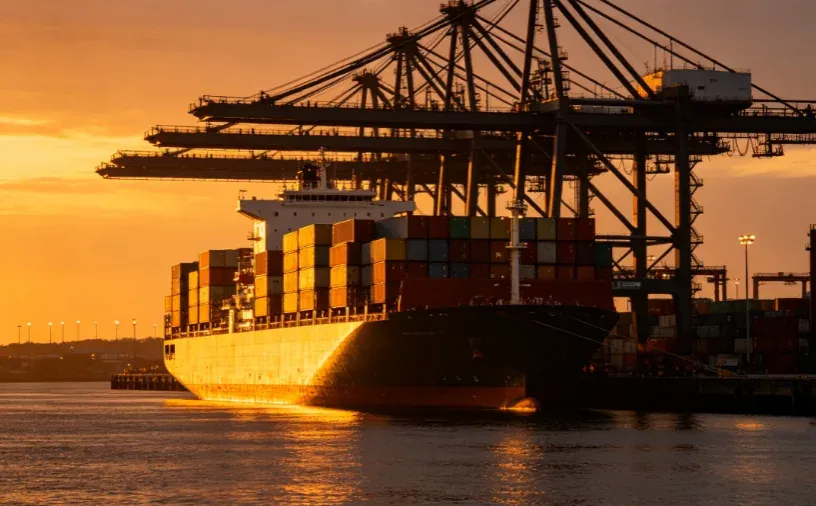
Peru is the rare South American market where Chinese-origin cargo enters at 0% ad valorem duty — and where a surprising number of importers pay duty anyway.
The China–Peru Free Trade Agreement has been in force since 2010, and it covers most of what Peru buys from China: machinery, electronics, textiles machinery, hardware, appliances, auto parts. The catch is documentation. Preferential treatment is claimed with a certificate of origin, and if the certificate is missing, wrong, or issued after the vessel sails, your shipment is assessed at general MFN rates. On a USD 40,000 consignment that gap runs to roughly USD 3,000 in duty plus another USD 460 in IGV on the higher duty base — several times the difference between the cheapest and the most expensive forwarder on this lane.
That is why “how do I choose a freight forwarder from China to Peru” is really a question about customs competence, not about who quotes the lowest ocean rate. This guide covers what forwarding costs on the lane in Q3 2026, how long it takes, what your quote must itemize, the seven checks worth running before you pay, and the SUNAT mechanics your forwarder should be managing on your behalf.
Freight Forwarder Cost from China to Peru: Q3 2026 Rates and Fees
A China–Peru shipment carries two separate cost blocks, and forwarders blur them on purpose: the freight (what the carrier charges, driven by the market) and the forwarder service fees (what your forwarder charges, driven by scope). You can only negotiate the second one intelligently if you can see the first.
Ocean and air freight on the China–Peru lane (Q3 2026)
| Service | Rate, Q3 2026 | Transit (port to port / airport) | Minimum |
|---|---|---|---|
| FCL 20ft, Shanghai or Shenzhen → Callao | USD 2,400–3,200 | 25–35 days | 1 container |
| FCL 40ft, Shanghai or Shenzhen → Callao | USD 3,400–4,900 | 25–35 days | 1 container |
| FCL 40ft HQ, Shanghai → Chancay express | USD 3,600–5,100 | 23–26 days | 1 container |
| LCL, major Chinese ports → Callao | USD 70–125 per CBM | 28–42 days | 1 CBM |
| Air freight, PVG / SZX → Lima (LIM) | USD 5.50–9.00 per kg | 3–8 days | USD 60–150 |
| Express courier, door to door | USD 7–12 per kg | 4–8 days | USD 50–120 |
Ningbo, Guangzhou (Nansha) and Qingdao sailings to Callao usually price within USD 100–250 of the Shanghai band. The August–December peak season adds 15–30% to base rates and tightens 40HQ equipment before the Lunar New Year rush, so book three to four weeks ahead and hold a rate-validity window rather than a single-day quote. You can sanity-check any number you are offered against our Freight Cost Calculator before you sign.
The forwarder service fees that sit on top
| Charge | Typical range | What it covers | Red flag if… |
|---|---|---|---|
| Export customs declaration | USD 40–90 | China export filing | It is “included” but the invoice grows later |
| Origin handling and documentation | USD 50–120 per B/L | CFS, VGM, telex, B/L issuance | Quoted per shipment, billed per B/L |
| Consolidation / deconsolidation | USD 35–120 | LCL CFS at both ends | Absent from an LCL quote, then added at destination |
| Peruvian agente de aduanas fee | USD 120–260 | DAM filing, channel control, release | No broker named anywhere in the quote |
| VUCE visto bueno processing | USD 30–90 | Sector permits (DIGEMID, SENASA) | Your goods need a permit and nobody asks |
| Inland trucking Callao → Lima | USD 90–260 per container | Delivery to your warehouse | Skipped, leaving you to source a carrier on arrival |
| Cargo insurance | 0.3–0.8% of CIF | All-risk marine cover | Declined “because the carrier insures it” |
On a small LCL shipment these fees (USD 400–900) can exceed the ocean freight. That is normal. What is not normal is a single lump-sum figure with no breakdown — the fastest way to end up with an invoice you cannot audit.
How Long Does It Take to Ship from China to Peru? Transit Times by Mode
| Mode | Port to port | Door to door | Notes |
|---|---|---|---|
| FCL direct, Shanghai → Chancay | 23–26 days | 26–31 days | Dedicated China–Chancay loop, the fastest sea option |
| FCL direct, Shanghai / Shenzhen → Callao | 25–35 days | 28–40 days | Widest carrier choice, most consolidation options |
| FCL via transshipment (Busan, Hong Kong, Manzanillo) | 30–40 days | 33–45 days | Fills in secondary origins and equipment shortages |
| LCL, major Chinese ports → Callao | 28–42 days | 31–47 days | Includes consolidation and deconsolidation time |
| Air freight, PVG / SZX → Lima | 3–8 days | 4–9 days | Connecting through Miami, São Paulo or Panama City |
| Express courier | — | 4–8 days | Documents, samples, sub-100 kg parcels |
Two days of that difference usually belong to customs, not to the carrier. SUNAT clearance on a clean, complete file takes 1–3 working days; a file that arrives incomplete waits in the terminal and starts billing storage. The route comparison by origin port is covered in our sea freight from China to Peru guide.
Peru Customs Clearance for China Imports: SUNAT, DAM and Anticipated Filing
Peruvian clearance is broker-led and, unusually for South America, offers a real choice of timing.
- Despacho anticipado — the DAM (Declaración Aduanera de Mercancías) is filed before the vessel arrives, so the declaration is pre-validated and the cargo can be released within hours of discharge. Because storage free time starts at discharge, this is almost always the cheaper path.
- Despacho diferido — the declaration is filed after arrival. It is simpler to prepare, but every day of delay is a day of terminal storage at Callao or Chancay, billed by the depositario aduanero.
- Channel control — SUNAT assigns a green, orange or red channel. Green releases on documents alone, orange means a documentary review, red means physical inspection. Your forwarder cannot choose the channel, but document consistency decides how often you see orange.
Two operational details decide more money than the ocean rate:
- Free time. Terminals at Callao and Chancay typically allow a short free window (commonly around a week, sometimes less for LCL deconsolidated cargo), after which storage escalates daily. A forwarder who will not state the free period in writing is passing that risk to you.
- Regulated goods. Cosmetics, medical devices and pharmaceuticals need a DIGEMID visto bueno; food, plants and agricultural inputs need SENASA. These permits take weeks and are issued in Peru, not China — a forwarder who discovers them at arrival has already cost you storage.
Peru Import Duty, IGV and the China–Peru FTA Your Forwarder Must Claim
Peru charges three things on an import, and only one of them is negotiable in the sense that matters.
| Charge | Rate on Chinese-origin goods | Base |
|---|---|---|
| Ad valorem duty | 0% with a valid certificate of origin, MFN without it | CIF |
| IGV (general sales tax) | 16% | CIF + duty |
| IPM (municipal promotion levy) | 2% | CIF + duty |
| IGV perception (advance payment) | typically 3.5%, up to 10% for importers SUNAT flags | CIF + IGV, creditable |
Three points your forwarder should be able to explain without checking:
- The FTA is document-driven. Chinese-origin goods qualify for 0% ad valorem, but the certificate of origin must accompany the shipment and match the invoice description, quantities and HS code. Certificates issued late, or describing goods differently from the invoice, are the most common reason importers pay duty they did not owe.
- Not everything is zero. Peru kept long elimination schedules for a narrow list — much of apparel, textiles, footwear and some agricultural lines — and applies anti-dumping duties to specific Chinese products. Ask your forwarder to check both the FTA schedule and the current anti-dumping list for your HS code, not just the tariff table.
- The IGV perception is cash flow, not cost. It is an advance payment creditable against your next IGV return, so it should be quoted as a line you recover — not buried in a DDP price.
Worked example: 2.5 CBM of accessories, Shenzhen → Lima, LCL on an FTA basis
| Line | Basis | Amount |
|---|---|---|
| Goods value FOB Shenzhen | — | USD 6,000 |
| Ocean freight (LCL, 2.5 CBM at USD 80) | per CBM | USD 200 |
| Cargo insurance | 0.4% of goods | USD 25 |
| CIF value in Peru | FOB + freight + insurance | USD 6,225 |
| Ad valorem duty | 0% with certificate of origin | USD 0 |
| IGV 16% + IPM 2% | 18% × CIF | USD 1,120.50 |
| IGV perception | 3.5% × (CIF + IGV), creditable | USD 257.09 |
| Forwarder service fees (customs, docs, broker, trucking) | itemized | USD 635 |
| Total cash out | USD 8,237.59 |
That is 37% over the goods value — and roughly 34% of it is tax, not freight. Without the certificate of origin the same file pays MFN duty plus IGV on the higher base, which on a 6% MFN line costs about USD 3,038 extra. The most expensive mistake on this lane is not the forwarder fee.
Documents Required to Import from China to Peru: The Forwarder Checklist
| Document | Issued by | Needed | If it is missing or wrong |
|---|---|---|---|
| RUC + SOL key | Importer, via SUNAT | Before the first DAM | No declaration can be filed |
| Commercial invoice | Supplier in China | At booking | Valuation queries, delay |
| Packing list with weights and dimensions | Supplier in China | At booking | Inspection risk and chargeable-weight disputes |
| Bill of lading / AWB | Forwarder or carrier | After sailing | No release, no delivery order |
| Certificate of origin (China–Peru FTA) | Authorised Chinese body | With the documents, not after arrival | Duty reverts to MFN |
| VUCE visto bueno (DIGEMID, SENASA, sector regulator) | Peruvian regulator | Weeks before arrival | Cargo held in terminal at your cost |
| Cargo insurance certificate | Insurer | At sailing | A total loss is a total loss |
| DAM + liquidation | Agente de aduanas | On or before arrival | No withdrawal authorisation |
Send all of it to the broker as one package, with model numbers and unit quantities consistent across invoice, packing list and B/L. Most “SUNAT delay” stories are really document-mismatch stories.
Choosing a Freight Forwarder from China to Peru: Seven Checks Before You Pay
- Name the broker. Who is the agente de aduanas who will file your DAM, and what do they charge? “We have a partner in Peru” is not an answer.
- Confirm the certificate of origin. Will they obtain it from the authorised Chinese body, and who pays for the issue and any amendment?
- Test the HS question. Give them your product and ask for the HS code, the FTA treatment and the IGV base. A forwarder who cannot do this in one reply is selling sea space.
- Ask for free time and terminal choice in writing. Callao or Chancay, which depot, how many free days, and the storage tariff after that.
- Get the booking and vessel number before the container sails. Then verify the container on the carrier website yourself.
- Check the money trail. The bank account name must match the contracting company, and the quote must have a validity window of at least 15 days.
- Ask about the IGV perception. Will they advance it, and how is it credited back? A forwarder with no answer is not handling your tax cash flow.
Red flags
Lump-sum pricing with no itemization; a rate 30% below the market band with no explanation; pressure to prepay the full invoice before booking; no named Peruvian counterpart; and any claim that Peru charges no tax on imports. Peru charges 18% IGV on every commercial import — anyone who tells you otherwise is either not filing, or filing something you will be asked about later.
Our guide to freight forwarder scams and hidden traps covers the patterns in detail, and if you want to compare scope before you compare prices, start with what a sea freight forwarder from China normally includes.
Air Freight from China to Peru vs Sea Freight: Which Your Forwarder Should Recommend
A forwarder who quotes only one mode is not advising you, they are quoting their own book.
| Factor | Sea FCL | Sea LCL | Air freight | Express |
|---|---|---|---|---|
| Door-to-door transit | 28–40 days | 31–47 days | 4–9 days | 4–8 days |
| Cost basis | per container | per CBM | per chargeable kg | per kg |
| Typical break-even | above 15 CBM | up to 12–15 CBM | high value, under 500 kg | under 100 kg |
| Best for | furniture, machinery, appliances, textiles | mixed consumer goods, first orders | electronics, spare parts, cosmetics, seasonal restocks | samples, documents |
Air freight bills on the greater of actual and volumetric weight, using length × width × height in centimetres ÷ 6000. A carton measuring 60 × 50 × 40 cm carries a volumetric weight of 20 kg, so a 12 kg box is billed as 20 kg. If your product is bulky and light, air pricing works against a weight that does not exist — check the numbers with our Volumetric Weight Calculator before you approve an air quote. Sea wins almost every time once density is low and volume is real; air earns its premium on first trial orders, spare parts, spare capacity for a launch, and replenishment that cannot wait five weeks. Our Ningbo to Peru guide shows how the origin port shifts both options.
Frequently Asked Questions
How much does a freight forwarder from China to Peru cost in 2026?
In Q3 2026, ocean freight runs USD 2,400–3,200 for a 20ft and USD 3,400–4,900 for a 40ft from Shanghai or Shenzhen to Callao, USD 70–125 per CBM for LCL, and USD 5.50–9.00 per kg by air. Forwarder service fees add USD 400–900 to a small shipment.
Do I pay import duty on goods from China to Peru?
Most Chinese-origin goods enter at 0% ad valorem under the China–Peru FTA, but only with a valid certificate of origin. Without it, MFN rates apply. IGV of 16% plus the 2% municipal levy is charged either way.
How long does a freight forwarder take from China to Peru?
Sea freight 23–35 days port to port (23–26 days on the Chancay express loop), LCL 28–42 days, air 3–8 days, express 4–8 days. Add 1–3 working days for SUNAT clearance and 1–2 days for inland delivery.
What should a China to Peru forwarder quote itemize?
Origin charges, freight with surcharges, destination terminal handling with free time stated, the agente de aduanas fee, inland trucking, insurance, and IGV estimated separately. Duty should read zero only when the certificate of origin is confirmed.
How do I verify a China to Peru freight forwarder before paying?
Ask for the filing broker by name, the booking and vessel number before sailing, an itemized charge list, a payment account matching the contract, and your HS code with its FTA treatment.
Does Peru require a licensed customs broker?
Yes. Imports clear on a DAM filed by a registered agente de aduanas, and the importer needs a RUC and SOL key. Despacho anticipado is usually cheapest because it keeps cargo out of billable storage.
Talk to a China to Peru Freight Forwarder Who Files in Peru
The forwarder worth keeping on this lane is the one who asks for your product and your HS code before quoting a rate. Duty is zero for most Chinese-origin cargo into Peru — but only for importers whose paperwork proves it, and that paperwork is produced on the China side, weeks before the vessel sails.
Dantful.US handles China-side pickup and consolidation, export customs, ocean and air freight to Callao and Chancay, the FTA certificate of origin, SUNAT clearance through a registered Peruvian agente de aduanas, and inland delivery to Lima, Arequipa or Trujillo under one file. Start from our China to Peru shipping page for routes and service levels, or contact our team with your product list and delivery city for an itemized Q3 2026 quote, including the IGV and perception lines in writing.