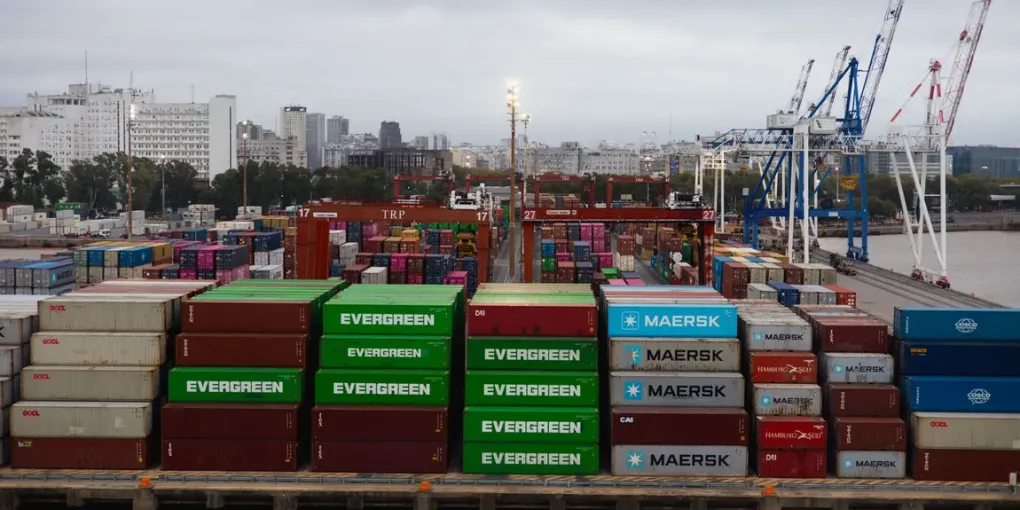
Two containers leave Ningbo the same week for San Antonio with the same furniture. One arrives dry and clears in four days. The other spends twenty-eight days at sea breathing through the tropics, lands with $14,000 of water-stained fabric, and then sits five extra days at the terminal while the claim is argued — long enough to burn another $600 in demurrage and storage.
Neither importer lost money on the ocean freight rate. Both paid the market rate on the same sailing. What separated them was everything the rate quote does not describe: which box was allocated, how the cargo was stuffed, and how many free days were left when the vessel berthed. This guide covers container shipping from China to Chile at that level — equipment supply into Q4 2026, the forty-day life of the box, stuffing and VGM, and the free-time clock that starts the moment the container is discharged. It comes from 15 years of forwarding practice at Dantful.US International Logistics; for the country-level overview start with shipping from China to Chile, and for the rate matrix itself our 20ft and 40ft cost from China to Chile breakdown prices every origin port.
Container Shipping from China to Chile: Where a 40-Day Voyage Actually Breaks
Most container problems on this lane are not freight problems. They fall into three groups, and each one has a clock attached.
Equipment at origin. The box you booked is not guaranteed by the booking. A 40HQ confirmed in October for a November sailing can still be substituted with a 40GP forty-eight hours before gate-in, because the carrier’s equipment position in Ningbo or Yantian changed. On a lane with weekly sailings that substitution costs volume; on a fortnightly service it costs a rotation.
Moisture at sea. A China–Chile voyage of 25–35 days crosses climate bands where the ambient temperature swings 20–30°C. Every swing condenses water out of the air inside the box. Cargo that left the factory at 12% moisture content does not arrive the same way.
Free time at destination. Chilean terminals give 5–7 free days. Customs, SAG inspection, duty payment and trucking all compete for those days, and every one of them is faster when the paperwork was finished before the vessel arrived.
The cost of getting these wrong is not spread evenly: a demurrage day, a damaged pallet and a re-allocated box each cost more than the difference between a good and a bad freight rate on the same sailing.
Container Equipment for China to Chile in Q4 2026: 40HQ Scarcity, Reefer Season and SOC
Chile is not a mainline destination in container terms. It sits at the end of the Asia–West Coast South America rotation, which means the equipment supply into San Antonio and Valparaíso is whatever the carrier decides to reposition after the transpacific peak is served. That is the single most useful thing to understand about booking this lane in the fourth quarter.
| Equipment | China–Chile availability in Q4 2026 | Booking lead time | What it is used for |
|---|---|---|---|
| 20GP | good, rarely short | 2–3 weeks | tile, steel, machinery, dense cargo |
| 40GP | adequate | 2–3 weeks | mixed SKUs, 28–58 CBM |
| 40HQ | tight from November | 3–4 weeks | furniture, plastics, e-commerce stock |
| 20RF / 40RF | tight, seasonal | 4–6 weeks | food, pharma, temperature-controlled |
| 20OT / 40OT / flat rack | scarce, repositioned | 4–6 weeks | over-height or over-wide machinery |
Three mechanics drive that table. First, global peak pulls 40HQ boxes onto the transpacific mainlane between August and December, and the West Coast South America services inherit what is left. Second, Chile’s own fruit season runs opposite to your import: from November the country ships cherries, blueberries and table grapes north in reefers, which books reefer plugs and yard space at San Antonio and pushes empties out of the terminals your import is trying to enter. Third, equipment imbalance surcharges reappear when a carrier has to reposition a box into a region it does not naturally flow back from.
Two practical options when the 40HQ cannot be confirmed:
- Take two 20GP boxes only if the cargo genuinely exceeds 26–27 tonnes or the order is split — otherwise the per-container destination charges double and the saving disappears.
- Book SOC (shipper-owned container) for repeat programmes. You buy or lease the box, ship it under your own equipment, and skip both the equipment wait and the carrier detention clock. It costs more up front and requires a depot arrangement in Chile, but on steady volumes it removes the two biggest operational risks on this lane.
Ask for an equipment guarantee in writing — “subject to equipment availability” is not a booking, it is a hope. Our sea freight from China to Chile guide covers the carrier and alliance options that hold equipment most reliably in the peak window.
How to Ship a Container from China to Chile: The Booking-to-Empty-Return Timeline
The container’s life on this lane is roughly forty days, and only twenty-eight of them are at sea. Here is the sequence with the cut-offs that actually stop cargo:
| Stage | When | Who owns it | What fails here |
|---|---|---|---|
| Booking and space confirmation | 3–4 weeks before ETD | forwarder | space confirmed, equipment “subject to availability” |
| Empty pickup / stuffing at supplier | 7–12 days before ETD | supplier, forwarder supervises | late factory ready date, no loading plan |
| VGM weighing and submission | 24 h before loading | forwarder / NVOCC | no weighbridge slot, declared weight wrong |
| Gate-in at the Chinese terminal | 1–2 days before ETD | trucker | miss the gate cut-off, container rolled |
| Shipping instruction / BL draft | 3–5 days before ETD | shipper | invoice and HS code mismatch |
| Sailing, 25–37 days | — | carrier | transshipment at Callao or Balboa adds 5–10 days |
| Arrival, discharge, free time starts | day 0 | terminal | nobody booked the broker before arrival |
| DIN entry, SAG inspection, duty and IVA | days 1–4 | Chilean broker | broker engaged on day 4 instead of day −3 |
| Trucking and empty return | days 3–7 | consignee | empty kept past free days |
Two rows decide most files. VGM is not paperwork to leave for the last morning — a container without a verified mass cannot be loaded, and re-weighing after a gate-in usually means missing the sailing. And the broker should be appointed before the vessel sails, not after it berths: Chilean customs requires a licensed agente de aduanas for commercial imports, and the DIN entry can be prepared from the documents while the box is still at sea, so day one of free time is spent releasing cargo instead of starting the file. The wider door-to-door timeline is set out in our how long does it take to ship from China to Chile guide.
Container Stuffing for Chile: Moisture Control, Lashing and SAG Wood Packaging Rules
Stuffing is the cheapest insurance on this lane and the most commonly skipped step. A container is not a dry box: it is a steel shell that moves between 35°C in the tropics and 10°C off southern Chile, and every one of those transitions deposits water on the cargo or the walls.
- Desiccant, calculated not guessed. For hygroscopic cargo — furniture, textiles, paper, leather, cardboard packaging — allow roughly 1 kg of calcium chloride desiccant per 3–5 CBM, hung so air can circulate around the bags. A 40HQ of upholstered furniture needs 15–20 kg, not two bags near the door.
- VCI film and desiccant for machinery. Bare metal parts rust in the same humidity; VCI film plus desiccant keeps a 30-day voyage from producing a claim.
- Floor load and lashing. Standard dry containers take about 4.5 t/m² of floor loading; point loads from machinery need timber spreaders. Fill voids with airbags, strap anything taller than the door height, and never leave a gap at the door end where cargo can shift on the road leg.
- Check the box before loading it. A container with a damaged door seal, a hole in the roof or a strong smell has already failed. Photograph the interior and the CSC plate before the first pallet goes in — it is the only evidence that works in a damage claim.
- ISPM 15 on every piece of solid wood. Chile’s SAG inspects wood packaging, dunnage and pallets on arrival. Heat-treated, stamped pallets are mandatory; untreated wood is refused, fumigated at the importer’s cost or re-exported, and the container waits while that is arranged.
A practical note on pallets: load with the 1.2 m side across the container width and count stacking height before you count pallets. Two-thirds of the stuffing problems we see are cargo bought by the pallet and planned by the CBM. If your cartons are dimensional rather than palletised, run the dimensions through our Volumetric Weight Calculator first — it turns carton sizes into the chargeable space the box will actually consume.
Container Weight Limits from China to Chile: VGM, Ruta 68 and the Weighbridge
A container can be legal at sea and illegal on the road, and Chile is one of the places where that gap is enforced. Three limits stack on top of each other:
| Limit | Figure | Enforced by |
|---|---|---|
| Container max gross (CSC plate) | 30.48 t for a 20GP, 32.5 t for a 40GP/40HQ | carrier, terminal |
| SOLAS VGM | weight declared before loading, Method 1 (weighing) or Method 2 (calculation) | Chinese terminal |
| Chilean road limit, container corridors | practical cargo cap around 26–27 t per box on Ruta 68 and Ruta 78 | Carabineros weigh stations, SAG/road control |
The practical result: a 20GP rated to 28 tonnes of payload can be loaded to that figure in Ningbo and still be stopped on the climb from San Antonio to Santiago, because the tractor-trailer combination is what the axle limits apply to. Heavy cargo above the practical cap needs a permit or a split delivery, both of which are arranged before arrival, not at the weigh station.
Two habits prevent the problem. Weigh, don’t estimate — a weighbridge ticket at the factory costs almost nothing and settles the VGM question at the same time. And tell the forwarder the density, not the volume: 20 CBM of steel and 20 CBM of packaging are the same line on your invoice and different boxes on this lane. If the cargo is heavy and the box is fixed, the only remaining variable is how many tonnes you declare.
Container Demurrage and Detention Charges in Chile: Free Time at San Antonio and Valparaíso
This is the cost that never appears in a rate quote and regularly exceeds the freight difference between two forwarders. The two charges are different clocks:
| Charge | Clock starts | Free time | Typical charge after free time |
|---|---|---|---|
| Demurrage (storage inside the terminal) | container discharged | 5–7 days at San Antonio / Valparaíso | $40–$120 per container per day |
| Detention (box outside port) | container gated out | 5–7 days with most carriers | $35–$70/day for a 20ft, $55–$110/day for a 40ft |
| Empty return refusal (dirty or damaged box) | at the depot | — | $50–$150 cleaning or repair, plus detention until accepted |
Read the second row carefully. Detention does not stop when your cargo reaches the warehouse; it stops when the empty is accepted back at the carrier’s nominated depot. On this lane the depots sit around San Antonio, Valparaíso and Santiago, and a box returned to the wrong one is still your box — accruing days while it is trucked to the right place. A 40HQ held four extra days at $55–$110 per day is $220–$440 for nothing, which is more than most importers save by negotiating the ocean rate down by $100.
What actually shortens the clock:
- Pre-clear before arrival. Send the commercial invoice, packing list, BL draft and Form F to the Chilean broker before the vessel berths so the DIN entry is ready to lodge on discharge day.
- Book the truck before the release, not after. Chilean container haulage from San Antonio to Santiago books out 2–3 days ahead in peak weeks, and a truck that arrives on day six of a five-day window is a demurrage invoice.
- Strip fast, return faster. If the cargo needs several days of unloading, ask for a carrier detention extension in writing at booking — not after day five, when the answer is no.
- Inspect the box on return. Clean it, sweep it, photograph it. Every day a depot argues about a dent is a day of detention you pay.
Container Shipping Cost from China to Chile: What a Q4 2026 Quote Must Itemize
For scale, Q4 2026 port-to-port rates to San Antonio run $2,300–$3,100 for a 20GP, $3,400–$4,900 for a 40GP and $3,550–$5,000 for a 40HQ, with LCL at $65–$120 per CBM. Those numbers are the ocean leg only. A quote that does not show the rest of the file is not a price, it is a deposit on a surprise:
| Line item | Typical Q4 2026 range | Where it hides |
|---|---|---|
| Ocean freight incl. BAF/CAF | see above | quoted as a single number, surcharges inside |
| Origin THC and documentation | $120–$260 per container | “origin charges at cost” |
| Export clearance, VGM and ENS filing | $80–$180 per shipment | invoiced after sailing |
| Equipment imbalance / peak surcharge | $0–$250 per container | absent until the booking is confirmed |
| Destination THC and port charges | $150–$350 per container | “destination charges on arrival” |
| Delivery order and BL release | $60–$120 per container | charged before release |
| Licensed customs broker | $120–$250 per entry | quoted separately, or not at all |
| SAG inspection | $150–$400 when triggered | discovered on arrival |
| Storage or demurrage | $40–$120 per container per day | the importer’s problem, by default |
| Inland trucking to the consignee | $350–$550 to Santiago, more to the south | usually excluded from port-to-port |
| Duty (0% with Form F) and IVA 19% on CIF plus duty | percentage of CIF | never in a port-to-port rate |
Two questions separate a real quote from a headline number. “Is this door-to-door on DDP or DAP basis?” — door to door is the service; DDP means the forwarder includes Chilean duty and IVA in the fixed price, DAP means you settle them yourself. The two differ by thousands of dollars on a 40HQ, so the term has to be named. And “what is the free time, and what happens on day eight?” — a quote that cannot answer that is quoting you the cheap half of the service.
For a fast sanity check before you ask for rates, model your own volume and weight on the Freight Cost Calculator; it gives a starting price per container type so you can tell immediately whether a quote is in range.
Frequently Asked Questions
How much does container shipping from China to Chile cost in Q4 2026?
Port to port, a 20GP from Shanghai to San Antonio runs $2,300–$3,100, a 40GP $3,400–$4,900 and a 40HQ $3,550–$5,000, before origin charges, Chilean terminal charges and IVA of 19%. LCL bills $65–$120 per CBM. Dry equipment tightens from November, when a 40HQ can carry a $100–$250 premium over the same box in February.
How long does it take to ship a container from China to Chile?
Shanghai to San Antonio runs 25–31 days at sea, Ningbo to Valparaíso 26–33 days, Shenzhen 28–35 days and Qingdao 30–37 days. Add 3–7 days before sailing for booking, VGM and gate-in cut-offs, 3–5 days for clearance and release, and 1–3 days of trucking — door to door is normally 35–45 days.
What is the difference between demurrage and detention in Chile?
Demurrage is charged while the container stays inside the terminal beyond its free time, typically 5–7 days at San Antonio and Valparaíso. Detention starts when the box leaves the port and continues until the empty is accepted back at the carrier depot. Both escalate daily, roughly $35–$70 per day for a 20ft and $55–$110 for a 40ft once free time expires.
Do I need a VGM declaration for a container to Chile?
Yes. SOLAS requires a Verified Gross Mass for every packed container before loading, from a weighbridge or by calculation, and the terminal refuses the box without it. Chile also enforces road limits on Ruta 68 and Ruta 78, so a 40HQ loaded past roughly 26–27 tonnes of cargo can be stopped inland even though the vessel accepted it.
What are the SAG and wood packaging rules for a container arriving in Chile?
SAG inspects containers carrying wood packaging, plant products, food and agricultural inputs. Solid wood pallets and dunnage must be ISPM 15 heat-treated and stamped, and the box must be free of soil and plant residue. A failed inspection means fumigation, re-export of the packaging or a fine charged to the importer, with inspection fees around $150–$400 when triggered.
Book a Container to Chile With an Equipment Plan That Survives the Peak
The box, the stuffing plan and the free-time clock decide whether a container to Chile pays for itself; the freight rate only decides by how much. In practice that means confirming equipment in writing, weighing the cargo at the factory, stuffing for a month of climate change, and having the Chilean broker working while the vessel is still at sea.
Send us your volume, weight and destination city and we will come back with an equipment plan — 20GP, 40GP or 40HQ, plus a stuffing and free-time schedule — before anyone talks about a rate. Start at contact Dantful.US, or read the door-to-door shipping from China to Chile page if you want the whole file handled on a DDP basis.