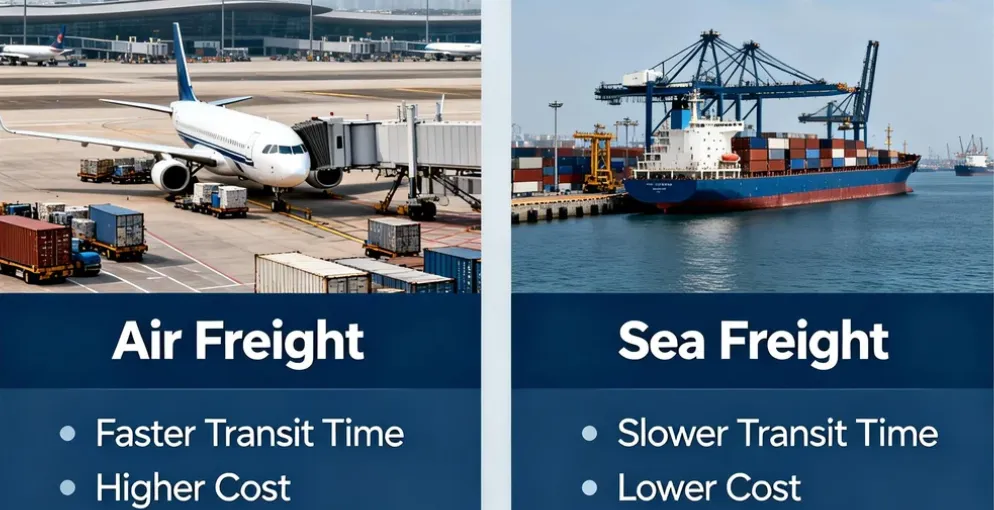
Are you struggling to decide between air freight and sea freight for shipping from China to the USA? Choosing the right shipping method can impact your costs, delivery speed, and business success. In this comprehensive guide, we’ll break down the key differences, costs, transit times, cargo suitability, customs requirements, and more, helping you make the best choice for your import needs. Discover which option—air freight or sea freight—is truly better for your business.
Overview: Air Freight vs Sea Freight for Shipping from China to USA
When it comes to international shipping from China to the USA, selecting the right shipping method—air freight or sea freight—can have a significant impact on your supply chain efficiency, cost, and customer satisfaction. Each mode offers distinct advantages and challenges, making it crucial to assess your cargo type, budget, timeline, and business goals before making a decision. As a professional in international logistics at Dantful.US International Logistics, I help clients navigate these complexities to find the most suitable solution.
Why Choosing the Right Shipping Method Matters
Choosing between air freight and sea freight isn’t just about transit time or price. The optimal mode impacts more than just when your goods arrive; it affects inventory planning, working capital, risk management, and even your carbon footprint. For importers, exporters, cross-border e-commerce sellers, manufacturers, supply chain managers, SMEs, and even individuals, the right choice enhances competitiveness, reduces unexpected costs, and ensures regulatory compliance.
Key considerations include:
- Type of goods: Fragile, perishable, high-value, or oversized cargo may have specific requirements.
- Urgency: Market launches, promotional activities, or seasonal sales may demand faster delivery.
- Cost sensitivity: For high-margin goods, time may be more valuable than shipping cost, while bulk cargo may prioritize savings.
- Supply chain stability: Predictable, reliable shipping supports inventory planning and customer commitments.
At Dantful.US International Logistics, we provide tailored solutions—air, sea, rail, road, Amazon FBA, warehousing, customs clearance, insurance, door-to-door, OOG, consolidated, and breakbulk freight—to match your unique business needs.
Related reading: Learn how Shipping from China to USA works, including timelines and best practices for importers.
Key Differences Between Air and Sea Shipping
Understanding the core distinctions between air freight and sea freight empowers you to make informed decisions. Below is a concise comparison across critical factors:
| Factor | Air Freight | Sea Freight |
|---|---|---|
| Speed | 2–7 days (airport to airport) | 20–40 days (port to port, depending on routing and port) |
| Cost | Higher per kg/CBM; best for small, urgent, high-value goods | Lower per kg/CBM; best for large, heavy, or bulk shipments |
| Cargo Types | Suitable for perishables, electronics, fashion | Suitable for machinery, furniture, raw materials, consumer goods |
| Capacity | Weight and size limits per shipment | Large volumes; containers: 20FT (28CBM), 40FT (56CBM), 40HQ (68CBM), 45HQ (78CBM) |
| Reliability | Highly reliable schedules, minimal delays | Weather, port congestion, and customs may cause delays |
| Security | Lower risk of theft/damage | Higher risk if not properly packed |
| Environmental Impact | Higher carbon footprint per kg | Lower carbon footprint per kg |
| Customs Procedures | Streamlined for airport controls | More complex, especially for consolidated (LCL) shipments |
By understanding these differences, you can align your logistics choices with your business priorities.
Shipping Costs: Air Freight vs Sea Freight
Shipping costs are a pivotal consideration for businesses moving goods from China to the USA. The choice between air freight and sea freight often comes down to both direct and indirect costs. Below, I break down the cost structures, main pricing models, and the key variables that influence your total landed cost.
Cost Structure of Air Freight from China to USA
Air freight pricing is influenced by several factors:
- Chargeable weight: Calculated as the greater of actual weight or volumetric weight (Length x Width x Height in cm / 6000).
- Fuel surcharges and security fees: These are added on top of base rates and may fluctuate based on market conditions.
- Origin/Destination charges: Including terminal handling, documentation, and customs clearance at both ends.
- Airport-to-airport vs. door-to-door: Door-to-door includes additional pickup, delivery, and customs brokerage costs.
Typical air freight rates (as of early 2026) from major Chinese airports (like Shanghai PVG, Guangzhou CAN, Shenzhen SZX) to major US airports (Los Angeles LAX, Chicago ORD, New York JFK) range from $3.5 to $6.5 per kg for general cargo, with express and high-priority shipments costing more.
Example Air Freight Charge Calculation:
| Item | Example Value | Unit Price | Total |
|---|---|---|---|
| Chargeable Weight | 500 kg | $4.5 per kg | $2,250 |
| Fuel & Security Fee | – | $0.3 per kg | $150 |
| Origin Charges | – | Fixed | $200 |
| Destination Charges | – | Fixed | $250 |
| Total | $2,850 |
Note: Actual rates fluctuate based on market supply, seasonality, and capacity. The data above is derived from Dantful’s internal shipment averages for standard cargo in Q1 2026. For highly volatile periods (e.g., Q4 peak season), expect a 15-30% premium.
Sea Freight Pricing: FCL, LCL, and Additional Charges
Sea freight offers two primary cargo options: Full Container Load (FCL) and Less than Container Load (LCL).
FCL (Full Container Load)
You pay for exclusive use of a container. Standard capacities:
- 20FT: 28CBM
- 40FT: 56CBM
- 40HQ: 68CBM
- 45HQ: 78CBM
Example FCL Rates (Q2 2026, indicative):
| Route | 20FT Container | 40HQ Container |
|---|---|---|
| Shanghai – Los Angeles | $1,500 | $2,800 |
| Shenzhen – New York | $1,800 | $3,200 |
| Ningbo – Houston | $1,700 | $3,000 |
Rates include ocean freight only; not including origin/destination charges, documentation, customs clearance, or inland transport. Sourced from Dantful’s contracted carrier rates and major shipping indices (e.g., FBX) as of early 2026.
LCL (Less than Container Load)
You share container space. Pricing is per CBM, with minimum charges applied (typically 1–2 CBM minimum).
Example LCL Cost (per CBM):
- Shanghai to Los Angeles: $50–$90/CBM + local charges (origin and destination).
- Minimum charges: $150–$250 for small shipments.
Additional Sea Freight Charges:
- THC (Terminal Handling Charges)
- Documentation Fees
- AMS/ISF Filing Fees (for US customs)
- Inland Haulage (door delivery)
- Customs Clearance and Duties
- Insurance (optional but recommended)
Further reading: For container-specific pricing and comparisons, see How much to ship a container from China to USA.
Factors That Influence Shipping Costs
A range of elements affect your final shipping expenses:
- Seasonality: Rates climb during peak seasons (pre-holiday, Chinese New Year).
- Fuel price volatility: Bunker Adjustment Factors (BAF) and air fuel surcharges can shift frequently.
- Cargo type and value: Dangerous, fragile, or temperature-sensitive goods may incur surcharges.
- Incoterms: Determine who pays for which part of the journey (EXW, FOB, CIF, DDP, etc.).
- Volume and weight: Discounts available for large/FCL or high-weight air cargo.
- Route and carrier selection: Direct sailings/flights are often costlier but faster and more reliable.
- Customs duties and taxes: Not included in freight quote, but critical for landed cost calculation.
- Value-added services: Warehousing, consolidation, insurance, and door-to-door delivery impact the overall cost.
For the most accurate and cost-effective solutions, our team at Dantful.US International Logistics leverages extensive industry knowledge, direct carrier contracts, and digital systems to optimize your shipping from China to the USA—whether you choose air freight, sea freight, or a multimodal solution. Contact us for a tailored, transparent quote that aligns with your business goals.
Transit Time Comparison: How Fast Is Air Freight vs Sea Freight?
When shipping from China to the USA, transit time is one of the most critical factors for importers, exporters, and supply chain managers. Both air freight and sea freight present distinct speed profiles. Understanding these differences helps you align your logistics strategy with your business needs, customer expectations, and inventory planning.
Typical Delivery Timeframes for Air Freight
Air freight is the fastest international shipping method between China and the United States. Flights from major Chinese airports like Shanghai (PVG), Shenzhen (SZX), Guangzhou (CAN), and Hong Kong (HKG) to popular US hubs such as Los Angeles (LAX), Chicago (ORD), and New York (JFK) operate daily.
| Airport Pair | Direct Air Freight Transit (Business Days) | Typical Door-to-Door Delivery* |
|---|---|---|
| Shanghai – Los Angeles | 1-3 | 3-5 |
| Shenzhen – Chicago | 1-3 | 4-6 |
| Guangzhou – New York | 2-4 | 5-7 |
| Hong Kong – Los Angeles | 1-2 | 3-5 |
*Note: Door-to-door includes pick-up, customs clearance, and delivery.
Factors influencing air freight transit time:
- Flight schedules and frequency
- Type of service (direct vs. transshipment)
- Seasonal congestion (e.g., peak seasons, holidays)
- Customs clearance efficiency
Air freight is best suited for time-sensitive shipments that require urgent delivery, such as electronics, fashion items, and critical spare parts.
Average Transit Times for Sea Freight
Sea freight is slower but remains the backbone of global trade due to cost efficiency and high-volume capacity. Transit times vary based on ports, vessel type, routing, and service (FCL – Full Container Load vs. LCL – Less than Container Load).
| Origin Port (China) | Destination Port (USA) | FCL Transit Time (Days) | LCL Transit Time (Days) |
|---|---|---|---|
| Shanghai | Los Angeles | 12-16 | 14-22 |
| Shenzhen | New York | 25-30 | 28-35 |
| Ningbo | Houston | 25-30 | 28-35 |
| Qingdao | Seattle | 15-20 | 18-24 |
LCL shipments are generally slower due to additional consolidation, deconsolidation, and handling procedures.
Key factors affecting sea freight transit times:
- Port congestion at origin/destination
- Transshipment or direct route
- Customs inspection/clearance delays
- Weather conditions, especially during typhoon season
You may also be interested in: Sea Shipping from China to USA Time, which breaks down typical port-to-port and door-to-door timeframes in detail.
How to Choose Based on Urgency and Deadlines
Selecting between air freight and sea freight depends on your specific time constraints, costs, and risk tolerance.
Consider air freight if:
- Your shipment is urgent or you must meet a strict deadline (e.g., product launches, seasonal demand).
- The value of the goods justifies higher shipping costs.
- Your supply chain cannot tolerate inventory shortages.
Consider sea freight if:
- You are shipping large quantities or bulky items and can plan in advance.
- Cost-efficiency is a greater priority than speed.
- Your business operates on a forecast-based inventory model with flexible lead times.
Decision Matrix:
| Criteria | Air Freight | Sea Freight |
|---|---|---|
| Transit Speed | 3-7 days | 15-35 days |
| Cost | High | Low |
| Cargo Volume | Low to Medium | Medium to High |
| Urgency | High | Low/Moderate |
| Environmental | Higher emissions | Lower emissions |
If you are uncertain which route best fits your needs, consult a reputable logistics provider like Dantful.US International Logistics. We offer tailored solutions—including sea freight, air freight, and even hybrid services—ensuring you always meet your business timelines and cost targets.
Cargo Suitability: What Types of Goods Should Use Air or Sea?
Every shipment is unique. Choosing between air freight and sea freight for transporting goods from China to the USA depends on the nature, value, and dimensions of your cargo.
Best Cargo Types for Air Freight Shipping
Air freight is ideal for:
- High-value, low-volume goods: Electronics, mobile phones, precision instruments, pharmaceuticals, watches, luxury goods.
- Perishable items: Fresh food, flowers, vaccines, certain chemicals.
- Time-sensitive shipments: Fashion/apparel for seasonal launches, urgent spare parts, samples for trade fairs.
- Lightweight cargo: When the volumetric weight does not exceed air freight cost-effectiveness thresholds.
Restrictions: Some items are restricted or require special handling, such as hazardous materials (batteries, chemicals), oversized cargo, and products with strict airline regulations.
Most Suitable Goods for Sea Freight
Sea freight is optimal for:
- Bulk, heavy, or voluminous cargo: Machinery, automotive parts, furniture, building materials.
- Large-scale shipments: FCL containers (20FT, 40FT, 40HQ, 45HQ) loaded with up to 78CBM.
- Non-perishable goods: Plastics, textiles, toys, household products.
- Project cargo: OOG (Out of Gauge), breakbulk, and consolidated shipments.
LCL (Less than Container Load) is cost-effective for shipments not filling a full container, allowing businesses to share container space and reduce expenses.
Weight, Volume, and Shipment Size Considerations
Air freight pricing is calculated based on chargeable weight: the greater of actual weight or volumetric (dimensional) weight. Large, light items may be cost-prohibitive by air.
- Volumetric Weight Formula:
(Length * Width * Height in cm) / 6000 = Chargeable Weight (kg)
Sea freight pricing depends on container size and volume:
| Container Type | Volume Capacity (CBM) | Typical Use Cases |
|---|---|---|
| 20FT | 28 | Small machinery, electronics |
| 40FT | 56 | Furniture, textiles, large goods |
| 40HQ | 68 | Bulky, lightweight goods |
| 45HQ | 78 | Oversized, consolidated cargo |
Discover more: Shipping Container from China to USA—a practical guide to container specs, cargo types, and best practices.
Key Recommendations:
- For shipments under 150-200kg or less than 1CBM, air freight may be more practical.
- For cargo over 2CBM or 200kg, sea freight is usually more economical.
- For very large or heavy items, or when shipping in bulk, FCL sea freight provides the best value.
At Dantful.US International Logistics, we combine our extensive industry expertise and a full suite of services—including sea freight, air freight, rail freight, road freight, Amazon FBA, warehousing, customs clearance, insurance, and specialized solutions like OOG, consolidated, and breakbulk freight—to help you select and optimize the best shipping mode for your unique requirements. For a free consultation or quote, contact us anytime.
Customs Clearance and Compliance for US Imports
Compliance Statement: The information provided below is for general guidance and does not constitute legal or tax advice. Customs regulations and tariffs are subject to change. For official, up-to-date standards, please refer to U.S. Customs and Border Protection (CBP).
Navigating customs clearance is a critical step when shipping from China to the USA, regardless of whether you choose air freight or sea freight. Each method has its own compliance requirements, documentation needs, and common pitfalls to avoid. Optimizing your process can save you time, money, and prevent costly delays.
Customs Requirements for Air vs Sea Shipments
Both air freight and sea freight shipments must comply with US Customs and Border Protection (CBP) regulations. However, the specific processes and requirements can differ:
| Aspect | Air Freight | Sea Freight |
|---|---|---|
| Manifest Submission | Advanced Electronic Information (AEI) must be submitted at least 4 hours prior to arrival in the USA. | Importer Security Filing (ISF or “10+2”) must be filed 24 hours before cargo is loaded on the vessel at the port of origin. |
| Customs Entry Filing | Entry can be filed prior to arrival; clearance often completed quickly. | Requires ISF, Bill of Lading, and may face more detailed scrutiny. |
| Physical Inspection Likelihood | Lower, especially for established shippers and smaller shipments. | Higher, particularly for consolidated or LCL shipments. |
| Release Timeframe | Typically within 1-2 days after arrival, if documentation is correct. | Can be 2-5 days or longer, depending on port congestion and documentation accuracy. |
In both cases, your goods must comply with US import regulations, including any FDA, EPA, or FCC requirements depending on the commodity.
Documentation Differences
Accurate and complete documentation is vital for smooth clearance. While air freight and sea freight share several core documents, there are key differences:
| Document | Air Freight | Sea Freight |
|---|---|---|
| Bill of Lading | Air Waybill (AWB) | Ocean Bill of Lading (OBL) |
| Commercial Invoice | Required | Required |
| Packing List | Required | Required |
| Arrival Notice | Provided by airline or freight forwarder | Provided by shipping line or agent |
| ISF (Importer Security Filing) | Not required for air shipments | Mandatory for all sea shipments (10+2) |
| Other Docs (FDA, etc.) | As required by commodity | As required by commodity |
Mistakes or omissions in documentation are one of the leading causes of customs delays. Working with a professional freight forwarder like Dantful.US International Logistics ensures documents are prepared and filed accurately, minimizing risks.
Common Challenges and How to Avoid Delays
Some of the most frequent customs clearance challenges for imports from China to the USA include:
- Incorrect HS Codes: Misclassification can result in fines or detainment. Always verify and use the correct Harmonized System (HS) code for your product.
- Incomplete or Inconsistent Documentation: Mismatches between the commercial invoice, packing list, and bill of lading can trigger inspections.
- Late ISF Filing (Sea Freight): Late or incorrect Importer Security Filing can incur penalties up to $5,000 per shipment.
- Non-compliance with US Regulations: Products subject to FDA, FCC, or other agency requirements must have proper certifications and permits.
- Unpaid Duties or Taxes: Ensure all applicable import duties, tariffs, and taxes are accurately calculated and paid.
How to Avoid Delays:
- Partner with a reliable freight forwarder (Dantful.US International Logistics) who manages end-to-end customs clearance.
- Double-check all documentation before submission.
- Submit ISF filings on time and monitor for updates or additional requirements from US authorities.
- Stay updated on changing import regulations, especially for sensitive goods (e.g., electronics, food, textiles).
- Consider customs bond requirements for high-value or frequent shipments.
Risk Management: Safety, Insurance, and Reliability
Freight risk management is essential to a successful supply chain. Both air freight and sea freight have unique risk profiles in terms of safety, insurance, and shipment reliability.
Damage, Loss, and Security Risks Compared
| Risk Factor | Air Freight | Sea Freight |
|---|---|---|
| Physical Damage | Lower risk due to minimal handling and shorter transit time. | Higher risk due to longer journeys, more handling (especially LCL), rougher sea conditions. |
| Theft/Pilferage | Lower, as air cargo is often in secure, monitored facilities. | Moderate risk, particularly at busy ports or during transshipment. |
| Loss | Rare, but possible in the event of misrouting or cargo misplacement. | Can occur during container mishandling, incorrect unloading, or port congestion. |
| Environmental Exposure | Minimal (climate-controlled holds). | Higher (risk of humidity, salt water, temperature changes). |
Valuable, fragile, or time-sensitive goods are often better protected via air freight, while sea freight requires robust packaging and additional precautions, especially for vulnerable cargo.
Insurance Options for Air and Sea Freight
Cargo insurance is strongly recommended for both air and sea shipments, as carrier liability is limited by international conventions:
| Insurance Aspect | Air Freight | Sea Freight |
|---|---|---|
| Standard Carrier Liability | Limited, typically ~$20/kg (Warsaw/Montreal Convention). | Limited, ~$500 per package/unit (Hague/Visby Rules). |
| Full-Value Insurance | Recommended for high-value or sensitive cargo; covers loss, theft, and damage. | Strongly advised for all sea shipments, especially LCL or OOG (out-of-gauge) cargo. |
| Type of Cover | All-risk, named perils, war risk, etc. | All-risk, named perils, war risk, etc. |
At Dantful.US International Logistics, we offer comprehensive cargo insurance solutions for both air and sea freight, tailored to your needs and cargo value.
Delays, Tracking, and Shipment Visibility
Reliable shipment tracking and clear communication are essential for modern supply chains. Here’s how air and sea freight compare:
| Tracking & Visibility | Air Freight | Sea Freight |
|---|---|---|
| Real-time Tracking | High—most airlines provide up-to-date tracking and estimated delivery times. | Good, but less frequent updates; tracking is by vessel and container, not by piece. |
| Common Causes of Delay | Weather disruptions, customs holds, airline overbooking. | Port congestion, customs inspections, vessel schedule changes, transshipment delays. |
| Average Delay Impact | Generally minor (1-2 days). | Can be significant (several days to weeks, especially during peak season). |
| Customer Communication | Fast and transparent; delays are often communicated promptly. | May be slower, especially for consolidated cargo or less digitalized shipping lines. |
To mitigate risks of delay and improve visibility:
- Use professional freight forwarders like Dantful.US International Logistics who provide advanced tracking, proactive updates, and experienced support.
- Invest in cargo insurance to cover potential losses from delays, damage, or theft.
- Plan shipments in advance, especially for sea freight during peak periods or to congested US ports.
In summary, successful customs clearance and risk management are key to smooth, cost-effective shipping from China to the USA. By understanding the differences between air freight and sea freight, preparing accurate documentation, and proactively managing risks, you can safeguard your supply chain. If you need tailored guidance or a trusted partner for end-to-end international logistics, Dantful.US International Logistics is here to provide professional, reliable, and cost-effective solutions for your business.
Environmental Impact: Air Freight vs Sea Freight Sustainability
Carbon Footprint Comparison
When shipping from China to the USA, understanding the environmental impact of your chosen freight method is increasingly important for modern businesses. Both air freight and sea freight play vital roles in global logistics, but their carbon footprints differ significantly.
Air freight is known for its speed, but it also generates a much higher amount of CO₂ emissions per kilogram shipped compared to sea freight. According to the latest data:
| Shipping Method | Average CO₂ Emissions (per metric ton per km) |
|---|---|
| Air Freight | 500–600 g |
| Sea Freight | 10–40 g |
For example, shipping 1 ton of cargo from Shanghai to Los Angeles (approximately 10,000 km):
| Method | CO₂ Emissions Per Shipment (kg CO₂) |
|---|---|
| Air Freight | 5,000–6,000 |
| Sea Freight | 100–400 |
Clearly, sea freight is far more carbon-efficient for long-distance shipments. For organizations aiming to reduce their environmental footprint or adhere to corporate sustainability goals, sea shipping is the preferred choice. However, for time-sensitive or perishable goods, air freight may still be necessary despite its higher emissions.
Green Logistics Options
At Dantful.US International Logistics, we recognize the need for sustainable shipping solutions to support our customers’ environmental and compliance goals. Here’s how you can make greener choices, regardless of your shipping method:
- Choose Eco-Friendly Carriers: Many shipping lines and airlines operating between China and the USA now invest in more fuel-efficient vessels and aircraft. Opting for carriers committed to sustainability can reduce your total environmental impact.
- Optimize Container Utilization: Maximize cargo space by consolidating shipments. Using Full Container Load (FCL) helps reduce the per-unit carbon footprint compared to Less than Container Load (LCL) or poorly packed shipments.
- Explore Alternative Fuels: Some shipping companies now operate vessels powered by LNG (liquefied natural gas) or are exploring biofuels and hybrid propulsion technologies to lower emissions.
- Carbon Offsetting Programs: Consider participating in carbon offset initiatives offered by reputable logistics providers, including Dantful.US, that invest in renewable energy, reforestation, or clean technology projects to balance emissions.
- Route Optimization: We help our clients optimize shipping routes and transit times to minimize unnecessary mileage and idle time, reducing overall energy consumption.
- Digital Documentation: By embracing e-Bill of Lading and other digital processes, we help clients reduce paper usage and administrative carbon footprint.
For businesses prioritizing sustainability, sea freight is currently the most environmentally friendly choice for volume shipments. However, by partnering with a logistics expert like Dantful.US International Logistics, you can further minimize your environmental impact no matter which shipping option you select.
Choosing the Best Shipping Method for Your Business
Selecting between air freight and sea freight for shipping from China to the USA depends on your unique business requirements. Here are key factors to help guide your decision:
| Criteria | Air Freight | Sea Freight |
|---|---|---|
| Speed | 2–7 days (China to US major airports) | 20–40 days (China to US West/East Coast ports) |
| Cost | High (per kg) | Low (per CBM or per container) |
| Cargo Types | High-value, urgent, perishable, sensitive | Bulky, heavy, non-urgent, large volumes |
| Environmental Impact | High CO₂ emissions | Low CO₂ emissions |
| Reliability | High frequency, predictable schedules | Subject to port congestion, weather, etc. |
| Customs Clearance | Faster, often streamlined | May involve more complex documentation |
| Flexibility | Limited on size/weight; strict regulations | Flexible for oversized/out-of-gauge cargo |
How to Decide
- Urgency: If your supply chain demands rapid delivery (such as seasonal goods, electronics, or fashion), air freight is ideal.
- Budget: For large, heavy, or non-urgent shipments, sea freight offers significant cost savings.
- Cargo Nature: Consider the type and value of your goods. Fragile or high-value items may benefit from the added security and speed of air freight.
- Environmental Goals: If reducing your carbon footprint is a priority, sea freight is more sustainable, especially when combined with green logistics practices.
Why Partner with Dantful.US for Your China-USA Shipping?
Choosing between air and sea freight is complex, but executing the shipment flawlessly requires deep route expertise. At Dantful.US International Logistics, we don’t just offer generic freight services; we specialize in the China-to-Americas dedicated line, solving the exact pain points importers face: cost overruns, customs delays, and opaque tracking.
Here is how our specific expertise benefits your supply chain:
- Data-Driven Routing (Expertise): We analyze current port congestion at LAX/LGB and NY/NJ, alongside airline peak capacities out of Shanghai and Shenzhen, to recommend the exact optimal mode for your cargo’s weight and urgency.
- Customs & Compliance Safety (Trust): With years of handling CBP clearances and ISF/AMS filings, we preemptively audit your commercial invoices and HS codes to prevent costly detentions—whether you are shipping standard FCL or complex, battery-included air freight.
- Seamless Amazon FBA Integration (Experience): If your final destination is an Amazon warehouse, we provide direct Door-to-Door (DDP) services. We handle the transition from sea/air main-line transport straight into compliant last-mile delivery, eliminating intermediate handling risks.
- Transparent Cost Structures: No hidden fees. We provide clear breakdowns of origin charges, main-line freight, and destination customs fees so you can accurately calculate your landed costs.
Contact us today for a personalized consultation. Let our experienced team help you choose the best shipping solution from China to the USA, balancing cost, speed, reliability, and sustainability for your business success.
For more detailed quotes or transit schedules between specific Chinese ports (like Shanghai, Shenzhen, Ningbo) and US destinations (Los Angeles, New York, etc.), please contact Dantful.US International Logistics for up-to-date, transparent information tailored to your business needs.
Get A Free Shipping Quote