

Over 40% of all U.S. container imports from Asia flow through the Los Angeles and Long Beach port complex every year — making it the single most important gateway for businesses shipping from China to Los Angeles. But between volatile freight rates (a 40HQ container swung from $2,800 to over $8,500 in 2026 alone), a dozen-plus hidden surcharges that inflate your true landed cost by 30–50%, and a customs process where one late ISF filing can cost you $5,000, this critical trade lane is as unforgiving as it is essential. Here’s everything you need to navigate it with confidence.
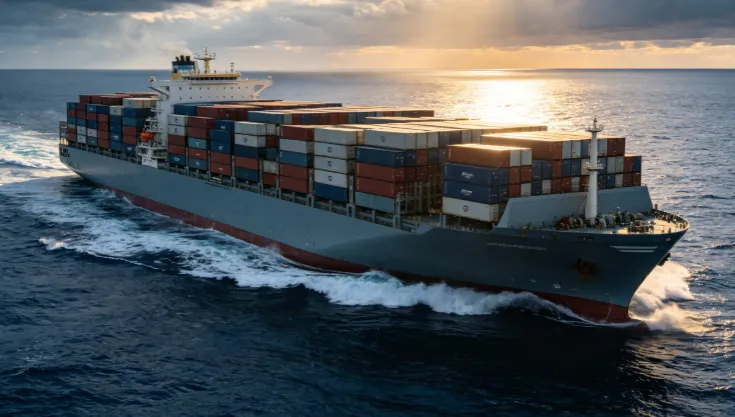
2026 Shipping Costs from China to Los Angeles
Freight pricing is never just one number. It changes by season, by port of origin, by container type, and by the dozen-plus surcharges that carriers apply. Below, we break down every layer — so you know exactly what you’re paying for. For a broader pricing overview beyond LA, see our complete container shipping costs from China to USA guide.
2026 Sea Freight FCL Rates
FCL (Full Container Load) means you book an entire container — ideal when your shipment exceeds approximately 15 CBM (Cubic Meters) . Below are the current port-to-port base freight ranges for the China–Los Angeles/Long Beach corridor:
| Origin Port | 20GP (20ft) | 40GP (40ft) | 40HQ (40ft High Cube) |
|---|---|---|---|
| Shenzhen (Yantian) | $1,900 – $3,200 | $2,800 – $5,200 | $3,000 – $5,500 |
| Shenzhen (Shekou) | $2,000 – $3,300 | $2,900 – $5,400 | $3,100 – $5,700 |
| Shanghai | $1,800 – $3,100 | $2,700 – $5,000 | $2,800 – $5,300 |
| Ningbo | $1,800 – $3,000 | $2,700 – $4,900 | $2,800 – $5,200 |
| Qingdao | $2,100 – $3,500 | $3,100 – $5,600 | $3,300 – $5,900 |
Peak season alert (August–December): Add 15–30% to all rates above. During the July–September 2026 window, 40HQ containers on premium sailings are already hitting $6,500–$8,500 as importers rush inventory ahead of Black Friday and holiday demand. Book 3–4 weeks in advance to lock in standard rates.
Shanghai and Ningbo consistently offer the most competitive pricing due to higher vessel frequency and shorter direct sailing distances. Shenzhen’s Yantian terminal — the busiest container port in South China — provides the fastest transit but at a slight cost premium over Shekou.
Matson Fast Sea, a premium express ocean service exclusive to the China–Long Beach route, costs approximately 30–50% more than standard FCL but delivers in just 10–13 days at sea. For e-commerce sellers who need speed but cannot justify air freight costs, Matson is often the optimal middle ground. We’ll cover transit details in the next section.
2026 Sea Freight LCL Rates
LCL (Less than Container Load) is your go-to when the shipment is too small to fill an entire container — for a deeper dive, see our guide to LCL Shipping from China to USA — typically under 12–15 CBM. You pay only for the space your cargo occupies, priced per cubic meter (CBM) :
| Origin Port | LCL Rate (per CBM) | Minimum Charge |
|---|---|---|
| Shenzhen → LA/LB | $50 – $95 | 1–2 CBM |
| Shanghai → LA/LB | $45 – $85 | 1–2 CBM |
| Ningbo → LA/LB | $50 – $85 | 1–2 CBM |
| Qingdao → LA/LB | $60 – $100 | 1–2 CBM |
LCL shipments take 5–10 days longer than FCL due to the extra time required for consolidation at origin and deconsolidation at the destination CFS (Container Freight Station). However, for shipments under roughly 15 CBM, LCL is almost always more cost-effective than booking a half-empty container.
Example: A 10 CBM shipment of furniture from Shanghai to Los Angeles via LCL costs approximately $450–$850 in base ocean freight — significantly less than a 20GP FCL at $1,800–$3,100.
2026 Air Freight and Express Courier Rates
For time-sensitive, high-value, or low-volume cargo, air freight and express courier services offer dramatically shorter transit:
| Service Type | Rate Range | Best For |
|---|---|---|
| Standard Air Freight (port-to-port) | $3.80 – $7.20/kg | Shipments 100–3,000+ kg |
| Air Freight DDP (door-to-door, all-in) | $4.60 – $8.00/kg | Importers wanting hassle-free delivery |
| Express Courier (DHL/FedEx/UPS) | $11 – $15/kg | Samples, documents, urgent parcels <100 kg |
Chargeable weight in air freight is calculated as the greater of actual gross weight or volumetric weight (length × width × height in cm ÷ 6,000). A lightweight but bulky box can cost significantly more than its physical weight suggests — always confirm chargeable weight with your forwarder before booking.
The Hidden Costs: A Complete Landed Cost Breakdown
Here’s where most competitor guides fall short. Your base ocean or air freight is just the tip of the iceberg. Below is a full door-to-door landed cost framework for a typical FCL shipment from Shenzhen to Los Angeles:
| Cost Component | Estimated Range (USD) | Notes |
|---|---|---|
| Base Ocean Freight (40HQ) | $2,800 – $5,500 | Varies by season and carrier |
| BAF (Bunker Adjustment Factor) | $200 – $600 | Fuel surcharge, adjusted quarterly |
| THC (Terminal Handling Charges) | $150 – $350 | Origin + destination terminal fees |
| Documentation Fee | $50 – $150 | Bill of Lading, manifest, etc. |
| China Export Customs Clearance | $100 – $300 | Brokerage fee at origin |
| ISF Filing (10+2) | $35 – $75 | Mandatory; $5,000+ penalty for late filing |
| U.S. Customs Bond (Single Entry) | $100 – $300 | Required for all formal entries |
| U.S. Import Duty | Varies (0–25% of cargo value) | Depends on HTS classification + Section 301 |
| MPF (Merchandise Processing Fee) | 0.3464% of cargo value | Min $32.71, max $634.62 per entry |
| HMF (Harbor Maintenance Fee) | 0.125% of cargo value | Applies to ocean freight only |
| Port & Chassis Fees | $200 – $600 | LA/LB clean truck fees, chassis rental |
| Drayage (Port → Warehouse) | $350 – $800 | Short-haul trucking from terminal |
| Last-Mile Delivery | $200 – $1,000+ | Depends on distance from LA/LB |
Real-world example: A 40HQ shipment of consumer electronics from Shenzhen Yantian to a warehouse in Ontario, CA (near ONT8), with a declared cargo value of $30,000, under DDP terms, would have a total landed cost breakdown roughly like this:
- Base ocean freight: $3,200
- BAF + THC + docs: $700
- China export clearance: $150
- ISF + U.S. Customs Bond: $225
- U.S. import duty (assume 7.5% Section 301 on electronics): $2,250
- MPF + HMF: $142
- Port charges + chassis: $400
- Drayage + last-mile: $650
- Total landed cost (excluding goods value): ~$7,717
That’s nearly $4,500 above the base ocean freight — or about 24% of the goods’ value. Understanding these hidden layers is what separates seasoned importers from first-timers who get blindsided by unexpected bills.
How to Get the Lowest Shipping Rates
- Book during low season (February–April): Rates can be 20–30% lower than peak season.
- Use FCL once you exceed ~15 CBM: The per-unit cost flips in FCL’s favor at this threshold.
- Consolidate multiple suppliers into one container: Fewer half-empty shipments = lower cost per unit.
- Build long-term relationships with a freight forwarder: At Dantful.US International Logistics, our direct carrier contracts with major shipping lines — including COSCO, Maersk, MSC, and CMA CGM — secure competitive rates and priority space even during peak season, without hidden markups.
How Long Does Shipping from China to Los Angeles Take?
Transit time is the second question every importer asks — right after “how much?” The answer depends heavily on your shipping method, origin port, and whether you’re measuring port-to-port or true door-to-door. For a broader perspective on transit times across all U.S. destinations, see How Long does it Take to Ship from China to USA.
Transit Times by Shipping Method
| Shipping Method | Port-to-Port | Door-to-Door (Total) |
|---|---|---|
| Standard Ocean FCL | 14 – 22 days | 25 – 35 days |
| Standard Ocean LCL | 17 – 28 days | 28 – 40 days |
| Matson Fast Sea | 10 – 13 days | 14 – 18 days |
| Air Freight | N/A | 3 – 7 days |
| Express Courier (DHL/FedEx/UPS) | N/A | 2 – 5 days |
LCL door-to-door takes longer than FCL because consolidation at origin adds 2–4 days, and deconsolidation at the destination CFS adds another 2–4 days. For time-sensitive LCL shipments, ask your forwarder about expedited consolidation options.
Door-to-Door Timeline: A 6-Stage Breakdown
Here’s what actually happens between the moment your supplier hands over the goods and the moment they arrive at your warehouse:
| Stage | Duration | What Happens |
|---|---|---|
| 1. Booking & Space Confirmation | 1 – 3 days | Forwarder reserves container space with the carrier; issues Booking Confirmation |
| 2. Factory Pickup & Export Clearance | 2 – 5 days | Truck picks up cargo, delivers to CFS or port; Chinese customs declaration filed and cleared |
| 3. Port Waiting & Vessel Loading | 1 – 3 days | Container staged at terminal, loaded onto vessel per sailing schedule |
| 4. Ocean Transit | 14 – 22 days | Vessel sails from Chinese port to LA/Long Beach (direct routing) |
| 5. LA/LB Discharge & U.S. Customs | 2 – 5 days | Container offloaded, CBP entry processed, inspection (if selected), release |
| 6. Drayage & Final Delivery | 1 – 3 days | Truck picks up from terminal, delivers to your warehouse or FBA facility |
Total door-to-door: 21–41 days for FCL. The wide range is driven primarily by origin port distance, direct vs. transshipment routing, and CBP inspection luck. For a detailed look at what happens between Shanghai and Long Beach specifically, read our breakdown of port-to-port shipping from Shanghai to Long Beach.
What Affects Transit Time?
- Direct vs. transshipment routing: A direct sailing from Shanghai to LA takes 14–16 days. A transshipment via Busan or Kaohsiung can add 5–15 days. Always confirm with your forwarder whether the routing is direct.
- Port of origin matters: Shenzhen Yantian (14–17 days direct) and Shanghai (14–16 days) are the fastest. Ningbo and Qingdao add 1–3 days each.
- LA/LB port congestion: While the extreme backlog of 2021 (100+ vessels at anchor) has long passed, peak season still causes 2–5 day delays at terminal. Matson’s dedicated Long Beach terminal bypasses standard terminal queues, which is why transit is so much faster.
- CBP inspection rate: U.S. Customs and Border Protection randomly inspects 2–5% of containers. An intensive exam (MET) can add 5–10 business days. Accurate documentation — HS codes, commercial invoices, packing lists — dramatically reduces your odds of being flagged.
- Peak season (August–December): Add 3–7 days buffer to all estimates. Book early and, if time is money, seriously consider Matson or air freight for Q4 shipments.
Incoterms 2020 Explained: EXW, FOB, CIF & DDP for China-to-LA Shipping
Incoterms (International Commercial Terms) define who pays for what and where risk transfers from seller to buyer. Choosing the wrong term for your China–LA shipment can cost you thousands in unexpected fees — or leave you legally liable for cargo you thought was already your supplier’s problem.
The Four Core Incoterms: A Side-by-Side Comparison
| EXW (Ex Works) | FOB (Free on Board) | CIF (Cost, Insurance & Freight) | DDP (Delivered Duty Paid) | |
|---|---|---|---|---|
| Who arranges China-side transport? | Buyer | Seller | Seller | Seller |
| Who handles China export clearance? | Buyer | Seller | Seller | Seller |
| Who books ocean/air freight? | Buyer | Buyer | Seller | Seller |
| Who pays ocean/air freight? | Buyer | Buyer | Seller | Seller |
| Who insures the cargo? | Buyer (optional) | Buyer (optional) | Seller (minimum cover) | Seller |
| Who handles U.S. import clearance? | Buyer | Buyer | Buyer | Seller |
| Who pays U.S. duties & tariffs? | Buyer | Buyer | Buyer | Seller |
| Risk transfers at: | Seller’s premises | Vessel’s deck at origin port | Vessel’s deck at origin port | Buyer’s doorstep |
| Best for: | Experienced importers with China logistics team | Buyers with their own forwarder | Price comparison across forwarders | First-time importers who want zero hassle |
Scenario-Based Recommendations
“This is my first time importing from China and I don’t want to deal with customs paperwork.” → Choose DDP. Your freight forwarder handles everything — pickup, export clearance, shipping, U.S. customs, duties, and last-mile delivery — for a single all-in price. Learn more about how DDP shipping from China to USA works. At Dantful.US, our DDP door-to-door service from China to Los Angeles is our most popular offering for exactly this reason: one point of contact, zero surprises.
“I already have a U.S. customs broker I trust, and I want to control freight selection.” → Choose FOB. Your supplier handles everything up to the vessel in China; from that point forward, your broker and forwarder take over. This gives you control over carrier selection and U.S.-side costs. For a detailed walkthrough, see our guide on FOB shipping from China to USA.
“I want to compare quotes from multiple forwarders before committing.” → Choose FOB or CIF. Both let you gather competitive rates. CIF has the added benefit of the seller covering insurance — but note that CIF insurance is typically minimum cover only (Institute Cargo Clauses C), which excludes many common risks. For valuable cargo, supplement with your own all-risk cargo insurance.
“My supplier quoted me EXW — what do I do?” → EXW puts virtually all responsibility on the buyer. If you don’t have a team or partner in China to handle pickup and export clearance, convert the EXW quote to DDP through a freight forwarder. Dantful.US routinely helps importers bridge the EXW-to-DDP gap — we collect from the factory, handle all Chinese export formalities, and deliver to your door in the U.S.
Why DDP Is the Most Popular Choice for LA-Bound Shipments
For importers shipping from China to Los Angeles — especially Amazon FBA sellers, SMEs without in-house logistics teams, and first-time importers — DDP removes the single biggest source of stress: the unknown. If you want a completely hands-off experience, explore our door-to-door shipping from China to USA service. With DDP, your forwarder assumes all customs and tax liability at destination. You know your total landed cost before the container even leaves China. No surprise demurrage bills. No CBP hold notices. No scrambling to find a last-minute customs broker when your cargo is already sitting at the Port of Los Angeles.
U.S. Customs Clearance at Los Angeles: ISF, Duties, Bonds & Required Documents
Clearing U.S. customs is the most intimidating part of importing — but it’s also the most rule-based. Once you understand the process, it becomes a checklist. Here’s your complete walkthrough for the LA/LB port complex.
The Customs Clearance Timeline
- Pre-departure (at least 24 hours before vessel loading): Your ISF (Importer Security Filing) — also called “10+2” — must be filed with CBP. This is non-negotiable.
- In transit: Your customs broker prepares the CBP entry using your commercial invoice, packing list, and bill of lading.
- Vessel arrival at LA/LB: CBP entry is formally submitted. Duties are calculated and must be paid before release.
- CBP review: Most shipments clear within 24–48 hours. A small percentage are flagged for VACIS (X-ray) or MET (intensive) examination.
- Release: Container is released from the terminal and available for drayage pickup.
ISF 10+2: The Rule You Cannot Afford to Break
The Importer Security Filing (ISF) requires 10 data elements from the importer and 2 from the carrier, filed electronically with CBP at least 24 hours before the vessel departs from the foreign port.
Late filing penalty: $5,000 per violation. Inaccurate filing: $5,000–$10,000. These fines are strictly enforced — we’ve seen first-time importers receive penalty notices months after their shipment arrived simply because their previous forwarder filed late.
Our advice: The moment your booking is confirmed, provide your forwarder with the commercial invoice and packing list. Do not wait until the day before sailing.
Customs Bond: Your Entry Ticket
Every formal U.S. customs entry (goods valued over $2,500) requires a Customs Bond — essentially a guarantee that duties and fees will be paid.
| Bond Type | Cost | Best For |
|---|---|---|
| Single Entry Bond | $100 – $300 per shipment | Importers shipping 1–2 times per year |
| Continuous Bond | $300 – $800 per year | Importers shipping 3+ times per year |
If you plan to import from China more than twice a year, a Continuous Bond pays for itself by the third shipment — and eliminates the administrative headache of arranging a new bond for every entry.
HTS Classification: Where Importers Save (or Lose) Money
Every product entering the U.S. must be classified under a 10-digit HTS (Harmonized Tariff Schedule) code. This code determines your duty rate — and, crucially, whether Section 301 tariffs (an additional 7.5%–25% on most Chinese-origin goods) apply.
Common mistake: Importers accept whatever HTS code their supplier suggests. Chinese suppliers often default to generic codes that may carry higher duty rates than a more specific, correctly classified code would. Use the USITC HTS Search tool (hts.usitc.gov) to verify your classification independently, or work with a licensed customs broker who will optimize your HTS assignment.
Section 301 Tariffs: What Chinese Importers Must Know
Section 301 tariffs are additional duties imposed by the U.S. on a wide range of Chinese-origin goods, ranging from 7.5% to 25%, on top of standard MFN (Most Favored Nation) duty rates. Key affected categories include electronics, machinery, furniture, textiles, and many consumer goods.
Strategies to manage Section 301 exposure:
- Classify accurately: A precise HTS code may fall under a lower Section 301 rate or qualify for an exclusion.
- Monitor exclusion lists: USTR periodically grants product-specific exclusions. Check the USTR website or ask your customs broker to monitor for your HTS codes.
- Factor tariffs into your sourcing math: The total duty (MFN + Section 301) should be part of your landed cost model from day one — not a surprise after arrival.
Required Documentation Checklist
Here is a complete list of documents you’ll need for a smooth customs clearance at Los Angeles/Long Beach:
| Document | Required? | Notes |
|---|---|---|
| Bill of Lading (B/L) | ✅ Mandatory | Issued by the ocean carrier; original or telex release |
| Commercial Invoice | ✅ Mandatory | Must include accurate goods description, value, and currency |
| Packing List | ✅ Mandatory | Detailed breakdown of cartons, weights, and dimensions |
| ISF Filing Confirmation | ✅ Mandatory | Proof of timely 10+2 submission |
| Customs Bond | ✅ Mandatory | Single Entry or Continuous |
| Certificate of Origin | ⬜ Conditional | Required if claiming FTA duty preferences (rare for China-origin goods) |
| FDA/FCC/DOT Permits | ⬜ Conditional | Required for food, drugs, electronics with radio transmitters, vehicles/parts |
Amazon FBA & E-Commerce Shipping from China to Los Angeles Warehouses
If you sell on Amazon.com, the Los Angeles/Long Beach port complex isn’t just a convenient entry point — it’s your strategic advantage. Southern California hosts the densest cluster of Amazon FBA fulfillment centers in the United States. For the complete end-to-end FBA logistics playbook, see our guide on shipping from China to Amazon FBA USA.
Why LA Is the Strategic Gateway for Amazon FBA Sellers
Three of Amazon’s largest and most active West Coast fulfillment centers sit within a 90-minute drive of the LA/LB ports:
| FBA Warehouse | Location | Distance from LA/LB Ports |
|---|---|---|
| ONT8 | San Bernardino, CA | ~70 miles (1–1.5 hours) |
| LGB8 | Rialto, CA | ~65 miles (1–1.5 hours) |
| LAX9 | Fontana, CA | ~70 miles (1–1.5 hours) |
The short drayage distance from port to FBA means lower trucking costs, faster check-in, and less time in transit compared to routing through East Coast or Gulf Coast ports. For FBA sellers, shipping into LA/LB and delivering to ONT8 or LGB8 is the fastest and most cost-effective entry strategy in the U.S.
FBA Shipping Process: Step-by-Step from China to Amazon
- Supplier ships to forwarder’s China consolidation warehouse. Your factory delivers to our Shenzhen or Shanghai facility.
- Quality inspection + FBA labeling. We inspect for visible defects, then apply FBA-compliant FNSKU labels and shipping labels to each unit and carton. Cartons must not exceed 50 lbs (22.7 kg) unless marked “Team Lift,” and no single side should exceed 25 inches.
- Palletization (recommended). Palletized shipments are processed faster at Amazon and less likely to be rejected. Each pallet must be wrapped and labeled with the correct SPD (Small Parcel Delivery) or LTL (Less Than Truckload) shipment ID.
- Ocean or air freight to LA/LB. Sea freight (FCL or LCL) is standard; air freight is used for urgent restocks.
- U.S. customs clearance. Your forwarder files the entry — using either your importer of record or their DDP authority.
- Drayage to FBA or 3PL warehouse. Once cleared, the truck delivers directly to the assigned Amazon fulfillment center. Amazon provides a delivery appointment window; missing it means waiting for the next available slot.
- Amazon receives and scans. Your inventory status changes to “Available” — and you’re live.
FBA Seller Must-Knows
- Label compliance is non-negotiable. Amazon rejects shipments with peeling, smudged, or incorrectly placed FBA labels. Your freight forwarder should verify label quality before the container departs China.
- Section 301 tariffs hit FBA sellers hard. Most consumer goods — electronics, home goods, apparel, accessories — attract an additional 7.5–25% tariff. Build this into your unit economics.
- Prime Day and Q4 prep starts early. To have inventory in stock for July Prime Day, ship from China by late April. For Black Friday/Cyber Monday, ship by mid-August. Late shipments risk missing the peak entirely and incurring Amazon storage volume limits.
- Consider a 3PL as a buffer. A third-party logistics warehouse near LA can receive your container, store overflow inventory, and feed FBA in smaller batches — preventing both stockouts and Amazon long-term storage fees.
Dantful.US provides end-to-end Amazon FBA forwarding from China to all major Southern California fulfillment centers. Our service includes factory pickup in China, FBA-compliant labeling and palletization, customs clearance, and direct delivery to ONT8, LGB8, LAX9, and other regional warehouses — with a single point of contact from start to finish.
How to Choose the Best Freight Forwarder for China-to-LA Shipping
Your freight forwarder is more than a booking agent — they are your supply chain partner. A great forwarder prevents problems; a mediocre one only reacts to them. Here’s how to tell the difference for the China-to-Los Angeles route specifically.
Why LA-Specific Expertise Matters
The Port of Los Angeles and Port of Long Beach together form the busiest container port complex in the Western Hemisphere — with 10+ container terminals, multiple chassis providers, and a constantly evolving regulatory environment (Clean Truck Program, PierPass, port-wide digitalization initiatives). A forwarder who ships “everywhere” but doesn’t specialize in LA/LB won’t know, for example, which terminal has the shortest truck turn times during peak, or how to route your cargo to avoid a specific terminal’s chronic chassis shortage.
8 Questions to Evaluate Any Freight Forwarder
| # | Evaluation Criteria | What to Look For |
|---|---|---|
| 1 | Certifications | FIATA, IATA, FMC license, NVOCC bond — minimum baseline for professionalism |
| 2 | LA route volume | Do they move China→LA shipments weekly? Volume = carrier relationships and buying power |
| 3 | Pricing transparency | Are all surcharges disclosed upfront? Can they provide a full landed cost estimate, not just base freight? |
| 4 | Carrier relationships | Direct contracts with major transpacific carriers (Maersk, MSC, COSCO, CMA CGM, ONE, ZIM, Wan Hai) |
| 5 | Customs capability | In-house or dedicated U.S. licensed customs broker? Or outsourced to a third party? |
| 6 | Drayage & trucking network | Do they have established relationships with LA-area trucking companies? Can they handle chassis provisioning? |
| 7 | Cargo insurance | Do they offer comprehensive cargo insurance? What are the coverage limits and exclusions? |
| 8 | Track record | Can they provide verifiable client references for the China→LA route? |
Red Flags to Watch For
- Quotes that are significantly below market rate — especially common with LCL consolidators who bait with low freight rates then inflate destination charges.
- Inability to explain the ISF and Customs Bond process clearly. If they fumble on these basics, walk away.
- No physical presence or partner in the Los Angeles area. A forwarder without LA boots on the ground is entirely dependent on third parties for the most critical phase of your shipment.
Why Importers Choose Dantful.US for China-to-LA Shipping
With our headquarters in Shenzhen — minutes from the Yantian and Shekou container terminals that handle the majority of South China’s exports — and 15+ years of freight forwarding experience, Dantful.US International Logistics specializes exclusively in Shipping from China to America routes. The LA/LB corridor is our core lane.
We hold FIATA and IATA certifications, maintain direct freight contracts with all major transpacific carriers, and operate a dedicated U.S. customs brokerage team. Our DDP door-to-door service covers factory pickup, China export clearance, ocean or air freight, U.S. customs clearance (ISF + Bond + Duties), drayage from LA/LB terminals, and last-mile delivery — with transparent, all-in pricing and a dedicated account manager who speaks your language.
Get a free, no-obligation quote for your next China-to-Los Angeles shipment. Contact our team today.
FAQs
Q1: How much does it cost to ship a 40ft container from China to Los Angeles?
In July 2026, a 40HQ container from China to Los Angeles costs approximately $2,800–$5,500 for standard ocean FCL port-to-port, or $6,500–$8,500 during peak season (August–December). Door-to-door DDP service, which includes all customs, duties, drayage, and delivery, typically ranges from $3,800–$5,100 for standard season. For a detailed breakdown by container size, see our cost of shipping a 40ft container from China to USA. These are working ranges — always request a detailed quote with your specific cargo details for an accurate price.
Q2: How long does sea freight take from China to Los Angeles?
Standard ocean FCL from major Chinese ports to Los Angeles takes 14–22 days port-to-port, and 25–35 days door-to-door (including booking, origin handling, customs, and final delivery). The fastest direct sailings — Shanghai to LA and Shenzhen Yantian to LA — complete the ocean leg in 14–17 days.
Q3: What is the cheapest way to ship from China to Los Angeles?
For shipments over 15 CBM, FCL (Full Container Load) sea freight is the cheapest per-unit option. For smaller shipments (1–15 CBM), LCL sea freight at $45–$95 per CBM offers the lowest total cost. For a complete pricing comparison across all methods, check our guide on the cheapest shipping from China to USA. For very small, urgent shipments under 100 kg, express courier (DHL/FedEx/UPS) at $11–$15/kg is the most practical, though not the cheapest per kg. The true cheapest option depends on your cargo volume, weight, and urgency — there is no one-size-fits-all answer.
Q4: Can I ship from China to Los Angeles door-to-door with DDP?
Yes. DDP (Delivered Duty Paid) door-to-door shipping is a widely available service on the China–Los Angeles route. Under DDP, your freight forwarder handles every step — factory pickup, export clearance, ocean/air freight, U.S. customs clearance at LA/LB, duty and tax payment, and final delivery to your doorstep. Dantful.US specializes in DDP shipping from China to Los Angeles with transparent all-in pricing.
Q5: What documents do I need to import goods from China to Los Angeles?
You need at minimum: (1) Bill of Lading (B/L) or Airway Bill; (2) Commercial Invoice with accurate goods descriptions and values; (3) Packing List with carton-level details; (4) ISF Filing Confirmation (filed at least 24 hours before vessel departure); and (5) a valid U.S. Customs Bond (Single Entry or Continuous). Depending on your product type, additional permits (FDA, FCC, DOT) or a Certificate of Origin may be required.
Q6: Do I need a Customs Bond to import through Los Angeles?
Yes. All formal U.S. customs entries — goods valued over $2,500, or any shipment requiring CBP examination — require a Customs Bond. Choose a Single Entry Bond ($100–$300 per shipment) if you import 1–2 times per year, or a Continuous Bond ($300–$800 per year) if you import more frequently.
Leave a reply