

Every year, over 30 million TEUs pass through Shenzhen’s container terminals, making it the third-busiest port complex on the planet and the undisputed export engine of southern China. If you are sourcing from factories in the Pearl River Delta shipping hub — the manufacturing heartland behind everything from consumer electronics to home furniture — there is a high probability your cargo starts its journey right here. But figuring out the most efficient and cost-effective way to move those goods across the Pacific is where things get complicated. As a Shenzhen-based freight forwarder China to USA with over 15 years of hands-on experience managing trans-Pacific shipments, I have walked hundreds of importers through this exact decision. This guide breaks down every shipping method, real cost range, transit time expectation, and compliance requirement you need to understand — so you can ship from Shenzhen to the United States with confidence, whether you are a first-time importer, an Amazon FBA seller, or a seasoned B2B buyer scaling your supply chain. For businesses evaluating all their options, our Shipping from China to USA hub provides a broader overview of routes, carrier choices, and trade compliance across every major Chinese departure port.
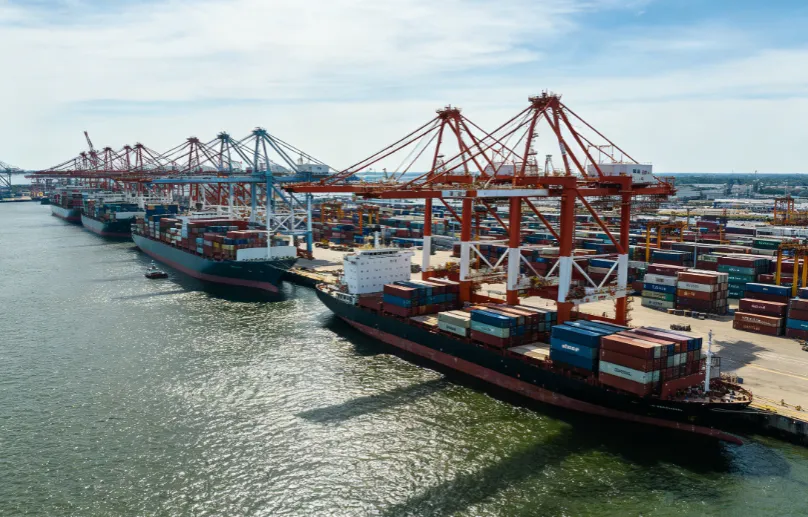
Why Ship from Shenzhen? Inside China’s Export Powerhouse
Before diving into shipping methods and costs, it is worth understanding why Shenzhen matters. The city does not just house one major port — it sits at the center of a logistics ecosystem that has been fine-tuned over four decades of breakneck manufacturing growth. Nearly 50,000 factories operate within a three-hour trucking radius, producing the electronics, furniture, textiles, machinery, and automotive parts that fill US-bound containers every day.
Shenzhen vs Other Chinese Ports for USA Shipments
When comparing departure points for trans-Pacific freight, Shenzhen holds a distinct advantage for goods originating in southern China. While Shanghai and Ningbo dominate the Yangtze River Delta, Shenzhen — together with Guangzhou and Hong Kong — anchors the Pearl River Delta, which accounts for roughly a quarter of China’s total export value. For importers sourcing from Guangdong province, routing cargo north to Shanghai adds 3–5 days of inland transit and hundreds of dollars in unnecessary trucking costs. Shipping from Guangdong province to USA through Shenzhen terminals keeps your supply chain lean and localized.
Shenzhen’s Three Container Ports: Yantian, Shekou & Chiwan
Not all Shenzhen port departures are created equal. Understanding the practical differences between the three container terminals can save you time and money on inland drayage.
| Port Terminal | Location | Best For | Major Carrier Alliances | Key Advantage |
|---|---|---|---|---|
| Yantian International Container Terminal | Eastern Shenzhen (Yantian District) | Large FCL shipments, trans-Pacific routes | Ocean Alliance (COSCO, CMA CGM, Evergreen), THE Alliance (Hapag-Lloyd, ONE, Yang Ming) | Deep-water berths handle ultra-large container vessels; most frequent direct sailings to US West Coast |
| Shekou Container Terminal | Western Shenzhen (Nanshan District) | Mixed FCL/LCL, factories in Bao’an & Dongguan | 2M Alliance (Maersk, MSC), plus independent carriers | Closer to western Shenzhen factories; lower trucking costs for cargo originating in Bao’an, Guangming, or Dongguan |
| Chiwan Container Terminal | Western Shenzhen (Nanshan District) | Supplementary capacity, niche routes | Mixed carrier coverage | Absorbs overflow during peak season; some specialized Southeast Asia transshipment connections |
Practical tip on Shenzhen Yantian port to USA shipping: If your suppliers are in Longgang, Pingshan, or Huizhou, Yantian is your closest terminal and you will save $100–$200 per container on trucking compared to Shekou. Conversely, if your factory is in Bao’an, Fuyong, or Dongguan’s Chang’an district, Shekou cuts drayage distance by 30–50 km. A knowledgeable local forwarder will route your cargo to the optimal terminal rather than defaulting to whichever is cheapest.
Shenzhen Bao’an International Airport: Air Freight Gateway
For time-sensitive cargo, Shenzhen Bao’an International Airport (SZX) offers direct freighter and belly-cargo capacity to major US hubs including Los Angeles (LAX), New York (JFK), and Chicago (ORD). Combined with the cargo airports in Guangzhou (CAN) and Hong Kong (HKG) — both within a two-hour trucking radius — the Pearl River Delta provides the densest air freight network in Asia.
Shipping Methods from Shenzhen to USA
Choosing the right shipping method is rarely about picking the fastest or the cheapest option in isolation — it is about finding the best fit for your cargo volume, timeline, and budget. The table below provides a side-by-side snapshot of the four primary methods. For a deeper cost-benefit analysis of the two most common modes, see our guide on Air Freight vs Sea Freight: Which is better for shipping from China to USA.
| Shipping Method | Transit Time | Cost Benchmark | Best For | Volume Threshold |
|---|---|---|---|---|
| Sea Freight FCL (Full Container Load) | 15–25 days (West Coast) 25–40 days (East Coast) | 20ft: $1,500–$4,000 40ft: $2,500–$6,000 | Bulk shipments, heavy cargo, Amazon FBA restocking | ≥15 CBM |
| Sea Freight LCL (Less than Container Load) | 20–35 days (West Coast) 30–45 days (East Coast) | $45–$150 per CBM | Small to medium shipments, trial orders, multi-supplier consolidation | 2–15 CBM |
| Air Freight | 3–10 days | $4–$10 per kg | High-value electronics, seasonal rush orders, trade show samples | 50–500 kg |
| Express Courier (DHL / FedEx / UPS) | 2–7 days | $7–$15 per kg | Small parcels, urgent documents, e-commerce samples | <100 kg |
Which Shipping Method Is Right for You? A Quick Decision Framework
Rather than sifting through every variable, use this decision logic based on what matters most for your shipment:
- Your cargo is over 15 CBM and cost is your top priority → Sea Freight FCL. You will get the lowest cost per unit, exclusive container use, and the most predictable transit window.
- Your cargo is under 15 CBM and you are not in a rush → Sea Freight LCL. You only pay for the space you use, making it the most budget-friendly option for smaller volumes.
- You need inventory in the US within 7–10 days → Air Freight. The 5–8× cost premium over sea freight is justified when stockouts cost more than the freight itself.
- You are shipping a single carton of samples or urgent documents → Express Courier. Door-to-door in under a week with full tracking is exactly what these services are built for.
Sea Freight from Shenzhen to USA
For the vast majority of B2B importers, sea freight from Shenzhen to USA is the backbone of their supply chain. It handles roughly 80% of all China-to-US cargo by volume and offers the most favorable economics for shipments exceeding a few cubic meters. But within sea freight, the choice between FCL shipping from Shenzhen to USA and LCL shipping from Shenzhen to USA has significant cost, timeline, and risk implications. For a comprehensive overview of ocean freight on this lane, visit our Sea Freight from China to USA resource.
FCL (Full Container Load): When You Own the Box
FCL (Full Container Load) means you book an entire container exclusively for your cargo. Nobody else’s goods share the space — your container is sealed at the factory or container freight station (CFS) and not opened again until it clears US customs.
Container types and their real-world capacities:
| Container Type | Internal Dimensions (L×W×H) | Max Payload | Typical CBM | Good For |
|---|---|---|---|---|
| 20ft General Purpose | 5.90 × 2.35 × 2.39 m | ~28,000 kg | 28–30 CBM | Heavy, dense goods (machinery, metal parts, ceramic tiles) |
| 40ft General Purpose | 12.03 × 2.35 × 2.39 m | ~26,500 kg | 58–62 CBM | Most common choice; best balance of capacity and cost |
| 40ft High Cube (HQ) | 12.03 × 2.35 × 2.69 m | ~26,300 kg | 65–68 CBM | Voluminous but lightweight goods (furniture, insulation, packaging) |
The FCL shipping journey, step by step:
- Day 0–2: Book space with the carrier and schedule an empty container pickup at the factory
- Day 2–3: Container is loaded at the supplier’s facility (or at a CFS if consolidating from multiple nearby factories)
- Day 3–4: Loaded container is trucked to Yantian or Shekou terminal; Chinese export customs declaration is filed
- Day 5–7: Container is loaded onto the vessel after customs release
- Day 7–27: Ocean transit across the trans-Pacific route (duration depends on destination)
- Day 27–29: Vessel arrives at US port; ISF filing and CBP entry are processed
- Day 29–32: Container is released, trucked or transloaded, and delivered to the final US address
FCL is the right choice when your shipment exceeds roughly 15 CBM, when your goods are heavy enough to hit the payload limit before the volume limit, or when cargo security and handling minimization are high priorities.
LCL (Less than Container Load): Pay Only for What You Use
LCL (Less than Container Load) consolidates cargo from multiple shippers into a single container. Your goods travel alongside shipments from other importers, sharing both the space and the cost — but also the handling and the timeline.
The LCL process differs from FCL in important ways. For detailed procedures and cost structures, see our LCL Shipping from China to USA page.
- Your cargo is delivered to an origin CFS in Shenzhen, where it waits to be consolidated with enough other cargo to fill a container
- At the destination port, the container is moved to a destination CFS for deconsolidation before individual shipments can be picked up or delivered
- Each extra handling step adds time and introduces a small risk of damage, misrouting, or delay
FCL vs LCL: Head-to-head comparison
| Factor | FCL | LCL |
|---|---|---|
| Cost per CBM | Lower when shipping ≥15 CBM | Lower when shipping <15 CBM |
| Transit speed | Faster (direct port-to-port, no consolidation wait) | Slower (+5–10 days for consolidation/deconsolidation) |
| Cargo security | Higher (sealed container, no co-mingling) | Moderate (shared container, multiple handling points) |
| Minimum charge | Full container rate regardless of actual load | Typically 1 CBM minimum; some forwarders accept 0.5 CBM |
| Destination fees | Terminal handling + trucking | Terminal handling + CFS deconsolidation + trucking (can be higher per CBM) |
| Best for | Established products with predictable volumes | New product testing, smaller buyers, multi-SKU shipments |
Air Freight from Shenzhen to USA
When sea freight’s 3–5 week timeline does not fit your business needs, air freight from Shenzhen to USA cuts transit to a matter of days. From Shenzhen Bao’an International Airport (SZX), direct cargo flights serve Los Angeles (LAX) in roughly 12–14 flight hours, with total door-to-door times of 5–8 days once ground handling, customs, and last-mile delivery are accounted for.
Air freight uses chargeable weight — the higher of actual gross weight and volumetric weight (length × width × height in cm ÷ 6,000). This means lightweight but bulky cargo can cost significantly more per kg than dense, compact cargo. As a rule of thumb, air freight becomes cost-competitive when the value density of your goods exceeds roughly $40–$50 per kg.
Express Courier from Shenzhen to USA (DHL, FedEx, UPS)
For small parcels, urgent samples, or direct-to-consumer e-commerce shipments, express shipping from Shenzhen to USA via DHL, FedEx, or UPS offers the simplest solution: drop off or schedule a pickup, and the courier handles everything — export clearance, air transport, US import clearance, and last-mile delivery — in 2–7 days. The trade-off is cost: at $7–$15 per kg, express is roughly 50–80% more expensive per kg than consolidated air freight. For shipments over 100 kg, switching to an air freight consolidator almost always saves money. For rate comparisons and carrier selection tips across DHL, FedEx, and UPS, read our full guide on Express Shipping from China to USA.
Shenzhen to USA Shipping Costs & Transit Times
Cost and speed are the two questions every importer asks first, so let us address them head-on with realistic, mid-2026 benchmark ranges. These figures are based on current market conditions and assume standard general cargo — hazardous materials, oversized items, or shipments requiring special handling will fall outside these ranges.
Sea Freight Transit Times from Shenzhen to Major US Ports
For transit time data across all Chinese departure ports, see our dedicated guide: How long does sea shipping take from China to USA.
| Origin | Destination (Port) | Transit Time (Port-to-Port) | Route |
|---|---|---|---|
| Shenzhen (Yantian) | Los Angeles / Long Beach | 15–20 days | Direct trans-Pacific |
| Shenzhen (Yantian) | Seattle / Tacoma | 16–22 days | Direct trans-Pacific (northern arc) |
| Shenzhen (Yantian) | Oakland | 18–24 days | Direct trans-Pacific |
| Shenzhen (Shekou) | Houston | 26–33 days | Via Panama Canal or Busan transshipment |
| Shenzhen (Yantian) | New York / New Jersey | 28–38 days | Via Panama Canal (all-water route) |
| Shenzhen (Yantian) | Savannah | 27–35 days | Via Panama Canal |
| Shenzhen (Shekou) | Miami | 30–40 days | Via Panama Canal |
For destination-specific transit times, see our city-level guides: Shipping from China to Miami, Shipping from China to Chicago, and Shipping from China to New York.
For Shenzhen to Los Angeles shipping, the direct trans-Pacific route across the Pacific offers the fastest ocean transit of any China-to-US lane — typically 15–18 days on the water with express ocean services pushing that to as low as 12–14 days. Shenzhen to New York shipping takes roughly twice as long due to the Panama Canal transit (the all-water route) or, alternatively, a land bridge route where cargo is discharged in Los Angeles and railed across the country — faster end-to-end (22–28 days) but more expensive. For a deeper look at East Coast routing, see our guide on the Shipping route from China to New York and for Gulf Coast options, check Container shipping from China to Houston. This West Coast vs East Coast shipping USA trade-off between transit time and cost is one of the most consequential decisions in your supply chain design.
Sea Freight Costs: FCL & LCL Rate Benchmarks
FCL container shipping rates — Shenzhen to USA (mid-2026 estimates):
For up-to-date rate analysis across all container types and US destinations, see our Container Shipping Costs from China to USA page.
| Container Type | West Coast (LA/LB) | East Coast (NY/NJ) | Gulf Coast (Houston) |
|---|---|---|---|
| 20ft GP | $1,500 – $2,800 | $3,200 – $4,800 | $2,400 – $3,800 |
| 40ft GP | $2,200 – $3,800 | $4,500 – $6,500 | $3,200 – $5,000 |
| 40ft HQ | $2,400 – $4,200 | $4,800 – $7,200 | $3,500 – $5,500 |
Note on rate transparency: The figures above represent the base ocean freight component only. Your all-in cost will include BAF (Bunker Adjustment Factor), THC (Terminal Handling Charges), documentation fees, customs brokerage, and destination charges. A professional forwarder will provide a line-item quote that breaks out each component — if you receive a single “all-in” number with no breakdown, ask for the detail. Legitimate forwarders have nothing to hide.
LCL shipping rates — Shenzhen to USA (per CBM):
| Destination | Cost per CBM (W/M) | Typical Transit (Port-to-Door) |
|---|---|---|
| Los Angeles / Long Beach | $65 – $130 | 22–30 days |
| New York / New Jersey | $120 – $200 | 32–42 days |
| Houston | $100 – $170 | 30–38 days |
| Chicago (via LA rail) | $110 – $180 | 27–35 days |
Container shipping rates China to USA are notoriously dynamic — they can swing 30–50% within a single quarter depending on capacity, fuel prices, and demand surges. Rates listed here reflect Q2 2026 conditions. If you are reading this during peak season (September through November), expect a 20–40% peak season surcharge on top of these baselines.
Air Freight Costs & Transit Times from Shenzhen
| Destination Airport | Transit (Door-to-Door) | Cost per kg (100–500 kg) | Cost per kg (500+ kg) |
|---|---|---|---|
| Los Angeles (LAX) | 5–7 days | $5.50 – $8.50 | $4.50 – $7.00 |
| New York (JFK) | 6–8 days | $6.00 – $9.00 | $5.00 – $7.50 |
| Chicago (ORD) | 6–9 days | $6.00 – $9.50 | $5.00 – $8.00 |
| Dallas (DFW) | 6–8 days | $6.00 – $9.00 | $5.00 – $7.50 |
How to Get the Cheapest Shipping Rate from Shenzhen to USA
Finding the cheapest shipping from Shenzhen to USA is not just about picking the lowest rate on a spreadsheet — it is about optimizing the entire shipment profile to minimize waste and avoid hidden costs. For a data-driven breakdown of pricing strategies, see our guide: Cheapest Shipping Rates from China to USA. Here are five strategies we apply for our clients every day:
- Right-size your consolidation. If you consistently ship 8–12 CBM per month, you are in the LCL “danger zone” where per-CBM costs are high but you are close to FCL viability. Consolidating two months of orders into a single 20ft container often cuts your per-unit freight cost by 30–40% — more than offsetting any incremental inventory carrying cost.
- Avoid the peak season shipping surcharge window. Rates predictably spike from September through early December (pre-holiday restocking) and again in the weeks before Chinese New Year (late January through February). If your inventory planning allows, ship during March–June or late July–early August for the most favorable rates of the year.
- Book 2–3 weeks in advance. Spot-market rates — where you book space on the vessel departing next week — carry a significant premium over forward bookings. Carriers reward predictability: a container booked three weeks out can cost $300–$600 less than the same container booked on a three-day lead time.
- Optimize your packaging for container density. Every cubic meter of wasted space inside a container is freight you are paying for but not using. Stackable cartons, right-sized outer packaging, and pallet optimization can increase container utilization by 10–15%, directly reducing your per-unit shipping cost.
- Consider West Coast discharge + rail for East Coast destinations. For shipments to Chicago, Dallas, or even the Midwest, landing at Los Angeles and using intermodal rail is often cheaper and only 3–5 days slower than the all-water Panama Canal route to New York. The all-water route vs land bridge route math changes with fuel prices, so ask your forwarder to quote both options.
A critical caveat: the cheapest quote is not always the cheapest shipment. Aggressively low freight rates sometimes mask inflated destination charges, or come from forwarders who lack direct carrier contracts and are simply reselling market space at a markup. Always compare the full door-to-door cost, not just the ocean freight line item.
Door-to-Door DDP Shipping from Shenzhen to USA
For many importers — especially those new to international trade or too lean to manage customs brokers on both sides of the Pacific — Shenzhen to USA door to door shipping under DDP terms is the closest thing to a logistics “easy button.” For a complete walkthrough of how delivered duty paid works — including cost breakdowns and Importer of Record responsibilities — see DDP shipping from China to USA. But DDP is not just a shipping method; it is a specific trade term with defined legal and financial responsibilities.
Understanding Incoterms 2020 for Shenzhen-to-USA Trade
Incoterms 2020 define who pays for what and where risk transfers between buyer and seller. For Shenzhen-to-USA shipments, four terms dominate:
| Incoterm | Who Handles Export? | Who Pays Ocean/Air Freight? | Who Handles US Customs? | Who Pays US Duties? | Risk Transfers At |
|---|---|---|---|---|---|
| EXW (Ex Works) | Buyer | Buyer | Buyer | Buyer | Factory door in Shenzhen |
| FOB (Free On Board) | Seller | Buyer | Buyer | Buyer | Loaded onto vessel at Shenzhen port |
| CIF (Cost, Insurance & Freight) | Seller | Seller | Buyer | Buyer | Destination port in USA |
| DDP (Delivered Duty Paid) | Seller/Forwarder | Seller/Forwarder | Seller/Forwarder | Seller/Forwarder | Buyer’s door in the USA |
How to choose:
- EXW works if you have an established forwarder physically present in Shenzhen who can handle factory pickup and export clearance — you retain full control but assume full logistical burden. For a detailed breakdown of buyer vs. seller responsibilities, see FOB shipping from China to USA.
- FOB is the market standard for experienced B2B importers who have a US customs broker and want to control carrier selection and freight negotiation. For a side-by-side cost and risk analysis, read CIF vs FOB: Which is better for US importers.
- CIF is a middle ground where the supplier arranges shipping to the US port, but you must still clear customs and arrange inland delivery — common for commodity goods where suppliers have shipping scale.
- DDP eliminates coordination complexity entirely. One forwarder handles everything: factory pickup in Shenzhen, Chinese export customs, international freight, US import clearance, duty and tax payment, and final delivery to your door. If you are a first-time importer, an Amazon FBA seller who cannot act as Importer of Record, or a business that simply wants one point of accountability, shipping from Shenzhen to USA DDP is almost always the right call.
What DDP Door-to-Door from Shenzhen Actually Covers
A true DDP service from a qualified forwarder should include every step in the chain:
- Factory pickup — truck picks up cargo from your supplier in Shenzhen, Dongguan, Guangzhou, or anywhere in Guangdong
- Export customs clearance — Chinese export declaration filed; any export licenses or inspections managed
- International transport — ocean (FCL or LCL) or air, depending on your chosen method
- US import customs clearance — CBP Form 7501 entry filed; ISF compliance verified
- Duties and taxes paid — US import duties (including Section 301 tariffs where applicable), MPF, and HMF are calculated and paid on your behalf
- Last-mile delivery — truck (LTL or FTL) or express parcel delivery from the port/airport to your final US address
- Proof of delivery — signed delivery confirmation; customs entry documentation provided for your records
DDP vs port-to-port: which one do you need? If you already have a trusted US customs broker, a warehouse near the port, and your own trucking arrangements, shipping from Shenzhen to USA port to port (typically under FOB or CIF terms) is sufficient and gives you more cost control. But if you would rather deal with one partner, one invoice, and one point of contact for the entire journey, DDP door-to-door is the path of least resistance.
Cargo Insurance: The Step Too Many Importers Skip
Every year, we see shipments damaged by rough seas, crushed during port handling, or lost to container fires — and every year, some of those importers learn the hard way that carrier liability covers only a fraction of the actual loss. Cargo insurance costs roughly 0.3%–1% of your shipment’s declared value and typically covers:
- Physical loss or damage during ocean/air transit
- Theft, pilferage, and non-delivery
- General average contributions (if a vessel declares an emergency and all cargo owners must share the loss)
- Warehouse-to-warehouse coverage under an All Risk policy
Skipping insurance to save a few hundred dollars on a shipment worth tens of thousands is a risk-reward equation that rarely favors the importer.
US Customs Clearance & Import Duties
The Pacific crossing is only half the journey. Getting your cargo released by US Customs and Border Protection (CBP) requires advance preparation and accurate paperwork — and the cost of getting it wrong ranges from multi-day delays to five-figure fines. For a step-by-step walkthrough of the entire entry process, refer to our guide on 2026 US customs clearance for imports from China.
The ISF Filing: Your Non-Negotiable First Step
Before your container even leaves Shenzhen, an ISF filing (Importer Security Filing) — commonly called “10+2” — must be submitted to CBP at least 24 hours before the vessel departs. The ISF requires 10 data elements from the importer (including seller, buyer, manufacturer, ship-to party, country of origin, and HS Code at the 6-digit level) plus 2 from the carrier (vessel stow plan and container status messages). CBP penalties for late, inaccurate, or missing ISF filings start at $5,000 and can reach $10,000 per violation — and CBP does issue them. Any competent freight forwarder managing Shenzhen-to-USA shipments should file the ISF on your behalf and provide confirmation before your container sails.
US Customs Entry (CBP Form 7501) & Customs Bonds
Once your cargo arrives at a US port, a formal entry (CBP Form 7501) must be filed within 15 calendar days. This entry declares the goods’ value, classification, and country of origin, and calculates the duties owed.
To clear customs, you need a Customs Bond — essentially an insurance policy guaranteeing that CBP will receive the duties and taxes owed. There are two types:
- Single-Entry Bond: Covers one shipment; cost is roughly 0.5%–1% of the bond amount. Suitable for infrequent importers (1–3 shipments per year).
- Continuous Bond: Covers all shipments for 12 months; annual cost is roughly $500–$800 for bonds up to $50,000. More economical for regular importers.
Common reasons for customs delays include incorrect or vague HS Code classification, declared values that appear below market norms (triggering a valuation review), and goods suspected of infringing trademarks or patents. Providing your forwarder with accurate, detailed commercial invoices and packing lists — with specific product descriptions, not vague categories like “electronics” or “accessories” — is the single most effective way to avoid a customs hold.
Section 301 Tariffs & US Import Duties on Chinese Goods
The most important cost variable that generic shipping guides ignore is the Section 301 tariffs imposed on Chinese-origin goods. For the latest policy developments and what they mean for your landed costs, see How U.S.-China Trade Tariffs Are Evolving in 2025: What Importers Need to Know. As of mid-2026, these additional duties remain in effect across four tariff lists:
| Section 301 List | Product Examples | Additional Duty Rate |
|---|---|---|
| List 1 | Industrial machinery, medical devices, certain electronics | 25% |
| List 2 | Plastics, chemicals, some auto parts | 25% |
| List 3 | Furniture, lighting, luggage, tires, many consumer goods | 25% |
| List 4A | Clothing, footwear, certain electronics accessories | 7.5% |
| Excluded Products | Laptops, cell phones, video game consoles, certain toys | 0% (currently excluded) |
How to estimate your actual import cost: Find your product’s HS Code (your supplier can provide this, or you can search the US International Trade Commission’s HTS online database), identify which Section 301 list it falls under, and add the applicable duty on top of the standard MFN (Most Favored Nation) rate. Additionally, CBP assesses the Merchandise Processing Fee (MPF) at 0.3464% of entered value (minimum $27.75, maximum $538.40 per entry) and the Harbor Maintenance Fee (HMF) at 0.125% for ocean shipments.
Required Shipping Documentation Checklist
A complete and accurate document package is your best defense against customs delays:
| Document | Purpose | Who Prepares It | Common Mistakes |
|---|---|---|---|
| Commercial Invoice | Declares transaction value, buyer/seller, HS codes, country of origin | Supplier / Exporter | Vague product descriptions; missing HS codes; undervaluation |
| Packing List | Details weight, dimensions, and package count of every carton/pallet | Supplier / Exporter | Weights and dimensions that do not match the physical cargo |
| Bill of Lading (B/L) (sea) or Air Waybill (AWB) (air) | Contract of carriage between shipper and carrier | Carrier / Forwarder | Incorrect consignee or notify party; missing “Telex Release” instruction |
| Certificate of Origin | Verifies country of manufacture; required for preferential tariff claims | Supplier / Chamber of Commerce | Not requested when needed for tariff exclusion claims |
| ISF Confirmation | Proof that the 10+2 filing was accepted by CBP | Freight Forwarder | Not filed, or filed late; wrong HS Code at 6-digit level |
Amazon FBA Shipping from Shenzhen to USA
If you are an Amazon seller sourcing from China, shipping from Shenzhen to USA Amazon FBA is likely the single largest line item in your logistics budget — and the one where mistakes carry the steepest penalties. Amazon’s fulfillment centers are not ordinary warehouses; they operate under strict inbound requirements that, if violated, result in refused deliveries, carrier redelivery fees, and stranded inventory.
The FBA Head-Haul Workflow from Shenzhen
Amazon FBA head-haul logistics from Shenzhen follows this sequence:
- Factory pickup & quality inspection — Your forwarder collects the goods and conducts a basic QC check (quantity, visible damage, labeling accuracy)
- FNSKU labeling — Every sellable unit must be labeled with a scannable FNSKU barcode matching your Amazon listing
- Palletizing & stretch-wrapping — Cartons are built onto pallets meeting Amazon’s specifications
- Chinese export customs — Export declaration filed by your forwarder
- Ocean or air freight — Transport to the US
- US customs clearance — Entry filed; duties paid (under DDP, your forwarder handles this)
- Carrier appointment scheduling — Your forwarder books a delivery slot at the designated Amazon fulfillment center
- Last-mile truck delivery — Pallets are delivered during the approved window
Critical FBA Requirements Most First-Time Sellers Overlook
Amazon’s inbound requirements are detailed and non-negotiable. The most common causes of rejected FBA deliveries include:
- Unscannable FNSKU labels — Barcodes must print clearly, without smudging or creasing, and must be placed on a flat surface (not across box edges). We recommend thermal-transfer printing rather than inkjet for durability during ocean transit.
- Incorrect pallet specifications — Amazon standard pallets are 1.2 m × 1.0 m (48″ × 40″), with a maximum height of 1.8 m (72″) for single-stacked pallets. Pallets must be four-way access, in good condition, and fully wrapped with transparent stretch film.
- No carrier appointment — You cannot simply show up at an Amazon fulfillment center. A delivery appointment must be scheduled in advance through Amazon’s Carrier Central portal. Showing up without an appointment means the truck is turned away — and you pay for the return trip plus redelivery.
- Floor-loaded containers — Some sellers ship cartons loose inside a container (floor-loaded) rather than palletized. While this maximizes container density, many Amazon facilities refuse floor-loaded deliveries outright. Always confirm your target FC’s policy before choosing this approach.
How a Specialized FBA Forwarder Prevents These Problems
A general freight forwarder can move your cargo from Shenzhen to the US. An Amazon FBA specialist forwarder in Shenzhen can receive your goods at their local warehouse, inspect labels, build compliant pallets, file ISF and customs entries, book carrier appointments, and deliver to Amazon on schedule — all while you monitor progress from your Seller Central dashboard. This end-to-end capability, combined with DDP terms, is why most experienced Amazon sellers partner with a Shenzhen-based forwarder rather than coordinating five separate vendors. For sellers who want a single partner handling every step — from Shenzhen pickup to Amazon check-in — explore our Amazon FBA freight forwarder shipping from China to USA service.
How to Choose a Freight Forwarder in Shenzhen
Choosing a Shenzhen to USA freight forwarder is one of the most consequential decisions you will make for your supply chain. The right partner saves you money, prevents costly mistakes, and becomes a strategic asset. The wrong one can leave your cargo sitting at a port while demurrage charges accumulate, with nobody answering your messages.
What to Look for in a Shenzhen-Based Freight Forwarder
| Criteria | Why It Matters | What to Verify |
|---|---|---|
| Local physical presence in Shenzhen | A forwarder with an office near Yantian or Shekou can personally oversee loading, inspect cargo pre-shipment, and resolve last-minute issues that a remote agent cannot | Ask for their office address; verify on Google Maps or during your next sourcing trip |
| Proven USA lane expertise | US customs procedures, Section 301 tariff classifications, and CBP compliance requirements are unique — experience on other trade lanes does not transfer | Ask for a recent example of a Shenzhen-to-USA shipment similar to yours |
| DDP capability & US Customs Bond | A forwarder offering true DDP must hold a US Continuous Customs Bond and act as Importer of Record — not all do | Ask directly: “Do you hold your own US Customs Bond, and do you act as the Importer of Record on DDP shipments?” |
| FIATA / IATA certifications | These internationally recognized credentials indicate the forwarder meets minimum professional and financial standards | Request certification numbers or documentation |
| Direct carrier contracts | Forwarders with direct container allocations from COSCO, Maersk, MSC, etc. can offer better rates and guaranteed space during peak season — those relying solely on the spot market cannot | Ask: “Do you have direct annual contracts with ocean carriers, or do you purchase space on the spot market?” |
| Transparent, line-item pricing | A professional forwarder provides a quote that breaks out ocean freight, BAF, origin charges, destination charges, customs brokerage, and trucking — so you know exactly what you are paying for | Request a sample quote format before committing |
| Dedicated account management | You want one person who knows your business and your cargo, not a rotating cast of customer service representatives | Ask: “Will I have a single point of contact for my account?” |
Red Flags That Should Make You Walk Away
- No verifiable physical office address — A WeChat contact and a mobile number is not a freight forwarding company; it is a reseller with no operational capability.
- Quotes significantly below market — If everyone else is quoting $1,800 for a 20ft to LA and one forwarder quotes $900, they are either planning to make it up on hidden destination charges or they do not actually have the space.
- Refusal to share customs bond or IOR information — Legitimate DDP providers are transparent about their US customs compliance infrastructure. Evasion on this question is a major red flag.
- No real case studies or client references — A forwarder with genuine experience on the Shenzhen-to-USA lane should be able to describe a recent shipment (without disclosing client names) in specific, operational detail.
Why Dantful.US for Your Shenzhen-to-USA Shipments
If you have read this far, you now have a checklist of what a qualified Shenzhen to USA freight forwarder should offer. Here is how Dantful.US International Logistics measures up — and why thousands of importers trust us with their trans-Pacific cargo:
- 15+ years of hands-on freight forwarding experience with dual headquarters in Shenzhen and warehousing presence in the United States. We are not a desk in a shared office — we are a full-service logistics provider with boots on the ground at both ends of your supply chain.
- FIATA & IATA dual-certified — credentials that require demonstrated professional competence, financial stability, and adherence to international freight forwarding standards.
- True DDP door-to-door service including US Customs Bond, Importer of Record, Section 301 tariff payment, and last-mile delivery — one invoice, one point of accountability, zero surprises.
- Direct annual contracts with major ocean carriers (COSCO, Maersk, MSC, CMA CGM, Evergreen) — which means competitive rates with guaranteed space, even when the spot market tightens during peak season.
- Dedicated account manager — a single, named professional who knows your products, your preferred shipping cadence, and your Amazon FBA requirements. No call-center roulette.
- Amazon FBA specialist team that handles FNSKU labeling, palletization, carrier appointment booking, and multi-FC distribution — so your inventory lands at Amazon on time and compliant.
Your cargo represents your business. The forwarder you choose should treat it that way.
FAQs:
Q1: How long does shipping from Shenzhen to USA take?
Sea freight to the West Coast (Los Angeles, Long Beach) takes 15–25 days port-to-port; to the East Coast (New York, Savannah) takes 25–40 days. Air freight takes 3–10 days door-to-door. Express courier services take 2–7 days. These are typical ranges — actual transit depends on the specific port pair, carrier schedule, and whether any customs or weather delays occur.
Q2: How much does shipping from Shenzhen to USA cost?
Sea freight LCL starts at roughly $45–$150 per CBM. FCL container shipping ranges from $1,500–$4,200 for a 20ft to the West Coast, up to $4,800–$7,200 for a 40ft High Cube to the East Coast. Air freight runs $4–$10 per kg. Express courier services cost $7–$15 per kg. All rates fluctuate with seasonality, fuel prices, and market demand — always request a current, shipment-specific quote.
Q3: What is the cheapest way to ship from Shenzhen to USA?
For shipments over 15 CBM, FCL sea freight offers the lowest cost per unit. For smaller volumes, LCL sea freight is the most economical choice. The cheapest option is not always the most cost-effective overall — hidden charges, longer transit, and increased handling risk can erode apparent savings. See Section 4 for a full breakdown of cost-optimization strategies.
Q4: Can I ship from Shenzhen to USA door to door?
Yes. DDP (Delivered Duty Paid) door-to-door service covers the entire journey — factory pickup in Shenzhen, Chinese export clearance, international freight, US import customs clearance, duty and tax payment, and final delivery to your US address. This is the recommended option for first-time importers and Amazon FBA sellers.
Q5: What documents are needed to ship from Shenzhen to USA?
The core documents are: Commercial Invoice, Packing List, Bill of Lading (sea) or Air Waybill (air), and Certificate of Origin. For ocean shipments, an ISF (Importer Security Filing) must also be submitted to CBP at least 24 hours before vessel departure. See Section 6.4 for a detailed document checklist with common errors to avoid.
Q6: How do I ship from Shenzhen to Amazon FBA in the USA?
You need an FBA-experienced freight forwarder who can handle: factory pickup, FNSKU labeling, palletization to Amazon specifications, Chinese export customs, international freight, US customs clearance, carrier appointment scheduling, and final delivery to the designated fulfillment center. Attempting to coordinate these steps across multiple vendors dramatically increases the risk of rejected deliveries and stranded inventory.
Q7: Do I need a customs broker to import from Shenzhen to the USA?
If you ship under DDP terms, your freight forwarder handles all customs clearance on your behalf. If you ship under FOB, CIF, or EXW terms, you (the buyer/importer) must engage a US customs broker to file the entry and pay duties. Many importers choose DDP specifically to eliminate the need to manage a separate customs broker relationship.
Q8: What is the difference between Yantian and Shekou port for shipping to the USA?
Yantian is Shenzhen’s largest deep-water terminal with the highest frequency of direct trans-Pacific sailings — ideal for FCL shipments where schedule reliability is critical. Shekou, located in western Shenzhen, offers shorter trucking distances for factories in Bao’an and Dongguan and provides additional carrier choice through the 2M Alliance. Your forwarder should route your cargo to the terminal that minimizes total door-to-door cost, not default to one or the other.
Ready to ship from Shenzhen to the USA? Contact Dantful.US today for a free, no-obligation shipping quote — or reach out to discuss your specific logistics challenges with one of our freight specialists.
Leave a reply