

If you are importing goods from Taiwan to Brazil, the first number you need is the shipping cost from Taiwan to Brazil — and not just the freight quote, but the full landed cost including Brazil’s notoriously complex import taxes. Get this wrong, and your “great deal” on Taiwanese electronics or machinery can turn into a cash-flow nightmare before your container even clears Santos.
Brazil operates one of the world’s most expensive import regimes. Between volatile ocean freight rates, cumulative tax-on-tax duties, and port fees that catch first-timers off guard, the true cost of shipping from Taiwan to Brazil often lands 50–100% above the commercial invoice value. In our 15+ years on this lane, we have seen importers burn through their entire margin on a single miscalculated tax line. At Dantful.US International Logistics, we built this guide to give you real 2026 rate ranges, a complete step-by-step landed-cost calculation, and practical strategies to control every dollar of your shipping spend.
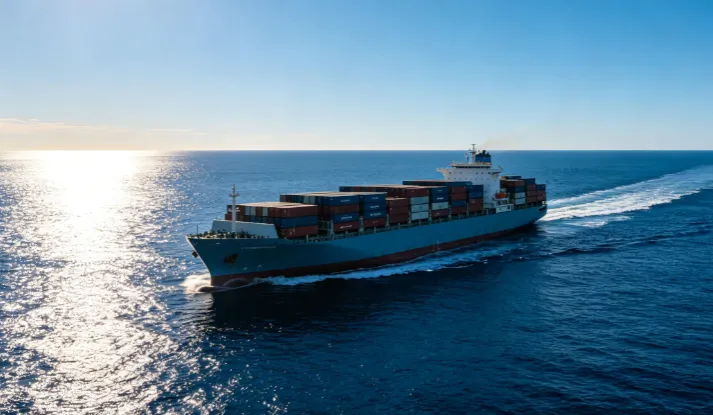
How Much Does It Cost to Ship from Taiwan to Brazil?
The answer depends on how much you are shipping, how fast you need it, and whether you want port-to-port or door-to-door service. Below are the real rate ranges our team sees on this lane in 2026, broken down by shipping mode.
Sea Freight Costs: FCL (Full Container Load)
FCL (Full Container Load) is the most cost-effective option when you have enough cargo to fill a container — typically 15 CBM or more. You pay for the entire container regardless of how full it is, which means your cost per unit drops as utilization rises.
| Container Type | Capacity | Off-Peak (Q1 / Q3) | Peak Season (Q2 / Q4) |
|---|---|---|---|
| 20ft GP | 28 CBM / ~18 tons | $2,800 – $3,800 | $4,500 – $6,000 |
| 40ft GP | 56 CBM / ~26 tons | $3,500 – $5,200 | $5,500 – $8,000 |
| 40ft HQ | 68 CBM / ~26 tons | $3,800 – $5,500 | $6,000 – $8,500 |
Rates are port-to-port, Kaohsiung → Santos. These are base ocean freight (BAS) rates; surcharges — BAF (Bunker Adjustment Factor), PSS (Peak Season Surcharge), and THC (Terminal Handling Charges) — add $400–$1,200 per container depending on the season. Always request an all-in quote.
When FCL makes financial sense: Your volume exceeds 15 CBM, you need dedicated container security for high-value goods, or per-unit shipping cost is your primary concern. At 22 CBM, for example, a 20ft FCL typically costs 25–40% less per CBM than shipping the same volume via LCL. For a complete breakdown of carrier options, port-specific routing, and documentation requirements, see our dedicated sea freight from Taiwan to Brazil guide.
Sea Freight Costs: LCL (Less than Container Load)
LCL (Less than Container Load) lets you share container space with other shippers, paying only for the cubic meters you occupy. It is the go-to choice for smaller volumes but carries a higher per-CBM rate.
| Volume Bracket | Off-Peak Rate (per CBM) | Peak Season Rate (per CBM) |
|---|---|---|
| 1–5 CBM | $120 – $200 | $150 – $250 |
| 5–10 CBM | $90 – $150 | $120 – $200 |
| 10–15 CBM | $65 – $120 | $100 – $180 |
Rates are port-to-port, Kaohsiung/Keelung → Santos. Minimum charge is typically 1 CBM. LCL adds 3–7 extra days for consolidation and deconsolidation at both ends.
When LCL makes financial sense: Shipments under 14–15 CBM, testing a new supplier with a trial order, or low-volume e-commerce batches. The sweet spot is 5–10 CBM — enough volume to access mid-tier rates without paying for empty container space.
Air Freight Costs: Rate Brackets by Weight
Air freight from Taiwan to Brazil costs significantly more per kilogram than ocean freight, but the speed difference is dramatic. Rates are tiered — the heavier your shipment, the lower your per-kg cost.
| Weight Bracket | Rate (USD/kg) | Airport-to-Airport Transit |
|---|---|---|
| +45 kg | $8.50 – $10.20 | 5–7 days |
| +100 kg | $7.80 – $9.50 | 4–6 days |
| +300 kg | $6.90 – $8.40 | 4–6 days |
| +500 kg | $6.20 – $7.80 | 3–5 days |
| +1000 kg | $5.80 – $7.20 | 3–5 days |
Rates are airport-to-airport, TPE (Taoyuan) → GRU (São Paulo-Guarulhos). No direct flights exist — cargo transships via LAX, MIA, AMS, or DXB. Airlines charge based on chargeable weight: the greater of actual weight or volumetric weight (L × W × H in cm ÷ 6000).
When air freight makes financial sense: Cargo value exceeds $100/kg, production lines are waiting on critical parts, or you are shipping samples for a time-sensitive buyer presentation. At 500 kg, air freight costs roughly $3,100–$3,900 versus ~$350 for LCL ocean — the premium buys you 4–6 days instead of 40–50. For weight-bracket pricing, airline options, and transshipment routing details, read our full air freight from Taiwan to Brazil guide.
Express Courier Costs: Small Parcels & Samples
For documents, samples, and urgent spare parts under 35 kg, express courier is the fastest option — but the most expensive per kilogram.
| Weight | Estimated Cost (USD) | Door-to-Door Transit |
|---|---|---|
| 0.5 kg (documents) | $40 – $80 | 2–4 days |
| 1 kg | $60 – $120 | 2–4 days |
| 5 kg | $150 – $300 | 3–5 days |
| 10 kg | $250 – $450 | 3–5 days |
| 20 kg | $400 – $700 | 3–6 days |
DHL, FedEx, and UPS all serve the Taiwan–Brazil lane. Note: Brazil applies a 60% flat import tax on express shipments under $3,000 — the Remessa Conforme program may offer lower rates for compliant e-commerce shipments.
Door-to-Door DDP Shipping Costs: All-Inclusive Estimates
DDP (Delivered Duty Paid) gives you one all-in price covering everything — pickup at the Taiwan supplier, export customs, ocean or air freight, Brazil import customs, all duties and taxes, and last-mile delivery to the final address. Under Incoterms 2020 (published by the International Chamber of Commerce), DDP places the maximum obligation on the seller — making it the most convenient but also the most cost-variable option for Brazil.
| Mode | All-In Cost (USD) | Total Transit |
|---|---|---|
| LCL DDP (per CBM) | $350 – $550 / CBM | 40–55 days |
| 20ft FCL DDP | $6,500 – $10,000 | 35–50 days |
| 40ft FCL DDP | $9,000 – $14,000 | 35–50 days |
| Air DDP (per kg) | $12 – $18 / kg | 7–12 days |
All-inclusive: supplier pickup → Taiwan export clearance → international freight → Brazil import clearance → II/IPI/PIS/COFINS/ICMS → last-mile trucking. DDP to Brazil carries higher cost variability than most trade lanes due to cumulative taxation and state-varying ICMS rates — always work with a forwarder that has proven Brazil DDP experience. For a step-by-step walkthrough of the end-to-end process, see our door to door shipping from Taiwan to Brazil service page.
What Drives Taiwan→Brazil Shipping Costs Up or Down?
Understanding the levers behind your freight quote helps you time shipments for lower rates and avoid expensive surprises.
Fuel Prices & BAF: The Bunker Adjustment Factor ties ocean freight directly to global fuel markets. In 2025–2026, post-Red Sea disruption, BAF remains elevated but is stabilizing — expect $100–$300 per-container fluctuation between quarters.
Peak Season Surcharges (PSS): The Brazil trade lane has three peak windows: pre-Carnival (January–February), mid-year restock (June–August), and pre-Christmas (September–November). During these periods, carriers add $500–$1,500 per container in PSS. The best booking windows for lower rates are March–May and early September.
Container Type & Volume: A 20ft container costs less in absolute terms, but a 40ft or 40HQ delivers far lower cost per CBM at higher volumes. The FCL breakpoint — where filling your own container becomes cheaper than LCL — is roughly 12–15 CBM. Shipments over 20 metric tons may also trigger heavy-cargo surcharges.
Port Congestion: Santos handles ~40% of Brazil’s container traffic, and wait times stretch to 3–7 days during peak periods. Diverting to Paranaguá or Navegantes can reduce port fees by 10–15%, though inland trucking costs may partially offset the savings.
Currency: Freight is quoted in USD. When the Brazilian Real (BRL) is strong against the dollar, your effective landed cost in local currency drops — a good time to lock in rates.
Taiwan to Brazil Transit Times: Ports, Routes & How Long It Takes
Your choice of departure port in Taiwan and arrival port in Brazil affects both cost and transit time.
Taiwan Departure Ports
| Port | Best For | Notes |
|---|---|---|
| Kaohsiung | FCL, heavy/oversized cargo | Largest container port; deepest berths; most frequent sailings |
| Keelung | LCL, electronics, high-value goods | Serves Taipei metro & Hsinchu Science Park |
| Taichung | Industrial machinery, tools | Central Taiwan manufacturing hub |
Taiwan export clearance is efficient — typically 1–2 days. Compared to China-origin shipments, Taiwan exports face fewer quota restrictions and lighter documentation burdens. If you also source from the mainland, our shipping from China to Brazil guide covers that lane in comparable depth.
Brazil Arrival Ports
| Port | Serves | Strategic Note |
|---|---|---|
| Santos | São Paulo (economic heart) | Largest port; ~40% of volume; longest queues |
| Paranaguá | Paraná, Curitiba | Lower congestion; good alternative for southern Brazil |
| Navegantes / Itajaí | Santa Catarina | Growing hubs; lowest inland cost for SC-based importers |
Match your port to your destination. Shipping to Santos when your warehouse is in Curitiba adds unnecessary inland trucking expense. Paranaguá would be the smarter, cheaper choice.
Typical Transit Times
| Route | Sea (Port-to-Port) | Air (Airport-to-Airport) |
|---|---|---|
| Kaohsiung → Santos (via Singapore) | 35–45 days | — |
| Keelung → Rio de Janeiro (via Hong Kong) | 38–48 days | — |
| Taoyuan → GRU (via LAX/MIA) | — | 4–7 days |
Add 7–14 days for door-to-door (pickup, customs at both ends, last-mile delivery). LCL adds another 3–7 days for consolidation/deconsolidation. For a visual breakdown of the major transshipment hubs that Taiwan-origin cargo shares with mainland routes, see our shipping routes from China to Brazil guide.
Brazil Import Duties: The Hidden Half of Your Shipping Cost
Here is the reality most first-time importers miss: the freight bill is only part of the story. Brazil’s import tax system can add 50–100% to your CIF value — and these taxes are non-negotiable, non-refundable, and cumulative (each tax inflates the base for the next).
Brazil’s Cumulative Tax Structure
| Tax | Full Name | Rate | Calculated On |
|---|---|---|---|
| II | Import Duty | 0% – 35% | CIF Value |
| IPI | Industrialized Products Tax | 0% – 30% | CIF + II |
| PIS | Social Integration Program | 2.10% | CIF Value |
| COFINS | Social Security Financing | 9.65% | CIF Value |
| ICMS | State VAT | 17% – 25% | CIF + II + IPI + PIS + COFINS |
Your single most important task before shipping: get the correct NCM code (Nomenclatura Comum do Mercosul — Brazil’s 8-digit HS code) for every product. The NCM, administered by Brazil’s Receita Federal (Federal Revenue Service) through the SISCOMEX system, determines your II rate — and the difference between 12% and 35% on a $50,000 shipment is $11,500 in extra duties.
Real-World Landed-Cost Calculation: Taiwan Electronics to São Paulo
No competitor article provides this. Here is a real shipment, with real numbers, so you can see exactly where your money goes.
The Shipment:
- Cargo: Integrated circuits (NCM 8542.31.90) | 3 CBM | 500 kg | Value: $20,000
- Route: Keelung → Santos (LCL) | Incoterms: FOB Keelung
Step 1 — Origin Charges (Taiwan):
| Item | Cost (USD) |
|---|---|
| Supplier pickup (Taoyuan → Keelung CFS) | $150 |
| Export customs clearance | $80 |
| Documentation (B/L, Certificate of Origin) | $50 |
| CFS receiving & handling | $120 |
| Origin Subtotal | $400 |
Step 2 — Ocean Freight:
| Item | Cost (USD) |
|---|---|
| LCL ocean freight (3 CBM × $110/CBM) | $330 |
| BAF (bunker surcharge) | $45 |
| Freight Subtotal | $375 |
Step 3 — CIF Value: $20,000 (goods) + $100 (cargo insurance) + $375 (freight) = $20,475
We strongly recommend cargo insurance for all Brazil-bound shipments — port theft and handling damage are real risks at Brazilian terminals. Insurance is inexpensive; an uncovered loss is not.
Step 4 — Destination Charges (Brazil):
| Item | Cost (USD) |
|---|---|
| THC (Terminal Handling) | $85 |
| Customs brokerage fee | $350 |
| Port storage (3 free days, 2 paid days) | $60 |
| ISPM 15 inspection | $40 |
| Inland trucking (Santos → São Paulo, 80 km) | $280 |
| Destination Subtotal | $815 |
Step 5 — Brazil Import Taxes (Cumulative):
| Tax | Calculation | Amount (USD) |
|---|---|---|
| II (16%) | $20,475 × 16% | $3,276 |
| IPI (0% for ICs) | ($20,475 + $3,276) × 0% | $0 |
| PIS (2.10%) | $20,475 × 2.10% | $430 |
| COFINS (9.65%) | $20,475 × 9.65% | $1,976 |
| ICMS — SP (18%) | Grossed-up base calculation | $5,310 |
| Total Import Taxes | $10,992 |
*ICMS in São Paulo uses a grossed-up tax base: (CIF + II + IPI + PIS + COFINS) ÷ (1 – 0.18) × 18% = $26,157 ÷ 0.82 × 18% ≈ $5,310.
Step 6 — Grand Total Landed Cost:
| Component | Amount (USD) | % of Total |
|---|---|---|
| Cargo value | $20,000 | 61.3% |
| Origin charges | $400 | 1.2% |
| Ocean freight | $375 | 1.1% |
| Cargo insurance | $100 | 0.3% |
| Destination charges | $815 | 2.5% |
| Import taxes & duties | $10,992 | 33.6% |
| Total Landed Cost | $32,682 | 100% |
Key takeaway: The final landed cost is 63.4% above the invoice value. Import taxes alone contribute 55% — more than the cargo value of many shipments. If you budgeted only the freight cost without modeling the tax impact, you would be short by nearly $11,000 on this single LCL shipment. This is why landed-cost analysis for Brazil is not optional — it is the difference between a profitable import and a costly surprise.
Essential Documents & Compliance
For smooth Brazil customs clearance, have these ready before your cargo sails:
- Commercial Invoice — detailed product descriptions, NCM codes, values; signed in blue ink (still required by some Brazilian customs officers)
- Packing List — must match the invoice to the gram; discrepancies trigger Red-channel inspections
- Original Bill of Lading — courier the physical original to your Brazil broker ahead of cargo arrival
- Certificate of Origin — issued in Taiwan; proves origin for any applicable trade preferences
- ISPM 15 Certificate — mandatory for ALL wood packaging (pallets, crates, dunnage). Brazilian authorities inspect this aggressively — a single untreated pallet can hold an entire container at the port. We have personally handled shipments where a supplier’s unmarked pallet triggered a Red-channel inspection, adding 12 days and $1,800 in port storage fees to an otherwise routine clearance.
- Import License (LI) — only for restricted goods; obtain BEFORE shipping
You will also need RADAR/SISCOMEX registration (Brazil’s importer licensing system). Foreign companies without a Brazilian CNPJ must use an Importer of Record (IOR) — a service that experienced DDP forwarders provide.
Sea Freight vs. Air Freight: A Quick Cost-Performance Comparison
| Factor | Sea FCL | Sea LCL | Air Freight | Express Courier |
|---|---|---|---|---|
| Relative Cost | Lowest ($) | Low ($$) | High ($$$) | Highest ($$$$) |
| Door-to-Door Transit | 40–60 days | 42–58 days | 7–14 days | 3–7 days |
| Minimum Volume | 15+ CBM | 1 CBM | 45 kg | 0.5 kg |
| Best For | Bulk, regular orders | Trial batches, small volumes | Urgent, high-value cargo | Samples, documents |
The cost-speed trade-off in practice: A 500 kg air freight shipment from Taiwan to Brazil costs roughly $3,100–$3,900 and arrives in 4–6 days. The same cargo via LCL ocean costs about $330–$550 in freight and arrives in 42–58 days. Air freight makes sense when the value of speed — avoiding production downtime, capturing a market window — exceeds the $2,500+ premium. For a broader decision-making framework on choosing between transport modes, read our air freight vs sea freight comparison — the cost-speed logic applies across all major trade lanes.
Choosing Incoterms That Protect Your Budget
Your Incoterms 2020 choice — the standardized trade terms published by the International Chamber of Commerce (ICC) — directly determines how much of the shipping cost you control versus how much you delegate.
| Your Situation | Recommended Incoterm | Cost Implication |
|---|---|---|
| First-time importer, no Brazil entity | DDP | Higher all-in price, but one predictable total — no surprises |
| Experienced, have Brazil customs broker | FOB or CIF | You control carrier selection and can negotiate direct rates |
| High-value electronics, IP-sensitive | FOB + own insurance | Full control over carrier, routing, and insurance terms |
| Trial order, testing the market | DDP or LCL CIF | Minimize complexity while you validate demand |
A note on DDP to Brazil: DDP is convenient, but Brazil’s cumulative tax-on-tax system and state-varying ICMS rates (17–25% depending on the state) make cost prediction harder here than on almost any other trade lane. Only work with forwarders who have documented, proven Brazil DDP experience — and who provide pre-shipment cost breakdowns, not vague estimates. For a detailed comparison of how different trade terms affect your cost and risk exposure, read our EXW vs FOB Explained: Cost, Risk, and Responsibility Comparison.
7 Ways to Lower Your Taiwan→Brazil Shipping Costs
These are the strategies our team applies daily for clients on this lane.
1. Consolidate to hit the FCL threshold. At 15+ CBM, a 20ft FCL is almost always cheaper per CBM than LCL. Combine orders from 3–4 Taiwan suppliers into one container at a CFS (Container Freight Station) in Keelung or Kaohsiung. We routinely help clients save $1,200–$2,000 per consolidated load this way. For specific container cost benchmarks, see our 20 ft container shipping cost from China to Brazil breakdown — the per-container pricing structure applies similarly for Taiwan-origin cargo.
2. Book off-peak. March–May and early September offer the lowest rates with the best capacity. Avoid January (pre-Carnival rush) and October–November (pre-Christmas peak) unless you are willing to pay a 20–50% PSS premium.
3. Optimize container utilization. A 40ft HQ gives you 68 CBM versus 56 CBM in a standard 40ft — roughly a 21% capacity increase for a 10–15% price increase. If your cargo is volume-heavy (electronics, furniture, packaging materials), the upgrade pays for itself.
4. Match your Brazil port to your destination. Shipping to Santos when your warehouse is in Santa Catarina adds 500+ km of unnecessary trucking. Use Paranaguá for Paraná, Navegantes for SC — the port fee savings often offset any difference in ocean freight.
5. Pre-clear your documents. Send complete documentation to your Brazilian customs broker 7–10 days before the vessel arrives. Demurrage costs $40–$150/day for a 20ft and $80–$300/day for a 40ft once free time expires. Negotiate 14–21 days of free time upfront — standard is 7–10 days, and Brazil customs can easily consume that.
6. Get NCM codes right before shipping. A Brazilian despachante aduaneiro (customs broker) can classify your goods before they leave Taiwan. A wrong NCM code not only triggers higher duty rates — it can result in fines up to 100% of the tax difference. Some NCM codes qualify for ex-tarifário (duty reduction on capital goods and IT equipment not manufactured in Brazil) — a broker can identify these savings.
7. Partner with a specialist. A forwarder with direct carrier contracts on the Asia–Brazil lane accesses rates 10–20% below the spot market, has in-country brokerage relationships that speed clearance, and consolidates LCL volumes for better per-CBM pricing. Generalist forwarders routing your cargo through three intermediaries cannot match this.
Why Importers Choose Dantful.US for Taiwan→Brazil Shipping
At Dantful.US International Logistics, the Taiwan–Brazil lane is not an afterthought — it is one of our core trade routes. We are a FIATA and IATA certified freight forwarder with 15+ years of hands-on experience moving cargo from Kaohsiung, Keelung, and Taichung to Santos, Paranaguá, and Navegantes.
What this means for your costs:
- Direct carrier contracts with Evergreen, Yang Ming, Wan Hai, COSCO, and CMA CGM — rates 10–20% below spot market, with stable allocation even during peak season
- In-country Brazil customs brokerage — no third-party intermediaries adding markup to your clearance fees
- Transparent DDP pricing — pre-shipment breakdown showing every cost component before you commit, with no hidden fees or post-shipment surcharges
- Dedicated account manager — one person managing your entire shipment, not a different agent at each handoff
“A Taiwanese PCB manufacturer shipping 40ft containers to their São Paulo distribution center switched to us from a generalist forwarder. By consolidating their bi-weekly LCL orders into FCL and optimizing routing through Kaohsiung, we cut their annual logistics spend by 22% — while improving delivery predictability.”
FAQs
How much does a 20ft container cost from Taiwan to Brazil?
Port-to-port (Kaohsiung → Santos): $2,800–$3,800 off-peak, $4,500–$6,000 peak season. Door-to-door DDP all-inclusive: $6,500–$10,000. The wide range reflects seasonal surcharges, fuel costs, and destination port selection. Always request a live quote tied to your specific cargo specs and timing.
How much does a 40ft container cost from Taiwan to Brazil?
Port-to-port: $3,500–$5,200 off-peak, $5,500–$8,000 peak. Door-to-door DDP: $9,000–$14,000. A 40ft HQ (68 CBM) costs about 10–15% more than a standard 40ft while offering 21% more cubic capacity — the better value for volume cargo.
What is the cheapest way to ship from Taiwan to Brazil?
For volumes over 15 CBM, FCL 20ft sea freight delivers the lowest per-unit cost. For smaller volumes, LCL sea freight at $65–$200/CBM is the most economical. The single most effective cost-saving move is consolidating multiple small shipments into one FCL container.
How much are Brazil import duties on goods from Taiwan?
Import duty (II) ranges from 0–35% of CIF value depending on the product’s NCM code. Additional cumulative taxes — IPI, PIS (2.10%), COFINS (9.65%), and ICMS (17–25%) — typically add another 30–60%, driving the effective tax burden to 50–100% of CIF. Electronics and machinery often benefit from lower II rates (12–20%); textiles and consumer goods face higher rates. See the full landed-cost breakdown in the chapter above for a worked example.
How long does sea freight take from Taiwan to Brazil?
Port-to-port: 35–55 days depending on route (Kaohsiung → Santos via Singapore: 35–45 days; Keelung → Rio de Janeiro: 38–48 days). Door-to-door with customs and delivery: add 7–14 days. LCL adds 3–7 days for consolidation/deconsolidation.
Can I ship door-to-door (DDP) from Taiwan to Brazil?
Yes. DDP covers the entire journey — Taiwan pickup → export clearance → international freight → Brazil import clearance → duty/tax payment → last-mile delivery. Because of Brazil’s cumulative tax structure and state-varying ICMS rates, DDP to Brazil requires an experienced forwarder who provides transparent pre-shipment breakdowns, not vague estimates. For a comparison of DDP service options, see our DDP shipping from China to Brazil guide — the same principles and cost structure apply to Taiwan-origin shipments.
Leave a reply