

Are you wondering how much it costs to ship a container from China to Canada and what factors impact these expenses? Understanding the complexities of container shipping, including variables like FCL vs LCL rates, key ports, and additional shipping fees, is crucial for smart budgeting and logistics planning. In this comprehensive guide, we’ll break down every aspect of container shipping costs from China to Canada, helping you navigate the process and secure the best possible shipping rates for your business.
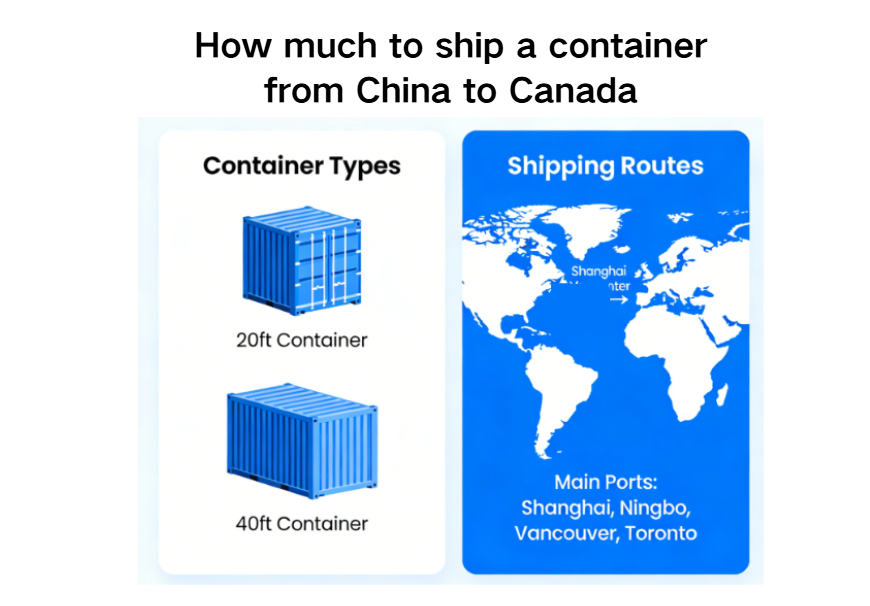
Understanding Container Shipping Costs from China to Canada
Shipping a container from China to Canada involves several cost components and variables. Based on our 15 years of experience in dedicated Americas logistics, we know that understanding these factors is essential for importers, exporters, and traders seeking optimal logistics solutions. Below, I’ll break down the primary considerations impacting your shipping budget, using our professional team’s statistics and analysis.
What Determines the Cost of Shipping a Container?
The cost of shipping a container from China to Canada is influenced by a mix of fixed and dynamic elements:
- Origin and Destination Ports: Rates vary based on port selection (e.g., shipping from Shanghai to Vancouver vs. Shenzhen to Montreal).
- Container Size and Type: The most common container sizes are 20ft (28CBM), 40ft (56CBM), and 40HQ (68CBM). Special containers (e.g., OOG, Reefer) cost more.
- Freight Mode: Choices include ocean freight, air freight, and, to a lesser extent, rail freight.
- Cargo Volume and Weight: Heavier or bulkier cargo can drive up costs, especially for LCL (Less than Container Load) shipments.
- Market Conditions: Seasonal surges (pre-holiday, Chinese New Year) and global disruptions can cause significant rate fluctuations.
- Additional Services: Insurance, customs clearance, warehousing, and last-mile delivery add to your total expense.
- Fuel Surcharges & Currency Exchange Rates: These fees can change monthly, impacting the final quote.
Average Container Shipping Rates: FCL vs LCL
Understanding the difference between Full Container Load (FCL) and Less than Container Load (LCL) is key for cost estimation. Here’s a simplified reference for recent market rates (Q1 2026), subject to real-time changes and specific cargo details:
| Route | 20ft FCL (USD) | 40ft FCL (USD) | LCL (per CBM, USD) | Transit Time (Days) |
|---|---|---|---|---|
| Shanghai – Vancouver | $1,680 – $2,030 | $2,870 – $3,220 | $63 – $98 | 15 – 20 |
| Shenzhen – Montreal | $1,960 – $2,380 | $3,430 – $3,920 | $84 – $119 | 25 – 32 |
| Ningbo – Toronto | $1,890 – $2,240 | $3,360 – $3,780 | $77 – $112 | 25 – 30 |
- FCL is best for shipments where you can fill the entire container, offering security and lower per-unit cost.
- LCL suits smaller loads but incurs higher per-CBM rates due to consolidation and handling.
Note: Rates are indicative and can fluctuate based on demand, space availability, and peak seasons. For the most accurate quote, always provide detailed cargo info. For more details on consolidated shipping, see LCL Shipping from China to Canada.
Key Ports in China and Canada Affecting Pricing
The choice of ports can significantly affect both cost and transit time. Here are the principal ports involved in China–Canada container shipping:
| China Major Ports | Canada Major Ports | Remarks |
|---|---|---|
| Shanghai | Vancouver | Main west coast entry, fastest |
| Shenzhen | Montreal | Major for east/central Canada |
| Ningbo | Toronto (via Vancouver/rail) | Requires inland rail/road transfer |
| Qingdao | Halifax | For eastern Canada, less frequent |
| Xiamen | Prince Rupert | Alternative west coast port |
- Vancouver and Montreal are the most popular Canadian ports due to established shipping lanes and robust infrastructure.
- Inland destinations (e.g., Toronto) typically require multimodal solutions, combining sea and rail or road.
If you are evaluating specific port-to-port routes and transit times, you may also want to check out How long does sea shipping take from China to Canada.
Main Factors Influencing Container Shipping Prices
Shipping rates from China to Canada depend on multiple, sometimes overlapping, variables. Let’s break down the most important ones:
Container Size and Type: 20ft vs 40ft vs Special Containers
Your cargo volume and nature determine the right container type:
| Container Type | Dimensions (L×W×H, m) | Capacity (CBM) | Typical Use Cases |
|---|---|---|---|
| 20ft Standard | 5.9 × 2.35 × 2.39 | 28 | Dense/heavy cargo, lower volume |
| 40ft Standard | 12.03 × 2.35 × 2.39 | 56 | Bulky/light cargo, double volume |
| 40ft High Cube | 12.03 × 2.35 × 2.69 | 68 | Taller items, max volume |
| Special/OOG | Varies | Varies | Machinery, oversized equipment |
- Special containers (such as OOG, reefer, or open top) carry premium rates due to handling and availability.
- Choosing the right size maximizes cost efficiency.
If you want to get a breakdown by specific container size, reference the 20 ft Container Shipping Cost from China to Canada and Cost of Shipping 40ft Container from China to Canada.
Freight Mode: Ocean Freight, Rail, or Air
The method of transportation significantly impacts cost and transit time:
| Mode | Cost Level | Transit Time | Best For |
|---|---|---|---|
| Ocean Freight | Lowest | 15–32 days* | Large, non-urgent, cost-sensitive cargo |
| Air Freight | Highest | 3–7 days | Urgent, high-value cargo |
| Rail Freight | Moderate | 18–25 days | Select inland destinations, limited space |
- Ocean freight is the mainstream choice for most containerized cargo.
- Air freight is used for time-critical or high-value shipments.
- Rail is less common but sometimes used for inland Canada, especially when combined with sea freight (multimodal).
Seasonal Fluctuations and Market Demand
Rates can swing substantially depending on the time of year:
- Peak seasons: Shipping rates rise before Chinese New Year, Golden Week, and pre-holiday periods in North America.
- Off-peak: Lower demand can yield better prices, but always check space availability.
- Market Disruptions: Events like port strikes, global pandemics, and supply chain congestion can create unexpected surcharges or delays.
- Geopolitical Factors: Recent conflicts in the Middle East have led to volatility in global oil prices. This directly affects fuel costs and may result in higher Bunker Adjustment Factor (BAF) surcharges, impacting the final shipping rate.
Fuel Surcharges, Currency Exchange, and Additional Fees
Several extra charges add up to your final bill:
- Bunker Adjustment Factor (BAF): A fuel surcharge that fluctuates monthly based on oil prices.
- Currency Adjustment Factor (CAF): Protects carriers from exchange rate volatility, especially between USD, RMB, and CAD.
- Port Congestion Surcharges: May apply if destination ports (e.g., Vancouver) are experiencing delays.
- Documentation & Handling Fees: For Bill of Lading, customs, and terminal handling.
- Insurance: Highly recommended for valuable or fragile cargo.
Pro-tip: At Dantful.US, as a dedicated team specializing in China-to-Americas logistics, we always provide transparent, itemized quotes so you know exactly what you’re paying for, helping you avoid unwelcome surprises.
In Conclusion:
Understanding these shipping cost components helps you make informed decisions, negotiate better rates, and improve your supply chain efficiency. For tailored advice and up-to-date rates on Shipping from China to Canada, I recommend partnering with a reliable provider like Dantful.US. We are not a generic global forwarder; we are a specialized team focused purely on the China-to-Americas trade lane. We offer comprehensive services including Sea Freight, Air Freight, Rail Freight, Amazon FBA, Warehousing, Customs Clearance, Insurance, and Door-to-Door solutions—ensuring your cargo arrives safely, on time, and at the most competitive rates.
Reach out to us for a quote designed for your business needs!
Detailed Breakdown of Container Shipping Fees
Shipping a container from China to Canada involves several distinct cost components. Drawing from our team’s extensive analysis of thousands of shipments, I always recommend that clients understand these fee structures to ensure transparent budgeting and avoid unexpected expenses. Let’s dive into each element:
Ocean Freight Charges
Ocean freight is the primary cost in shipping a container internationally. The actual charge depends on the following:
- The size and type of the container: Standard options are 20ft (28CBM), 40ft (56CBM), 40HQ (68CBM), and 45HQ (78CBM). Special containers (like reefer or open-top) typically incur higher rates.
- Route and port pair: Rates fluctuate depending on the popularity and congestion of the chosen Chinese and Canadian ports.
- Current market conditions: Rates can vary due to supply-demand imbalances or global events.
Below is an indicative table of recent average ocean freight rates from major Chinese ports to key Canadian ports (as of Q1 2026). Note, these are base rates for FCL (Full Container Load), excluding surcharges and local fees:
| Origin Port | Destination Port | 20ft Container (USD) | 40ft Container (USD) | Transit Time (Days) |
|---|---|---|---|---|
| Shanghai | Vancouver | $1,540 – $1,820 | $2,660 – $3,010 | 14–18 |
| Shenzhen | Vancouver | $1,505 – $1,750 | $2,625 – $2,940 | 15–20 |
| Qingdao | Montreal | $1,890 – $2,240 | $3,150 – $3,500 | 25–32 |
| Ningbo | Toronto | $2,030 – $2,380 | $3,290 – $3,640 | 27–34 |
Rates are for reference only. For accurate, up-to-date quotes tailored to your shipment, please contact our specialized Americas team at Dantful.US.
Port Charges, Documentation, and Customs Fees
Besides the ocean freight charge itself, several local charges are levied by both Chinese and Canadian ports:
- Port Charges: These include terminal handling fees, port security, wharfage, and container storage charges.
- Documentation Fees: Charges for Bill of Lading issuance, export/import declarations, and other official paperwork.
- Customs Fees: Costs for customs clearance, inspection, and duties (if applicable).
For example, on arrival in Canada (e.g., at Vancouver Port), importers will face terminal handling charges (THC), port security fees, and customs broker fees. In China, there will be similar export procedures and document fees. Depending on the complexity, these can range from $210–$560 per container.
Insurance Costs and Optional Services
While cargo insurance is not mandatory, I highly recommend it for risk mitigation. Insurance typically costs 0.2%–0.5% of the cargo’s declared value, depending on the goods’ nature and coverage level.
Optional Services that may add to the overall cost include:
- Palletizing and Packaging
- Warehousing
- Cargo Inspection
- Value-added logistics solutions (e.g., consolidation, repacking)
At Dantful.US, our deep expertise in the Americas market allows us to offer a comprehensive suite of services to ensure peace of mind throughout your shipment journey.
Inland Transportation and Last Mile Delivery in Canada
Getting your container from the Canadian port to its final inland destination involves inland trucking or rail services. Charges depend on:
- The distance from the port to the delivery address (e.g., Vancouver to Calgary, Toronto, etc.)
- Container size/weight
- Accessibility (urban or remote locations)
A rough guide to inland delivery rates in Canada:
| Route | 20ft Container (USD) | 40ft Container (USD) |
|---|---|---|
| Vancouver to Calgary | $875 – $1,120 | $945 – $1,190 |
| Vancouver to Toronto | $2,240 – $2,590 | $2,310 – $2,730 |
| Montreal to Ottawa | $665 – $840 | $735 – $910 |
For door-to-door solutions, our experienced team at Dantful.US arranges the entire process seamlessly, integrating ocean, customs, and inland services. You can also explore our specialized Door to Door Shipping solutions for Canada.
How to Get the Best Shipping Quotes
Securing a competitive and reliable shipping quote is crucial for cost control and supply chain efficiency. Here’s how I recommend approaching the process:
Comparing Freight Forwarders and Online Freight Marketplaces
It’s important to compare not just rates, but also the quality and scope of services offered. Leading freight forwarders like Dantful.US (specialists in China-Americas routes) provide end-to-end solutions and transparent pricing. Alternatively, online freight marketplaces aggregate instant quotes, but may lack the in-depth support and customization needed for complex shipments.
A good checklist for comparison:
| Criteria | Dantful.US (Americas Expert) | Online Marketplace |
|---|---|---|
| Transparent All-in Pricing | ✔️ | ❓ |
| Dedicated Account Manager | ✔️ | ❌ |
| Custom Logistics Solutions | ✔️ | Limited |
| 24/7 Tracking & Support | ✔️ | Varies |
| Coverage of All Freight Modes | ✔️ | Varies |
Tips to Negotiate Better Container Shipping Prices
- Book Early: Peak season surcharges are common; early bookings secure better rates.
- Consolidate Shipments: If possible, combine smaller shipments into a single container (FCL) to reduce per-unit costs.
- Provide Accurate Information: Clear cargo details prevent costly amendments and delays.
- Leverage Relationships: Working with a reputable forwarder like Dantful.US can yield volume discounts and priority slots.
The Importance of Accurate Cargo Details for Cost Estimates
Precise shipment information is essential for obtaining accurate and competitive quotes. This includes:
- Cargo dimensions and weight
- Nature of goods (hazardous, temperature-sensitive, etc.)
- Pickup and delivery addresses
- Required services (e.g., customs clearance, insurance, special handling)
Incomplete or inaccurate details can lead to unexpected surcharges, delays, or even shipment rejection at the port. At Dantful.US, we leverage our specialized knowledge to guide clients through the quote process, ensuring all variables are thoroughly considered for a smooth and cost-effective shipping experience.
If you’re ready to ship a container from China to Canada or want a tailored quote, contact Dantful.US. We are a professional, cost-effective, and high-quality one-stop international logistics service provider focused on the Americas market. We deliver peace of mind—door to door.
Shipping Process: Step-by-Step Guide from China to Canada
Shipping a container from China to Canada involves several key steps. Whether you are a first-time importer or manage regular shipments, understanding the process will help you save costs, avoid delays, and ensure compliance. Below, I outline each critical stage—incorporating our team’s 15 years of on-the-ground experience and how Dantful.US can support you.
Booking Your Container: Timeline and Documentation
Proper booking and documentation are the foundations of a successful international shipment. Here’s how the process typically unfolds:
| Step | Description | Typical Timeline |
|---|---|---|
| Inquiry & Quotation | Contact your freight forwarder (like Dantful.US, your Americas specialists) for a shipping rate quote. | 1 day |
| Cargo Details | Provide accurate information: cargo weight, volume, nature, HS code, and destination port in Canada. | Immediately |
| Booking Container | Reserve container space (20ft, 40ft, or special type) with the shipping line. | 3-7 days advance |
| Prepare Documents | Key documents: Commercial Invoice, Packing List, Bill of Lading, export license (if required). | 1-3 days |
| Arrange Pickup | Schedule cargo pickup and delivery to the origin port or warehouse. | 1-3 days |
| Container Stuffing | Cargo is loaded and sealed in the container at the warehouse or port. | 1 day |
| Submit SI (Shipping Instruction) | Finalize shipping instructions with your forwarder and shipping line. | 1 day |
Expert Tip: Always double-check the container size. A 20ft container (28CBM) is ideal for smaller loads, while a 40ft (56CBM) or 40HQ (68CBM) suits larger shipments. Accurate cargo detail ensures you get the best rates and the right equipment. Based on our handling of countless shipments, the Dantful.US team guides you through every documentation step, minimizing risks and delays.
Customs Clearance Requirements in China and Canada
Customs clearance is a pivotal stage that ensures your shipment complies with both Chinese export and Canadian import regulations.
In China:
- Export Customs Declaration: All goods leaving China must be declared to Chinese Customs with supporting documents (invoice, packing list, contract, export license if required).
- CIQ Inspection: Certain products require inspection and quarantine clearance.
- Verification: Ensure HS codes and declared values are accurate to prevent penalties or shipment holds.
In Canada:
- Import Declaration: File an import declaration with the Canada Border Services Agency (CBSA), including invoice and packing list.
- Duties & Taxes: Calculate GST, duties, and applicable tariffs based on HS code and value.
- Customs Broker: Engage a licensed broker for efficient clearance (Dantful.US provides in-house customs clearance).
- Release of Cargo: Once cleared, your goods are released for delivery.
Documentation Checklist:
- Bill of Lading
- Commercial Invoice
- Packing List
- Arrival Notice
- Certificates of Origin (if needed)
- Permits/Certificates for restricted items
Pro Tip: Rely on the specialized expertise of Dantful.US to avoid common customs pitfalls and ensure compliance in both countries.
Tracking and Managing Your Shipment
Monitoring your shipment in real-time is crucial for supply chain visibility and planning.
Tracking Methods:
- Online Tracking: Most shipping lines and forwarders offer online tracking by container or B/L number.
- Proactive Updates: Dantful.US provides milestone email notifications (departure, transshipment, arrival, clearance, and delivery).
- Integrated Systems: For large shippers, integration with order and inventory management systems is available.
Typical Transit Times from Major China Ports to Canada:
| Origin Port | Destination Port | Sea Transit Time (Est.) |
|---|---|---|
| Shanghai | Vancouver | 13 – 16 days |
| Shenzhen | Vancouver | 15 – 18 days |
| Ningbo | Montreal | 25 – 30 days |
| Qingdao | Toronto | 25 – 32 days (via rail after Vancouver) |
Managing Delays: Weather, port congestion, customs inspections, or documentation issues may cause delays. A reliable freight forwarder will proactively address issues, arrange for expedited customs review, and coordinate with carriers.
Value-added Services: With our dedicated Americas focus, Dantful.US offers warehouse storage, insurance, customs clearance, and last-mile delivery, giving you a seamless door-to-door experience.
FAQs
Q1: What is the transit time for shipping a container from China to Canada?
A: Transit times vary by route. Shipping from Shanghai to Vancouver typically takes 15–20 days, while routes to Montreal or Toronto take approximately 25–32 days.
Q2: What documents are mandatory for shipping from China to Canada?
A: You need a Bill of Lading, Commercial Invoice, Packing List, and in some cases, a Certificate of Origin or special permits.
Q3: How much does it cost to ship a 20ft container from China to Canada?
A: The cost for a 20ft container generally ranges from $1,680 to $2,380 depending on the route. For example, Shanghai to Vancouver is typically around $1,680 – $2,030.
Q4: What are the shipping rates for 40ft and 40HQ containers?
A: A 40ft container typically costs between $2,870 and $3,920. A 40HQ (High Cube) container usually costs slightly more, often ranging from $3,000 to $4,100.
Q5: How much does it cost to ship from Shanghai to Vancouver?
A: For the Shanghai to Vancouver route, current rates are approximately $1,680 – $2,030 for a 20ft container and $2,870 – $3,220 for a 40ft container.
Q6: What is the shipping cost from Shenzhen to Montreal?
A: Shipping from Shenzhen to Montreal costs around $1,960 – $2,380 for a 20ft container and $3,430 – $3,920 for a 40ft container.
In summary, shipping a container from China to Canada is straightforward with the right partner. Dantful.US delivers high-quality, cost-effective, and compliant solutions, ensuring your cargo arrives safely and on time. Contact us for a tailored quote and expert support on your next shipment.
Leave a reply