

Taiwan (China) to Mexico acts as a critical supply chain link connecting Asia’s high-tech manufacturing hub with North America’s nearshoring powerhouse. Whether you are importing semiconductors, precision machinery, auto parts, or consumer electronics, understanding the logistics landscape is essential to maintaining profit margins and production schedules.
This guide provides a comprehensive, professional analysis of shipping from Taiwan (China) to Mexico, covering shipping modes, current cost estimates, transit times, key ports, and how Dantful.US International Logistics
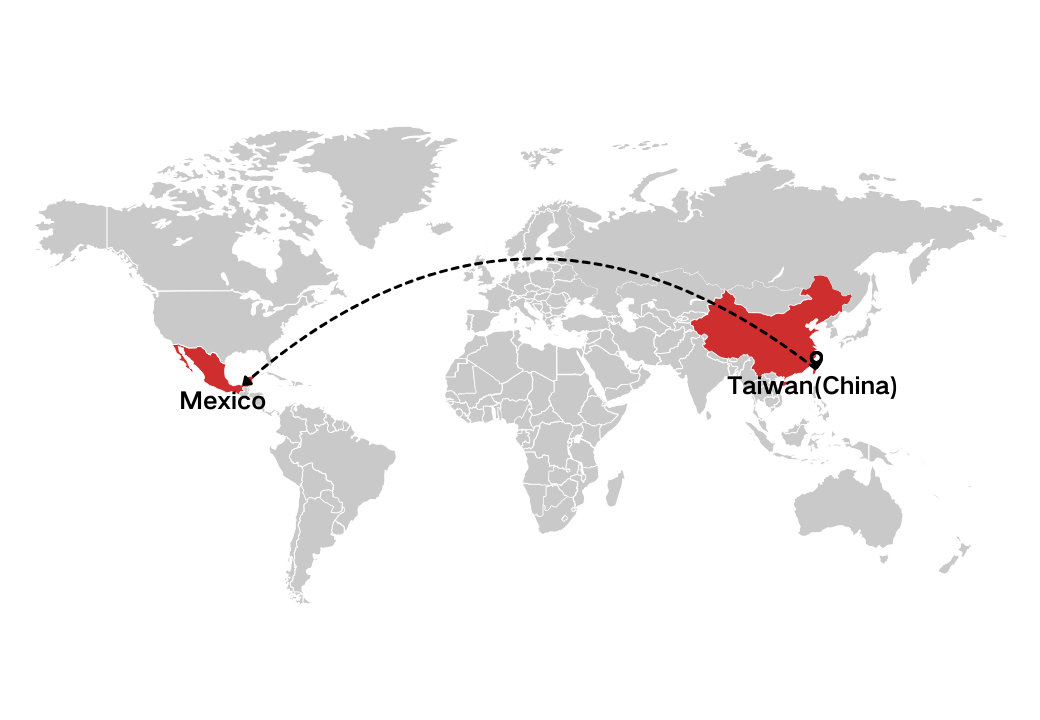
Taiwan (China) is a major supplier of electronics, integrated circuits (ICs), and machinery, while Mexico is a key manufacturing hub for the automotive and aerospace industries. This complementary demand supports a steady flow of trade between the two regions.
However, logistics on this route can be challenging due to:
-
Strict Customs Regulations in Mexico: Including NOM (Normas Oficiales Mexicanas) compliance for electronics.
-
Port Congestion: Especially at Manzanillo and Lazaro Cardenas.
-
Security Risks: Inland transportation in Mexico requires robust security measures.
Sea Freight is the dominant mode for transporting bulk goods, machinery, and large raw material shipments.
-
FCL (Full Container Load): Best for shipments over 15 CBM. You rent the entire 20’ or 40’ container, ensuring your goods are sealed from Kaohsiung to Manzanillo.
-
LCL (Less than Container Load): Ideal for smaller shipments (1–15 CBM). Your cargo shares container space with other importers.
Best suited for: Heavy machinery, auto parts, plastics, and non-urgent bulk electronics.
Air Freight from Taiwan (China) to Mexico
Air Freight provides the fastest connection, crucial for “Just-in-Time” (JIT) manufacturing supply chains.
-
Standard Air Freight: For urgent commercial cargo > 100kg.
-
Charter Services: For oversized project cargo or extreme urgency.
Best suited for: High-value semiconductors, urgent spare parts, prototypes, and medical devices.
Express Shipping from Taiwan (China) to Mexico
For shipments under 100kg or documents, global couriers like DHL, FedEx, and UPS offer door-to-door service.
Best suited for:
Freight rates fluctuate based on fuel surcharges, seasonal demand (e.g., pre-Chinese New Year), and carrier capacity. Below are estimated ranges for April 2026.
Estimated Shipping Rates (April 2026)
| Shipping Mode | Route | Estimated Cost Range | Key Influencing Factors |
|---|---|---|---|
| FCL 20′ Container | Kaohsiung to Manzanillo | $2,100 – $2,900 | Peak Season Surcharge (PSS) |
| FCL 40′ Container | Kaohsiung to Manzanillo | $2,800 – $4,200 | GRI (General Rate Increases) |
| FCL 40′ Container | Kaohsiung to Veracruz | $4,000 – $5,500 | Panama Canal transit fees apply |
| LCL (Sea Freight) | Major Ports | $60 – $110 per CBM | Consolidation fees & destination handling |
| Air Freight | TPE to MEX/GDL | $5.50 – $9.00 per kg | Varies by density (1:167) & airline space |
Note: Costs above are for freight only and do not include local terminal handling charges (THC), Mexican customs duties, DTA (Derecho de Trámite Aduanero), or inland trucking insurance
Transit time is heavily influenced by whether you choose a direct service or a transshipment service (often via Busan, Shanghai, or Los Angeles).
Typical Transit Time Ranges
-
Sea Freight (Direct): 18 – 24 days
-
Sea Freight (Transshipment): 30 – 45 days
-
Air Freight: 3 – 7 days
-
Express: 3 – 5 days
Factors Affecting Timelines
-
Route Selection: Sailing directly to Manzanillo is faster than routing through the Panama Canal to Veracruz.
-
Customs Clearance: Mexico’s “Red Light” (inspection) mechanism can add 2–5 days.
-
Port Congestion:
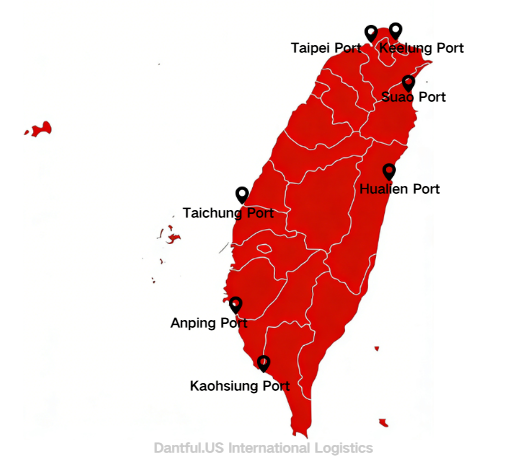
The largest port in Taiwan (China), handling the majority of container traffic.
-
Best for: Southern Taiwan manufacturers (Tainan, Kaohsiung).
-
Features: Most direct vessel calls to Mexico.
Keelung Port
Serves the northern region, including Taipei and New Taipei City.
-
Best for: Electronics and technology exports.
-
Note: Cargo is sometimes barged to Kaohsiung for mother vessel connection.
Taichung Port
Located in central Taiwan.
-
Best for: Machinery, bicycles, and aerospace components.
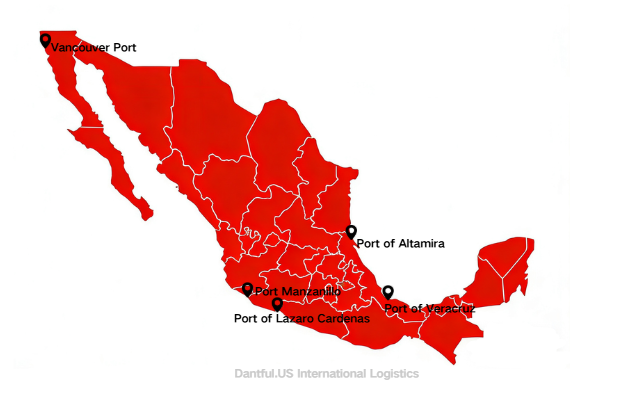
Mexico’s busiest port and the primary gateway for Asian trade.
-
Key Advantage: Direct rail and truck connections to Mexico City and Guadalajara.
-
Challenge: Prone to congestion; requires early booking.
Lazaro Cardenas Port
A deep-water port capable of handling the largest vessels.
-
Key Advantage: Alternative to Manzanillo with good rail connectivity to the US border and central Mexico.
Veracruz Port
The main port on the Gulf (Atlantic) coast.
-
Usage: Less common for Taiwan shipments unless the final destination is on the East Coast of Mexico or the Yucatan Peninsula.
Airports
-
Taiwan Taoyuan International Airport (TPE): The main hub for air cargo.
-
Mexico City International Airport (MEX/NLU): Primary entry point, though specialized cargo often goes to Guadalajara (GDL)
-
Confirm cargo details and book space 2 weeks in advance.
-
Export Haulage: Trucking from factory to Kaohsiung/Keelung/Taichung.
-
Export Clearance (Taiwan): Submission of commercial invoice and packing list.
-
International Transport: Ocean or Air transit across the Pacific.
-
Arrival & ISF/AMS (if transiting US): Not always applicable, but manifest filing is required.
-
Import Customs Clearance (Mexico): The most critical step. Requires a Pedimento filed by a licensed Mexican Customs Broker.
-
Inland Delivery:
Mexico has one of the strictest customs environments in the world. Errors in documentation can lead to severe fines or confiscation.
Key Compliance Requirements
-
Padron de Importadores: The consignee must be registered in Mexico’s Official Register of Importers.
-
Commercial Invoice: Must be detailed, in Spanish (or with translation), and include specific Incoterms.
-
HS Code Accuracy: Crucial for determining duty rates.
-
NOM Standards: Normas Oficiales Mexicanas (Official Mexican Standards) are mandatory for many products, especially electronics, wiring, and safety goods. You must prove compliance (certificates) before the goods arrive.
-
Certificate of Origin: If applicable, to claim preferential treatment, though Taiwan and Mexico do not have a direct FTA, WTO rules apply.
Dantful.US Tip:
Dantful.US International Logistics specializes in the Asia–Americas trade lane. We don’t just move boxes; we engineer solutions.
Why Choose Dantful.US?
-
Expertise in Electronics & Machinery: We understand the handling requirements for high-value goods.
-
Mexico Customs Knowledge: We guide you through the NOM and Padron hurdles.
-
Competitive Sea & Air Rates: Leveraging strong relationships with carriers like Evergreen (EMC), Yang Ming, Wan Hai, and MSC.
-
Secure Inland Transport: We partner with verified trucking companies in Mexico to ensure cargo safety against theft.
-
24/7 Support:
1. How much does it cost to ship from Taiwan to Mexico?
Shipping costs depend on the weight, volume, and service level. As of early 2026, Sea Freight LCL rates range from $60–$110 per CBM, while Air Freight averages $5.50–$9.00 per kg. For a precise calculation tailored to your cargo, .
2. What is the cheapest way to ship from Taiwan to Mexico?
Sea Freight is generally the most economical option.
-
LCL (Less than Container Load): Best for shipments between 1–15 CBM.
-
FCL (Full Container Load): Most cost-effective for shipments over 15 CBM. Express couriers (DHL/FedEx) are only cheaper for parcels under 100kg.
3. How long does shipping take from Taiwan to Mexico?
-
Sea Freight (Direct): 18–24 days (e.g., Kaohsiung to Manzanillo).
-
Sea Freight (Transshipment): 30–45 days.
-
Air Freight: 3–7 days.
-
Express: 3–5 business days.
4. What documents are required to import goods into Mexico?
To avoid customs delays, you must provide:
-
Commercial Invoice: Detailed and preferably in Spanish.
-
Packing List: Accurate weight and dimensions.
-
Bill of Lading (Sea) / Airway Bill (Air).
-
Pedimento: The official Mexican customs declaration.
-
NOM Certificates: Proof of compliance for electronics and safety goods.
5. Do I need an import license for Mexico?
Yes. The importer of record must be registered in the Padron de Importadores (Importers Registry). For specific industries like textiles, footwear, or steel, registration in the Padron Sectorial is also mandatory.
6. What are NOM standards?
NOM (Normas Oficiales Mexicanas) are mandatory technical regulations in Mexico. If you import electronics, wiring, or medical devices, your products must be tested and certified by an accredited Mexican lab before they arrive at the border.
5. Why are shipping rates higher in April?
April is the pre-Lunar New Year rush. Factories in Taiwan (China) accelerate production before the holiday shutdown, creating a surge in demand for shipping space, which drives up rates (GRI).
Ready to streamline your supply chain?
Don’t let logistics hurdles delay your business. Contact Dantful.US International Logistics today for a free, transparent shipping quote and a customized logistics plan for your Taiwan (China) to Mexico shipments.
Request
A Free Shipping Quote
Get a fast, free shipping quote from Dantful.US Logistics — your reliable partner for cost-effective, hassle-free global delivery.