

connects Southeast Asia’s manufacturing power with Latin America’s largest economy. However, this route is known for its long transit times, complex customs regulations, and the infamous “Custo Brasil” (Brazil Cost)—a combination of high taxes, bureaucracy, and logistics challenges.
This article provides a comprehensive, expert guide to shipping from Vietnam to Brazil, covering shipping methods, estimated costs, transit times, major ports, and how Dantful International Logistics
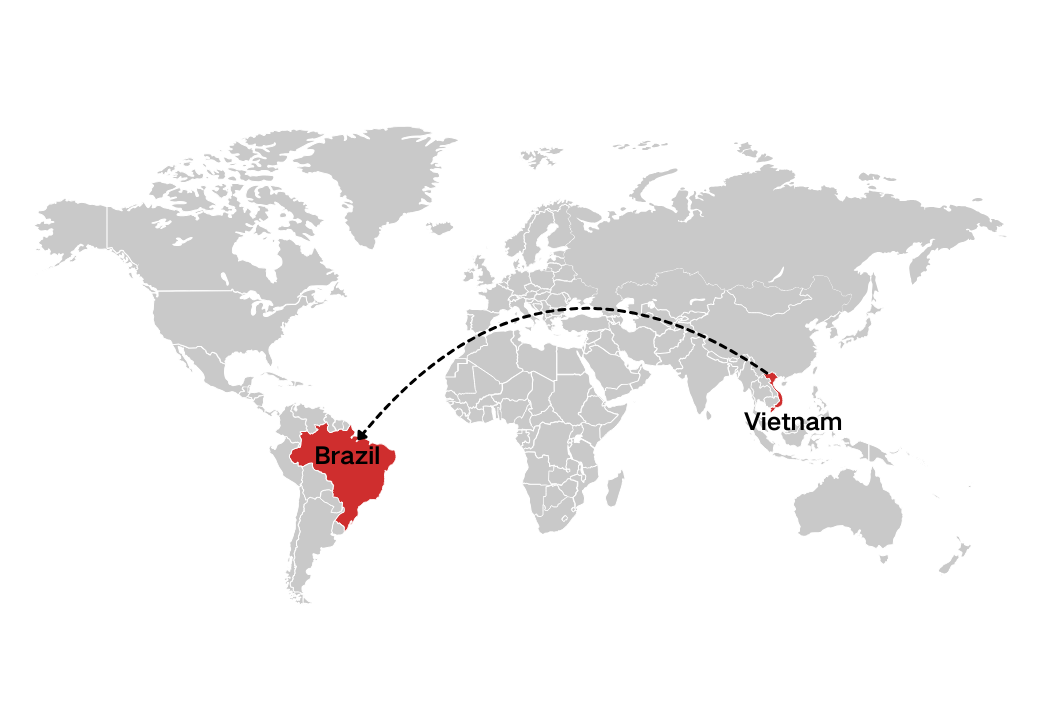
Vietnam exports electronics, footwear, textiles, machinery, and seafood to Brazil. While trade is growing, logistics between these two nations requires careful planning due to the geographic distance and strict import controls.
From our experience managing shipments on the Vietnam–Brazil trade lane, common challenges include:
-
Complex Customs Procedures: Brazil has one of the strictest customs systems in the world (SISCOMEX/RADAR).
-
Documentation Errors: Slight discrepancies between the Bill of Lading (BL) and Commercial Invoice can lead to heavy fines or cargo seizure.
-
Long Transit Times: Ocean freight can take 35 to 50+ days, impacting inventory cycles.
-
High Demurrage Risks: Port congestion in Santos or Paranaguá often leads to unexpected storage fees.
Partnering with a freight forwarder who understands both Vietnamese export rules and Brazilian import laws is crucial to avoiding fines and delays
Sea freight is the dominant mode of transport for this route due to the long distance and cost efficiency for bulk goods.
-
FCL (Full Container Load): Best for large shipments (e.g., furniture, machinery). You rent the entire 20’ or 40’ container, ensuring security and faster processing at the port.
-
LCL (Less than Container Load): Ideal for smaller shipments (e.g., 1–10 CBM). Your cargo shares a container with other importers.
Best suited for: High-volume commercial goods, non-urgent inventory, and heavy machinery.
Expert Tip: For Brazil, we highly recommend FCL whenever possible. LCL cargo often faces longer deconsolidation times at Brazilian ports due to strict individual customs inspections.
Air Freight from Vietnam to Brazil
Air freight is the fastest but most expensive option.
-
Charged by chargeable weight (the higher of actual vs. volumetric weight).
-
Flights often connect via the Middle East (Dubai/Doha) or Europe (Frankfurt/Paris) or USA (Miami), as direct flights are rare.
Best suited for: Electronics, samples, urgent spare parts, and high-value fashion items.
Express Shipping from Vietnam to Brazil
Couriers like DHL, FedEx, and UPS handle small parcels.
Best suited for:
Shipping rates fluctuate based on fuel prices, bunker adjustment factors (BAF), and seasonal demand. Below is an estimated cost range for April 2026.
Estimated Shipping Rates (April 2026)
| Shipping Mode | Destination Port | Estimated Cost Range | Key Influencing Factors |
|---|---|---|---|
| FCL 20′ Container | Santos Port (SP) | $2,800 – $3,800 | Peak season demand, fuel surcharges |
| FCL 40′ Container | Santos Port (SP) | $3,500 – $5,200 | Space availability, GRI (General Rate Increases) |
| FCL 40′ Container | Paranaguá / Itajaí | $3,600 – $5,400 | Slightly higher due to lower vessel frequency |
| LCL (Sea Freight) | All Major Ports | $80 – $130 per CBM | High destination handling charges in Brazil |
| Air Freight | GRU / VCP Airport | $6.50 – $9.50 per kg | Varies by airline routing and urgency |
Note: These are port-to-port estimates. They do not include Brazilian destination charges (Capatazia, THC), Import Duties (II), IPI, ICMS, PIS/COFINS, or the Merchant Marine Renewal Tax (AFRMM) which is significant for sea freight.
How to Judge Your Freight Quote
-
Check Destination Charges: In Brazil, local port charges can sometimes exceed the ocean freight cost. Ensure your quote includes or clearly estimates destination fees.
-
Verify Transit Route: Cheaper rates often mean more transshipment points (e.g., via Singapore AND South Africa), increasing the risk of delay.
-
Validity: Rates to South America can be volatile. Ensure the validity covers your cargo ready date.
Transit Time from Vietnam to Brazil
Due to the lack of direct shipping lines, transit times are long and variable.
Typical Transit Time Ranges
-
Sea Freight: 35 – 55 days (Dependent on transshipment hubs like Singapore or Tanjung Pelepas).
-
Air Freight: 3 – 7 days (Transit via hubs like Dubai, Doha, or Frankfurt).
-
Express Shipping: 3 – 6 days.
Factors Impacting Transit Time
-
Transshipment Connections: Missed connections at hubs (e.g., Singapore) are common.
-
Port Congestion in Brazil: Santos and Navegantes frequently face strikes or high volume delays.
-
Customs Clearance: The “Canal Vermelho” (Red Channel)
-
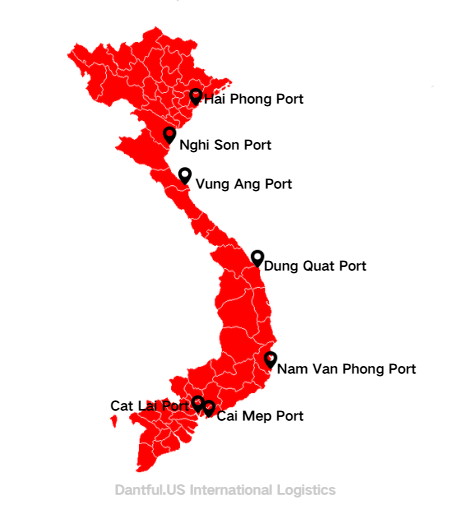
The main exit point for Southern Vietnam manufacturing.
-
Hai Phong Port: Key for electronics and heavy industry from Northern Vietnam.
-
Da Nang Port: Serves the central region.
-
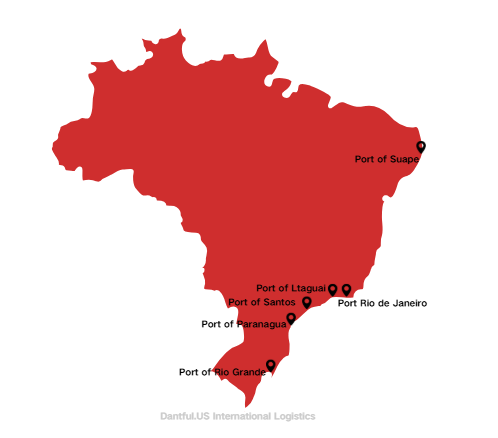
The largest port in Latin America. Handles the majority of Vietnam–Brazil trade. Best for cargo destined for São Paulo and surrounding industrial areas.
-
Paranaguá (PR): A major hub for agricultural and general cargo, serving Southern Brazil.
-
Itajaí / Navegantes (SC): Key entry points for the textile and machinery sectors in Santa Catarina.
-
Rio de Janeiro (RJ): Serves the oil & gas and mining industries.
-
Rio Grande (RS): The southernmost major port, connecting to Uruguay and Argentina markets.
Major Airports in Brazil
-
São Paulo/Guarulhos (GRU): The main gateway for international air freight.
-
Viracopos (VCP):
-
Confirm cargo details and book space 2 weeks in advance.
-
Export Clearance (Vietnam): Submit Invoice, Packing List, and Export Permit.
-
International Transit: Cargo moves via ocean or air.
-
ISPM 15 Compliance: Ensure all wooden packaging (pallets/crates) is treated and stamped. Brazil is very strict on this.
-
Manifest & Data Entry: Carrier transmits data to Brazilian customs (Mercante system).
-
Import Clearance (Brazil): Importer registers the declaration (DI/Duimp) in SISCOMEX.
-
Tax Payment: Pay duties, IPI, ICMS, etc.
-
Delivery:
Brazil’s customs process is complex. Failure to comply leads to heavy fines or “perdimento” (loss of cargo).
Key Requirements
-
RADAR System: The Brazilian importer MUST have an active RADAR license (import license) to access SISCOMEX.
-
NCM Code (HS Code): You must use the correct Mercosur Common Nomenclature (NCM). An incorrect code can result in a fine of 1% of the customs value.
-
Original Documents: Brazil often requires Original Bill of Ladings (or specific Telex Release wording) and wet-ink signed Commercial Invoices (Blue ink preferred).
-
CNPJ: The importer’s corporate tax ID (CNPJ) must appear on all documents.
Duties & Taxes
Imports are subject to a cascade of taxes:
-
II (Import Duty): 0% – 35% based on NCM.
-
IPI (Industrialized Product Tax): Federal tax.
-
PIS & COFINS: Social contribution taxes.
-
ICMS: State tax (like VAT), varying by state (e.g., São Paulo is 18%).
-
AFRMM: 25% tax on the ocean freight cost (for sea shipments only).
Dantful Insight: We assist in pre-checking your documents against Brazilian requirements to prevent blockage at the Receita Federal
Dantful International Logistics specializes in difficult trade lanes like Vietnam to South America. We understand that low freight rates mean nothing if your cargo gets stuck in Brazilian customs.
Why Partner with Dantful?
-
Brazil-Specific Expertise: We verify documents (BL, Invoice, PL) before the ship sails to ensure they meet SISCOMEX standards.
-
Cost-Effective Solutions: Competitive contract rates for FCL and LCL to Santos and Paranaguá.
-
Door-to-Door Service: We handle the entire chain, including DDU/DAP services (where applicable) and coordination with your Brazilian customs broker (Despachante).
-
24/7 Tracking:
1. How long does shipping take from Vietnam to Brazil?
Sea freight typically takes 35 to 50 days. Air freight takes 3 to 7 days. Delays often occur at transshipment hubs or due to congestion at Santos Port.
2. What is the cheapest way to ship to Brazil?
FCL Sea Freight is the most economical for large volumes. For smaller volumes (under 15 CBM), LCL is an option, though destination charges in Brazil can be high for LCL.
3. How much is the import tax from Vietnam to Brazil? (The “Tax Cascade”)
Importing into Brazil involves a complex tax structure often referred to as the “Tax Cascade.” It is not just a single duty. You should budget for:
-
II (Import Duty): 0%–35% (Based on NCM Code).
-
IPI (Industrialized Product Tax): 0%–30% (Calculated on CIF + II).
-
PIS & COFINS: ~11.75% (Federal social contributions).
-
ICMS: 17%–25% (State VAT, calculated on the total including all other taxes).
-
AFRMM: 25% on the ocean freight cost (only for sea freight). Tip: Use the correct NCM Code (HS Code) to find the exact rates, as errors here lead to heavy fines.
4. Can I ship “DDP” (Delivered Duty Paid) to Brazil?
True DDP shipping to Brazil is extremely difficult for foreign companies because Brazilian law requires the importer of record to be a local entity registered with RADAR to pay duties. However, Dantful offers a DDP-like solution (DAP/DDU): We handle all logistics, freight, and documentation door-to-door, while coordinating with your local Brazilian entity (or a trading partner) to pay the taxes directly to the government. This ensures compliance while keeping the process simple for you.
5. What are the most common reasons for customs delays in Brazil?
Delays usually stem from documentation errors, not the cargo itself. Common pitfalls include:
-
Missing CNPJ: The importer’s tax ID must be on the Commercial Invoice and Bill of Lading.
-
Incorrect NCM Codes: Using a generic HS code instead of the specific Brazilian NCM.
-
Blue Ink Signatures: Some customs officers still demand original invoices signed in blue ink to prove authenticity.
-
Untreated Wood: Pallets without an ISPM 15 stamp can cause the entire shipment to be returned.
Ready to ship? Stop worrying about complex Brazilian regulations.
Request
A Free Shipping Quote
Get a fast, free shipping quote from Dantful.US Logistics — your reliable partner for cost-effective, hassle-free global delivery.