

Every week, our team at Dantful.US International Logistics fields the same urgent question from importers, Amazon sellers, and procurement managers across the Americas: “How much is shipping from China to USA per kg?” It’s a deceptively simple question. The honest answer — and one I’ve learned to give after 15 years of managing China-to-America freight — is “it depends on at least six variables we need to look at together.”
This guide is not a generic freight rate table you can find anywhere. It’s built from thousands of real shipments we’ve handled — from a 45 kg box of electronic samples rushed via DHL Express to a Los Angeles startup, to a 40-foot container of furniture leaving Yantian Port bound for Houston. I’ll walk you through exactly what drives your per-kilogram cost, what numbers you can expect in 2026, which hidden fees catch first-time importers off guard, and, most importantly, the strategies our clients use to bring that per-kg figure down month after month.
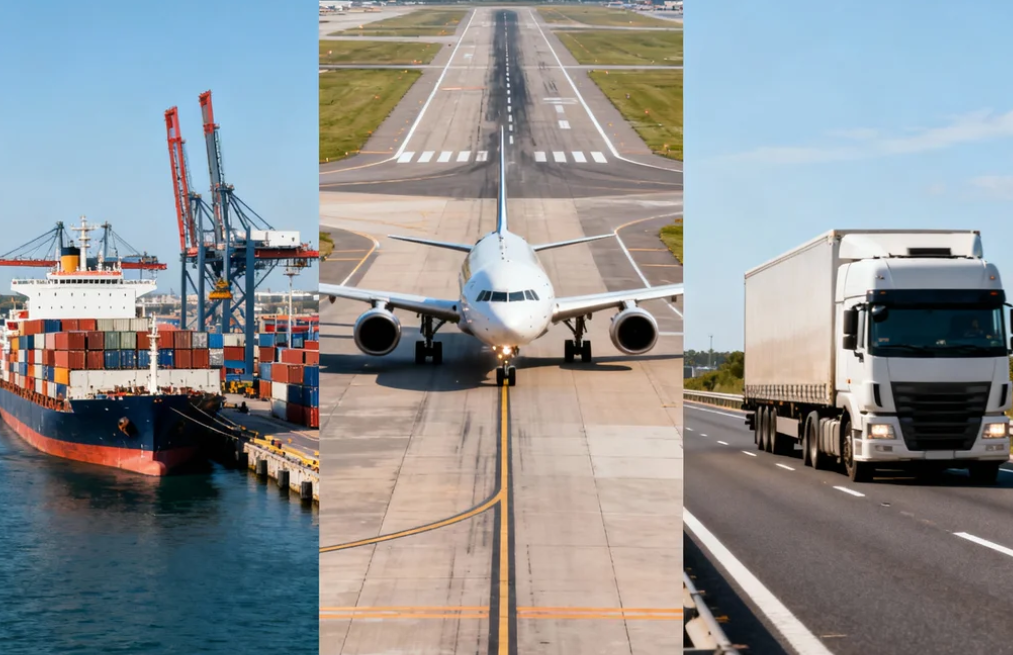
Key Factors Affecting Shipping Rates from China to USA Per kg
After handling over 8,000 China-to-USA shipments, I can tell you that six variables control roughly 90% of your per-kg freight cost. Miss one in your planning, and your landed cost can swing by 30% or more. Here’s what actually matters, in order of impact:
Shipping Method: Air Freight vs. Sea Freight vs. Express Courier
The choice of shipping method is the single largest lever you can pull on your per-kg cost. But the “best” choice is never about price alone — it’s about how the method fits your cash flow cycle, your buyer’s tolerance for lead time, and the physical nature of your cargo. Here’s how I break it down with clients in our Shenzhen office:
1. Air Freight Recommended when your shipment is between roughly 100 kg and 500 kg, or when time is your competitive advantage.
- Ideal Scenarios: New product launches, seasonal restocks, or high-value electronics where the carrying cost of inventory tied up at sea exceeds the air premium.
- Real-World Case: A Miami-based electronics distributor switched from sea to air for Q4 shipments. The $3.80/kg air premium was less than the $4.20/kg in lost margin they’d incur from stockouts during peak season.
2. Sea Freight The backbone of China-USA trade. For shipments above 2 CBM (roughly 500 kg), it consistently delivers per-kg rates 70–90% lower than air.
- LCL vs. FCL: We ship both FCL (booking an entire 20 ft, 40 ft, or 40 ft High Cube container) and LCL (sharing container space).
- Hidden Nuance: LCL looks cheaper on a pure per-kg basis. However, once you factor in destination CFS charges, customs examination risks, and 3–7 extra transit days, FCL often wins for shipments above 12–15 CBM.
- Cost-Saving Tip: Importers can often save up to 18% by waiting until they have enough volume for a 20 ft container rather than shipping three separate LCL lots.
3. Express Courier (DHL, FedEx, UPS) The simplest path: schedule a pickup, and it arrives at the buyer’s door in 3–7 days. You pay $7–$15/kg for speed and convenience.
- Ideal Scenarios: Samples under 30 kg or urgent replacement parts.
- Cost-Saving Tip: Avoid blindly using express for mid-sized shipments. For an 80 kg shipment, splitting it—using express for 30 kg of fast-moving SKUs and air freight consolidation for the remaining 50 kg—can cut your blended rate from $11/kg to roughly $7.50/kg.
Shipping Method Comparison Table
| Shipping Method | Typical Transit Time | Best For | Estimated Cost per kg | Minimum Weight/Volume |
|---|---|---|---|---|
| Air Freight | 3-10 days | 100-500 kg, urgent, valuable | $4.0 – $8.0 | 45+ kg |
| Sea Freight | 18-40 days | 500 kg+, bulk cargo | $0.5 – $2.0 | 2 CBM+ or 500 kg+ |
| Express Courier | 3-7 days | <100 kg, samples, e-commerce | $7.0 – $15.0 | 0.5 kg+ |
Related reading: For an in-depth guide, see Shipping from China to USA.
Weight and Volume: Dimensional Weight vs. Actual Weight
This is where I see importers lose money they didn’t even know they were spending. Freight charges on every mode — air, sea, and express — use a concept called chargeable weight: the higher of your actual scale weight and your dimensional weight (also called volumetric weight).
- Actual Weight: What the scale says when your cargo is placed on it.
- Dimensional Weight: (Length × Width × Height in cm) ÷ 6,000 for air freight and express, or ÷ 1,000 for sea LCL. This is the carrier’s way of charging for the space your cargo occupies, not just its mass.
Here’s a real example from last month: a client shipped 120 kg of foam packaging inserts — physically light but occupying 1.8 CBM of space. Actual weight: 120 kg. Dimensional weight at the air freight divisor (180 × 100 × 100 cm ÷ 6,000): 300 kg. The airline charged for 300 kg, not 120 kg — effectively making their per-kg cost 2.5× what they’d budgeted.
Three practical fixes we implement for clients every week:
- Re-engineer your packaging before shipping. A Guangzhou furniture exporter we work with reduced their dimensional weight by 22% simply by switching from double-wall to single-wall cartons with reinforced corner protectors — same protection, less cubic volume.
- Pallet strategically. Standard pallets add roughly 0.15–0.25 CBM of chargeable volume per pallet. For air freight, where each CBM converts to 167 kg of chargeable weight, a poorly planned pallet configuration can add $50–$80 in unnecessary freight cost per pallet. We often nest smaller boxes inside larger master cartons to maximize pallet density.
- Ask your forwarder for the chargeable weight calculation before confirming. At Dantful, we provide this as a standard line item on every quotation — many forwarders don’t, and the first time you see it is on the final invoice.
Shipping Routes and Major Ports
The port pair you choose affects your per-kg rate more than most importers realize. In China, the dominant export gateways are Shanghai (world’s busiest container port), Shenzhen (Yantian and Shekou terminals), Ningbo-Zhoushan, Qingdao, and Guangzhou (Nansha). On the USA side, Los Angeles/Long Beach (the San Pedro Bay complex handles roughly 40% of all US container imports), New York/New Jersey, Savannah, and Houston are the primary gateways.
Here’s what the rate tables don’t tell you:
- Shenzhen (Yantian) to Los Angeles/Long Beach is the cheapest and fastest China-US sea route by a meaningful margin — about 15–22 days transit with 3–5 sailings per week. The volume density on this corridor means carriers compete aggressively on rate.
- Ningbo/Shanghai to US East Coast (New York) commands a $800–$1,200 premium per 40 ft container versus the LA route, primarily because of Panama Canal transit fees and an extra 10–14 sailing days. That premium flows directly into your per-kg cost.
- Houston-bound cargo from Qingdao or Shanghai often routes through the Panama Canal or uses rail intermodal from LA/Long Beach. The rail intermodal option from LA to Houston adds roughly $0.15–$0.30/kg but can shave 7–10 days off all-water transit.
One tactic we use regularly for cost-sensitive clients: if your US distribution center is in the Midwest or East Coast, compare the all-water rate to LA plus rail/truck versus a direct East Coast call. Sometimes the LA+intermodal combination beats the all-water rate while being faster. We run this comparison on every booking.
Major Port Pairings Table
| China Port | Major USA Port | Typical Transit Time (Sea) | Notes |
|---|---|---|---|
| Shanghai | Los Angeles | 15-20 days | Busiest route, fast sail |
| Shenzhen | Long Beach | 16-22 days | High volume, cost-effective |
| Ningbo | New York/New Jersey | 28-35 days | Longest US route |
| Qingdao | Houston | 25-30 days | For US Gulf access |
Seasonal Demand and Market Trends
Shipping rates from China to USA per kg follow predictable seasonal patterns — and understanding them is the difference between paying a premium and locking in a rate before the market spikes.
The three annual peaks every importer must plan around:
- Pre-Chinese New Year (January–February): Factories rush to ship before the 2–3 week holiday shutdown. Space tightens 4–6 weeks before CNY. In 2026, with Chinese New Year falling on February 17, we advise clients to book December sailings and avoid the January rate surge, which typically pushes spot rates 30–50% above off-peak levels.
- Back-to-School / Summer Peak (July–September): Retail inventory build-up drives demand across the Pacific. Air freight rates can spike as e-commerce sellers front-load Q4 inventory. We saw air freight rates from PVG to LAX jump from $4.50/kg in June to $7.20/kg in late August 2025 — a pattern that repeats annually with minor variations.
- Pre-Christmas / Golden Week (October–November): The final push before holiday retail deadlines, compounded by China’s Golden Week holiday in early October. This is the tightest window of the year for both sea and air capacity.
Our practical recommendation: If your supply chain allows, ship between March–May or in early December. These windows consistently offer 15–25% lower rates than peak periods. And negotiate annual contracts with carriers in Q1 — rates locked in January typically beat spot market rates for the rest of the year.
Ongoing global supply chain adjustments, evolving trade policies, and geopolitical developments continue to influence shipping prices and capacity in 2026. The US-China trade landscape remains dynamic, and we actively monitor tariff policy changes that can affect per-kg landed costs overnight.
Current Shipping Prices Per kg: China to USA (2026)
Below are the rate ranges I quote to clients as of mid-2026, based on our active carrier contracts and consolidated shipping volumes. These are not spot-market extremes — they represent what a competitive freight forwarder with direct carrier relationships can deliver for general cargo (non-hazardous, non-temperature-controlled).
Important context on why rates vary within each range: The low end of each range typically applies to larger-volume shipments (300 kg+ for air, 5 CBM+ for LCL sea) on high-frequency routes, booked with flexible pickup/delivery windows. The high end reflects smaller shipments on less-served port pairs, tight deadlines, or peak-season surcharges. If a quote comes in below the low end, scrutinize what’s been excluded. If it’s above the high end, you’re likely paying a middleman’s markup.
Please note that market rates can change weekly due to fuel costs, capacity, and demand — always request a live quotation before budgeting.
Average Air Freight Cost per kg
Air Freight rates typically range from $4.0 to $8.0 per kg for general cargo shipped from major cities in China (such as Shanghai or Guangzhou) to USA airports (LAX, JFK, ORD). Rates for specialized services (like temperature-controlled cargo) or for remote destinations can be higher.
See also: Learn more about Air freight from China to USA for rate trends and best practices.
| Origin Airport | Destination Airport | Estimated Air Freight Rate per kg | Typical Transit (Days) |
|---|---|---|---|
| Shanghai (PVG) | Los Angeles (LAX) | $4.2 – $6.5 | 3 – 7 |
| Shenzhen (SZX) | Chicago (ORD) | $5.0 – $8.0 | 5 – 10 |
| Guangzhou (CAN) | New York (JFK) | $4.8 – $7.5 | 4 – 8 |
Note: Rates may vary for urgent or consolidated shipments, and are subject to fuel and security surcharges.
Average Sea Freight Cost per kg
For LCL (Less than Container Load) shipments from China to USA, the cost typically ranges from $0.5 to $2.0 per kg depending on the cargo volume, route, and current market conditions. FCL (Full Container Load) shipments are usually quoted per container, but when calculated per kg, they are even more economical for high-volume cargo.
| Route | Estimated LCL Sea Freight per kg | Typical FCL Cost (20ft/40ft/40HQ) | Transit Time (Days) |
|---|---|---|---|
| Shanghai – Los Angeles | $0.5 – $1.2 | $2,100 / $3,800 / $4,200 | 15 – 20 |
| Shenzhen – New York | $1.0 – $1.8 | $2,600 / $4,300 / $4,700 | 28 – 35 |
| Ningbo – Houston | $1.2 – $2.0 | $2,400 / $4,000 / $4,500 | 25 – 30 |
Note: LCL rates include basic freight only; additional charges (see below) may apply.
Express Courier Rates per kg
Express Courier services, like DHL, FedEx, and UPS, offer rapid transit but at a premium price. The average cost per kg for shipments under 100 kg is usually $7.0 to $15.0 per kg, depending on shipment weight, dimensions, and delivery location in the USA.
| Courier | Estimated Cost per kg (5-10 kg) | Transit Time (Days) | Coverage |
|---|---|---|---|
| DHL Express | $9.0 – $13.0 | 3 – 5 | Nationwide USA |
| FedEx IP | $8.5 – $14.0 | 4 – 6 | Nationwide USA |
| UPS Express | $10.0 – $15.0 | 3 – 7 | Nationwide USA |
For bulk shipments, negotiated rates may be available.
As an international logistics expert, I understand that selecting the right shipping method and understanding the associated costs is vital for your supply chain. At Dantful.US International Logistics, we specialize in providing transparent, competitive, and tailored freight solutions—including Sea Freight, Air Freight, Express, Amazon FBA, Warehouse, Customs Clearance, and more—to help you optimize your costs per kg and ensure safe, timely delivery.
If you need a custom quote or want to explore cost-saving strategies for your shipments from China to USA, contact me and the team at Dantful.US International Logistics, your highly professional and cost-effective one-stop logistics partner.
Additional Charges and Hidden Fees in International Shipping
If I could give every first-time importer one piece of advice, it would be this: the rate per kg on the quote is never your final landed cost per kg. Over 15 years, I’ve seen too many shipments where the “cheap” $0.80/kg sea freight quote turned into an effective $2.30/kg landed cost after destination charges piled up. Here’s every line item you need to account for, and the ones that catch people by surprise.
Customs Duties, Taxes, and Import Fees
Every shipment entering the United States must clear U.S. Customs and Border Protection (CBP). The duty rate applied to your goods depends entirely on their HS Code (Harmonized System Code) — a 6-to-10-digit classification number that maps to a specific duty percentage in the Harmonized Tariff Schedule of the United States (HTSUS).
- Customs Duties: Calculated as (Product Value + Insurance + Freight) × Duty Rate. Duty rates range from 0% (many electronics components, books) to 37.5% (certain textiles and apparel). In addition, Section 301 tariffs on Chinese-origin goods remain in effect as of 2026, adding 7.5% to 25% on thousands of product categories including furniture, electronics, machinery, and plastics. This single factor can double your effective per-kg cost if you’re not factoring it in.
- Merchandise Processing Fee (MPF): A CBP fee of 0.3464% of cargo value, with a minimum of $32.71 and a maximum of $634.62 per entry (2026 rates). Even a small shipment pays the minimum.
- Harbor Maintenance Fee (HMF): 0.125% of cargo value for sea freight arriving at US ports. Small in percentage terms, but real money on high-value shipments.
- Customs Brokerage Fees: Your customs broker charges $75–$150 per entry to file the ISF (Importer Security Filing), entry summary, and coordinate clearance. This is non-negotiable: by law, only a licensed customs broker can file customs entries.
Real case: A Texas importer shipped $8,000 worth of LED lighting fixtures from Zhongshan to Houston. At 3.7% base duty + 25% Section 301 tariff = 28.7% effective rate × $8,000 = $2,296 in duties alone. Their shipping cost was $1,100 — the duties were more than double the freight. We now proactively flag Section 301 exposure on every quotation.
Dantful.US International Logistics provides customs clearance services with a dedicated in-house brokerage team, so you’re never blindsided by duty calculations.
Fuel Surcharges and Security Fees
Fuel surcharges are the most common “surprise” line item in freight invoices because they change monthly and carriers update them with little notice.
- Air Freight Fuel Surcharge: Typically $0.35–$1.10 per kg, indexed to the global jet fuel spot price. As of mid-2026, we’re seeing $0.55–$0.75/kg on major transpacific routes.
- Sea Freight BAF (Bunker Adjustment Factor): Charged per container rather than per kg — roughly $200–$450 per 40 ft container on transpacific routes in 2026. When spread across a 15,000 kg container load, that’s about $0.013–$0.03/kg — negligible per-unit but material in aggregate.
- Security Surcharges: Air freight carries an Air Cargo Security Fee of $0.08–$0.15/kg. Sea freight has an ISPS (International Ship and Port Facility Security) surcharge, typically $15–$25 per container.
Handling, Documentation, and Delivery Charges
These are the charges that separate an “all-in” forwarder from a freight-only quote:
- Origin Charges (China side): Terminal Handling Charges (THC) at the port of loading ($30–$80 per shipment for LCL), Export Customs Declaration fee (typically ¥350–¥500 / $50–$70), Bill of Lading fee ($40–$65), trucking from factory to port ($150–$400 depending on distance).
- Destination Charges (US side): Destination THC ($75–$150), Chassis Fee for container trucking ($25–$50/day), Pier Pass / Clean Truck Fee at LA/LB ports ($35–$50 per container), Customs Exam Fee if CBP selects your container for inspection ($250–$1,200 depending on exam type — X-ray vs. intensive tailgate exam).
- Last-Mile Delivery: From the destination port/CFS to your final address. Typically $0.30–$0.80/kg for LCL shipments, or a flat $650–$1,200 for full container delivery within 100 miles of the port.
- Warehousing / Demurrage / Detention: If you don’t pick up within the free time window (typically 4–7 calendar days at US ports), per-diem charges kick in fast. I’ve seen storage fees exceed the original freight charge on shipments that sat for 2+ weeks.
The single most important protection you have: Always request a Door-to-Door DDP (Delivered Duty Paid) quote that includes every charge above as a single, guaranteed number. At Dantful, we provide DDP quotes with every line item broken out transparently — no “miscellaneous fees” or bundled charges you can’t verify. If a forwarder won’t give you a line-item quote, that’s a red flag.
Tips to Reduce Shipping Costs from China to USA per kg
Reducing shipping costs from China to the USA per kilogram is a key priority for many importers, exporters, cross-border e-commerce sellers, and supply chain professionals. Based on my experience in international logistics and the services we provide at Dantful.US International Logistics, here are actionable strategies to lower your per-kg freight rates without compromising on reliability or service quality.
Consolidation and Cargo Optimization
One of the most effective ways to reduce per-kg shipping costs is through cargo consolidation. By combining multiple smaller shipments into a larger consolidated shipment, you can leverage better rates, as freight forwarders and carriers typically offer lower rates for larger volumes.
- LCL (Less than Container Load) Consolidation: When your cargo does not fill a full container, we can consolidate your goods with those of other clients heading to similar destinations. This spreads the fixed costs of shipping and handling across more cargo, reducing your per-kg cost.
- Cargo Optimization: Properly optimizing your cargo—using the right packaging, minimizing wasted space, and ensuring accurate measurement of dimensional and actual weight—can significantly reduce costs. Since carriers often charge based on the higher of dimensional weight or actual weight, optimizing packaging to reduce size and eliminate empty space directly impacts your cost per kg.
Example:
| Shipment Type | Volume (CBM) | Total Weight (kg) | Rate per kg | Total Cost |
|---|---|---|---|---|
| Individual Shipment | 2 | 300 | $5.00 | $1,500 |
| Consolidated Shipment | 10 | 1,800 | $3.80 | $6,840 |
Consolidating shipments into a larger lot reduces the rate per kg by up to 25%.
Negotiating with Freight Forwarders
Negotiation is a powerful tool for getting the best shipping rates. As a logistics professional, I always recommend:
- Building Long-term Relationships: Establish a partnership with a reliable freight forwarder China to US. Regular business and good communication can help you secure preferential rates, priority space, and value-added services.
- Volume Commitments: If you ship regularly, discuss potential discounts for committing to a certain volume over time.
- Request All-in Quotations: Always ask for a breakdown of all costs (freight, fuel surcharge, handling, customs clearance, etc.) to avoid hidden charges. This transparency gives you a better basis for negotiation.
- Market Comparison: Compare quotes from at least three reputable logistics providers, but remember that the lowest price isn’t always the best value—service reliability, tracking, and support are equally important.
Choosing the Right Shipping Incoterms
Incoterms define the responsibilities of buyers and sellers in international shipping. The Incoterm you negotiate with your Chinese supplier fundamentally shifts who pays for what, altering your per-kg cost calculation:
- EXW (Ex Works): You (the buyer) arrange and pay for all transportation from the factory floor in China to your US door. You have total control over the logistics cost, but you bear all the risk.
- FOB (Free On Board): Your supplier pays for trucking to the Chinese port and export customs. You pay for the ocean/air freight and everything thereafter. This is the industry standard we recommend for 80% of our clients. It keeps the supplier responsible for Chinese export clearance (which they know best) while giving you control over the international freight rate.
- DDP (Delivered Duty Paid): The supplier handles everything to your final destination, including US customs clearance and taxes. Warning: Suppliers often mark up DDP freight by 15–30% as a hidden profit center. We regularly audit supplier DDP quotes against our own rates and find significant savings for clients by switching them to FOB.
| Incoterm | Who Arranges Freight | Who Handles US Customs | Impact on Your Per-kg Cost |
|---|---|---|---|
| EXW | Buyer | Buyer | Most transparent, requires strong forwarder |
| FOB | Buyer (from port) | Buyer | Best balance of control and cost |
| CIF | Seller | Buyer | High risk of inflated destination charges |
| DDP | Seller | Seller | Easiest, but often hides a 20%+ freight markup |
Tips to Reduce Shipping Costs from China to USA per kg
Reducing shipping costs from China to the USA per kilogram is a key priority for many importers, exporters, cross-border e-commerce sellers, and supply chain professionals. Based on my experience in international logistics and the services we provide at Dantful.US International Logistics, here are actionable strategies to lower your per-kg freight rates without compromising on reliability or service quality.
Consolidation and Cargo Optimization
One of the most effective ways to reduce per-kg shipping costs is through cargo consolidation. By combining multiple smaller shipments into a larger consolidated shipment, you can leverage better rates, as freight forwarders and carriers typically offer lower rates for larger volumes.
- LCL (Less than Container Load) Consolidation: When your cargo does not fill a full container, we can consolidate your goods with those of other clients heading to similar destinations. This spreads the fixed costs of shipping and handling across more cargo, reducing your per-kg cost.
- Cargo Optimization: Properly optimizing your cargo—using the right packaging, minimizing wasted space, and ensuring accurate measurement of dimensional and actual weight—can significantly reduce costs. Since carriers often charge based on the higher of dimensional weight or actual weight, optimizing packaging to reduce size and eliminate empty space directly impacts your cost per kg.
Example:
| Shipment Type | Volume (CBM) | Total Weight (kg) | Rate per kg | Total Cost |
|---|---|---|---|---|
| Individual Shipment | 2 | 300 | $5.00 | $1,500 |
| Consolidated Shipment | 10 | 1,800 | $3.80 | $6,840 |
Consolidating shipments into a larger lot reduces the rate per kg by up to 25%.
Negotiating with Freight Forwarders
Negotiation is a powerful tool for getting the best shipping rates. As a logistics professional, I always recommend:
- Building Long-term Relationships: Establish a partnership with a reliable freight forwarder China to US. Regular business and good communication can help you secure preferential rates, priority space, and value-added services.
- Volume Commitments: If you ship regularly, discuss potential discounts for committing to a certain volume over time.
- Request All-in Quotations: Always ask for a breakdown of all costs (freight, fuel surcharge, handling, customs clearance, etc.) to avoid hidden charges. This transparency gives you a better basis for negotiation.
- Market Comparison: Compare quotes from at least three reputable logistics providers, but remember that the lowest price isn’t always the best value—service reliability, tracking, and support are equally important.
Choosing the Right Shipping Incoterms
Incoterms define the responsibilities of buyers and sellers in international shipping. The Incoterm you negotiate with your Chinese supplier fundamentally shifts who pays for what, altering your per-kg cost calculation:
- EXW (Ex Works): You (the buyer) arrange and pay for all transportation from the factory floor in China to your US door. You have total control over the logistics cost, but you bear all the risk.
- FOB (Free On Board): Your supplier pays for trucking to the Chinese port and export customs. You pay for the ocean/air freight and everything thereafter. This is the industry standard we recommend for 80% of our clients. It keeps the supplier responsible for Chinese export clearance (which they know best) while giving you control over the international freight rate.
- DDP (Delivered Duty Paid): The supplier handles everything to your final destination, including US customs clearance and taxes. Warning: Suppliers often mark up DDP freight by 15–30% as a hidden profit center. We regularly audit supplier DDP quotes against our own rates and find significant savings for clients by switching them to FOB.
| Incoterm | Who Arranges Freight | Who Handles US Customs | Impact on Your Per-kg Cost |
|---|---|---|---|
| EXW | Buyer | Buyer | Most transparent, requires strong forwarder |
| FOB | Buyer (from port) | Buyer | Best balance of control and cost |
| CIF | Seller | Buyer | High risk of inflated destination charges |
| DDP | Seller | Seller | Easiest, but often hides a 20%+ freight markup |
Choosing a Reliable Freight Forwarder for China to USA Shipments
As a senior freight forwarder, I’ll be blunt: the cheapest per-kg quote on day one is rarely the cheapest per-kg cost on delivery day.
When evaluating forwarders, ask these three questions:
- “Are you FIATA/IATA certified?” (Ensures regulatory compliance and financial stability).
- “Do you hold direct contracts with carriers, or are you a co-loader?” (Direct contracts mean protected space during peak season).
- “Does this quote include destination THC and customs exams?” (The ultimate test of transparency).
Why Choose Dantful.US International Logistics?
At Dantful.US International Logistics, we’ve built our reputation over 15 years by being the logistics partner that tells you the truth about your freight costs. Operating from our headquarters in Shenzhen with deep US local networks, we offer:
- True DDP Transparency: We quote all-in rates so your landed cost per kg is exactly what you budgeted.
- Strategic Consolidation: We actively look for ways to combine your shipments, re-pack for dimensional efficiency, or shift modes to lower your blended per-kg rate.
- Dedicated Account Managers: You get one expert who knows your supply chain, not a generic call center.
- End-to-End Capabilities: From Sea Freight and Air Freight to Amazon FBA prep and specialized Customs Clearance, we handle the complexity so you can focus on selling.
Stop guessing your landed costs. If you need a transparent, line-by-line quotation for your next shipment from China to USA, contact Dantful.US International Logistics today. We’ll run the numbers, show you the math, and deliver the competitive per-kg rate your business needs.
FAQs
1. What is the cheapest way to ship from China to the USA?
Sea freight (LCL or FCL) is typically the cheapest method, often costing between $0.5 to $2.0 per kg for LCL. However, it requires a longer transit time (18-40 days) and is best for shipments over 500 kg or 2 CBM. For very small e-commerce parcels under 2 kg, standard postal services might be cheaper but take much longer.
2. How long does it take to ship from China to the USA?
Transit times vary heavily by shipping method. Express Courier (DHL, FedEx, UPS) takes 3-7 days. Standard Air Freight takes about 3-10 days depending on direct versus indirect flights. Sea Freight takes between 15-20 days to the US West Coast (e.g., Los Angeles) and 28-35 days to the East Coast (e.g., New York).
3. Does the per-kg shipping rate include US customs duties and taxes?
Usually, no. Standard freight quotes (like EXW or FOB) only cover transportation. You are still responsible for US customs duties, Merchandise Processing Fee (MPF), and potentially Section 301 tariffs. To get an all-inclusive price, ask your forwarder like Dantful.US International Logistics for a DDP (Delivered Duty Paid) quote, which bundles freight, duties, and door delivery into one final cost.
4. Why is my shipping cost higher than the actual weight of my cargo?
Carriers charge based on chargeable weight, which is the greater of your cargo’s actual physical weight and its dimensional (volumetric) weight. If you ship light but bulky items, the dimensional weight will be higher, meaning you are charged for the space the cargo occupies on the plane or in the container.
5. How can I get an accurate shipping quote for my products?
To get an exact rate, provide your freight forwarder with the total actual weight, carton dimensions (Length × Width × Height), pickup and delivery addresses, and the HS code of your products. At Dantful.US International Logistics, we use this data to provide transparent, line-by-line quotes with no hidden destination fees.
Leave a reply