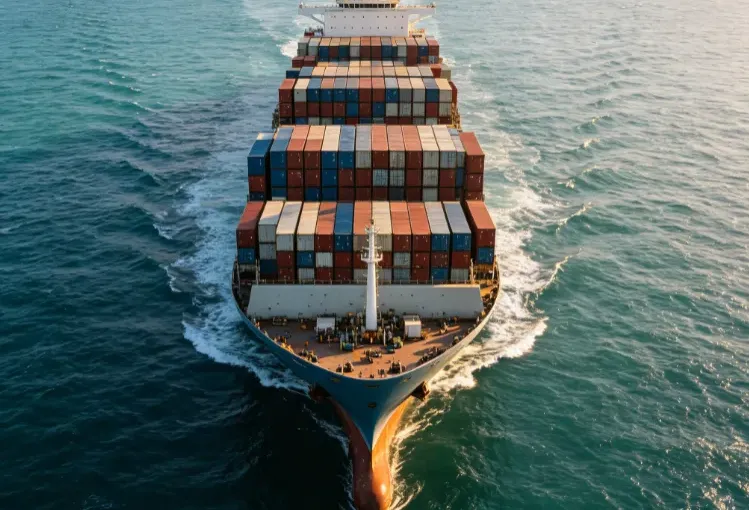
Shanghai is where Venezuela’s machinery, spare parts, solar equipment, motorcycles and consumer goods are manufactured and consolidated — and no shipping lane in the Americas punishes a careless importer faster. The freight rate is not the hard part: routing, entry port and compliance decide whether a Shanghai container reaches La Guaira or Puerto Cabello in six weeks or sits waiting for a bank transfer to clear while storage accrues. Venezuela applies the highest effective import tax stack in the region once IVA and the foreign-currency tax are counted, and every carrier and bank on the trade runs enhanced due diligence.
This guide covers October 2026 rates from Yangshan, the transshipment routings and why the quoted transit time rarely matches reality, the La Guaira versus Puerto Cabello decision, air freight through Maiquetía, SENIAT clearance with the 16% IVA and 3% IGTF stack, and the compliance groundwork that keeps a shipment moving. For the country overview first, start with our shipping from China to Venezuela hub.
Shanghai to Venezuela Shipping Routes: Yangshan Strings, Transshipment and the La Guaira vs Puerto Cabello Split
There is no non-stop mainline service from China to Venezuela. Every container transships, and which hub it uses shapes both the transit time and the damage risk:
| Routing | Hub | Typical port-to-port |
|---|---|---|
| Asia → Panama (Balboa/Cristóbal) → Caribbean feeder | Panama | 30–38 days |
| Asia → Cartagena or Kingston → feeder | Colombia / Jamaica | 32–42 days |
| Asia → Mediterranean (Algeciras, Valencia, Piraeus) → Atlantic feeder | Europe | 38–50 days |
| Direct Caribbean string, where offered | — | 26–32 days, limited space |
Shanghai’s own mechanics matter too. Deep-water mainline vessels load at Yangshan, reached by the Donghai Bridge, and most export boxes are gated in on the mainland and barged across — which is cheaper than a bridge truck run but comes with an earlier cut-off in the week. Waigaoqiao sits closer to Jiangsu and Zhejiang factories and takes some direct calls. Container yard cut-off typically closes 24–48 hours before departure, VGM is filed separately, and the export declaration is lodged before gate-in. Miss the cut-off and the box rolls a week, which at Yangshan is expensive in the weeks around China’s National Day holiday, when sailings fill early.
At the Venezuelan end, the choice is between two ports with different characters:
| Port | Serves | Practical note |
|---|---|---|
| Puerto Cabello | Valencia, Maracay, Caracas industrial corridor | The main container port; more berths, more yard capacity, better feeder coverage |
| La Guaira | Greater Caracas and the capital region | Closest to Caracas but smaller and more congestion-sensitive |
| Maracaibo | West (Zulia) | Limited container services, mostly specialised cargo |
| Guanta / El Guamache | East and Margarita Island | Regional feeders, occasional calls |
If your consignee is not in Greater Caracas, Puerto Cabello is usually the safer choice: more vessel options, more feeder frequency and a bigger yard to absorb a delayed clearance.
Shipping Cost from Shanghai to Venezuela: October 2026 FCL, LCL and Air Rates
Realistic October 2026 all-in ocean rates from Shanghai/Yangshan to the Venezuelan gateway, including origin THC, documentation and the ocean leg, excluding Venezuelan duties and IVA:
| Shanghai/Yangshan → La Guaira or Puerto Cabello | October 2026 rate |
|---|---|
| 20ft FCL (20GP) | $1,900–$4,250 |
| 40ft FCL (40GP) | $2,700–$5,550 |
| 40ft FCL high cube (40HC) | $2,850–$5,850 |
| LCL, per CBM | $118–$295 |
| Air freight from PVG, per kg | $5.0–$10.0 |
| Express courier, per kg | $10–$20 |
The range is wide because the lane is not one product. A space-guaranteed booking on a direct Caribbean string sits at the top; a transshipment routing with a long dwell at the European relay sits at the bottom. What you should never accept is a quote that does not name the routing — on this trade the difference between two “Shanghai to Venezuela” rates is entirely explained by the hub and the number of handovers. Our 20ft and 40ft container cost from China to Venezuela article breaks the routings down box by box.
October 2026 reality check. Capacity into Venezuela is thin, so a single vessel omission can remove a third of the month’s space. Rates are volatile and surcharges land with short notice, particularly on the European relay routings where a missed connection adds a week. Book three to four weeks ahead, confirm the rate validity date in writing, and never assume a space reservation holds without a booking confirmation number from the carrier.
LCL suits shipments below roughly 12–15 CBM, but on this lane the calculations differ from a mainstream trade: consolidation to Venezuela is less frequent, so LCL adds more waiting than usual. Typical destination charges to budget for:
| Destination charge | Typical October 2026 level |
|---|---|
| Venezuelan port and terminal handling | $200–$400 per container |
| Customs broker (agente aduanal) fee | $120–$300 per declaration |
| SENIAT inspection and warehousing, if selected | $90–$250 |
| Trucking Puerto Cabello → Valencia or Caracas | $150–$450 |
| Trucking to interior cities (Barquisimeto, Maracay, San Cristóbal) | $400–$1,100 |
Sea Freight Transit Time from Shanghai to Venezuela: Why the Quote Says 30 Days and Reality Says 45
Quoted transit times on this lane are almost always port-to-port on the best routing available, and almost never what the importer experiences:
| Segment | Direct Caribbean string | Via Panama or Caribbean relay | Via European relay |
|---|---|---|---|
| Booking, loading and export clearance in Shanghai | 2–4 days | 2–4 days | 2–4 days |
| Ocean leg | 26–32 days | 30–38 days | 38–50 days |
| Feeder and hub dwell | 1–3 days | 3–6 days | 4–8 days |
| Discharge and terminal in Venezuela | 1–3 days | 1–3 days | 2–4 days |
| SENIAT clearance | 3–6 working days | 3–6 working days | 3–6 working days |
| Trucking to final destination | 1–3 days | 1–3 days | 1–3 days |
| Door to door total | 34–48 days | 38–54 days | 50–68 days |
Three things stretch Venezuelan transit beyond the sailing. First, hub dwell — a container arriving at a Caribbean or European relay waits for the next feeder with capacity, and that can be weekly. Second, clearance, which in Venezuela depends on the declaration being complete and the tax payment actually transferring; incomplete documentation can add a week. Third, trucking availability from Puerto Cabello to interior cities, which is genuinely variable. Our how long does it take to ship from China to Venezuela guide breaks these segments down across all modes.
Venezuela Customs Clearance for Shanghai Cargo: SENIAT, DUA, 16% IVA and 3% IGTF
Venezuelan customs is administered by SENIAT (Servicio Nacional Integrado de Administración Aduanera y Tributaria), and imports are declared through a DUA (Declaración Única de Aduanas) filed electronically, normally by a licensed agente aduanal. The importer must be registered in the importers’ registry and hold an active RIF tax number.
- Import duty — Venezuela applies its own national tariff rather than the Andean Community’s external tariff, with rates generally reaching 35% at the top and most machinery and consumer goods falling between 10% and 20% of CIF.
- IVA — 16% on the CIF value plus duty. This is the largest single line in the tax stack.
- IGTF — 3% on payments made in foreign currency, which applies to most import settlements in Venezuela and is the charge importers most often forget to model.
- Customs service and inspection fees — smaller charges tied to the declaration and to any physical inspection.
- Product registrations — food, cosmetics, medicines and agrochemicals require health registration; electrical and telecom goods need conformity approval before release.
- No China–Venezuela FTA — there is no preferential duty arrangement in force, so classification accuracy is the only lever on the duty line.
Worked example — a 40ft container of machinery parts from Shanghai:
| Line | Amount |
|---|---|
| FOB Shanghai | $22,000 |
| Ocean freight and origin charges | $4,100 |
| Marine insurance | $150 |
| CIF value | $26,250 |
| Import duty at 15% | $3,938 |
| IVA 16% on $30,188 | $4,830 |
| IGTF 3% on the foreign-currency settlement | $788 |
| Port, broker, inspection and trucking | $1,050 |
| Landed cost at the warehouse | $36,856 (+68% over FOB) |
That 68% uplift is the number to build a Venezuelan business case on. A shipment whose margin cannot absorb it is not a freight problem — it is a product-selection problem, and the container shipping from China to Venezuela guide covers how box choice interacts with it.
Sanctions and Payment Compliance When Shipping from China to Venezuela
This section does not appear in most shipping guides, and it is the reason shipments on this lane stall. US and EU sanctions programmes target designated Venezuelan individuals, entities and state-owned companies rather than the country as a whole, but the practical consequences reach every commercial shipment:
- Enhanced due diligence everywhere. Banks, insurers, carriers and freight forwarders screen the consignee, the notify party, the end user and the vessel history. A name that resembles a designated party can freeze a payment for weeks.
- Payment routing is the bottleneck. Foreign-currency settlements are slower, sometimes require a specific intermediary, and are the single most common cause of a container reaching Venezuela before the money does. Align the payment milestone with the sailing date, not the arrival date.
- Carrier acceptance varies. Some lines advertise the trade, others will not carry it; the booking decision may be constrained by the carrier’s internal policy rather than by capacity.
- Documentation discipline is your defence. A clean chain — commercial invoice, packing list, bill of lading, certificate of origin, end-use statement where relevant — is what gets a shipment through enhanced review. Vague descriptions and unexplained third parties do the opposite.
- Screen before you book. Confirm that neither your consignee nor the ultimate end user appears on a restricted-party list, and get your forwarder’s written confirmation on the same point. Our freight forwarder from China to Venezuela guide covers how to evaluate a partner’s compliance capability.
Air Freight from Shanghai to Venezuela: Maiquetía, Transshipment Hubs and Rates
Shanghai Pudong (PVG) is China’s largest air cargo gateway, and there is no non-stop freighter to Venezuela. Cargo connects through Istanbul, Madrid, Panama City, Miami, Lisbon or Doha before landing at Maiquetía (CCS), which serves Caracas, or at Valencia or Maracaibo.
| Service from PVG | Rate | Door-to-door transit |
|---|---|---|
| Consolidated air, 45–100 kg | $8.0–$10.0 per kg | 7–10 days |
| Consolidated air, 100–300 kg | $6.5–$9.0 per kg | 6–9 days |
| Blocked space, 300–500 kg | $5.8–$8.0 per kg | 6–9 days |
| Blocked space, 500–1,000 kg | $5.3–$7.0 per kg | 5–8 days |
| Blocked space, 1,000 kg+ | $5.0–$6.8 per kg | 5–8 days |
| Express courier (DHL/FedEx/UPS) | $10–$20 per kg | 4–8 days |
Airlines bill the greater of actual and volumetric weight, using length × width × height in centimetres ÷ 6000, and a $50–$150 minimum applies. Note that express couriers on the Venezuela lane frequently cannot guarantee service to all cities, so confirm coverage before promising a customer.
Air is the right answer for spare parts that stop a production line, medical and laboratory equipment, samples and high-value electronics — anything where five weeks of sea transit costs more than the air premium. Above about 300 kg, the per-kilo rate drops sharply and the decision becomes genuinely close. Our door to door shipping from China to Venezuela guide explains how a DDP structure bundles the tax stack, and where DAP is the better choice.
Documents Required to Ship from Shanghai to Venezuela
| Document | Note for this lane |
|---|---|
| Commercial invoice | Must match the DUA exactly; Spanish descriptions reduce query risk |
| Packing list | Required for inspection selection at Puerto Cabello |
| Bill of lading | Consignee must match the RIF registration; no vague descriptions |
| Certificate of origin | Needed for tariff determination even without a preference |
| Import registration and RIF | Confirm validity before the vessel sails, not after |
| HS classification | Drives duty; confirm against the real product, not a supplier description |
| Health or conformity certificates | Required for food, cosmetics, medicines, electrical and telecom goods |
| Insurance certificate | Marine cover at roughly 0.1–0.3% of value |
| End-use statement | Helps clear enhanced compliance review for dual-use items |
Get these right and the Venezuelan end of the shipment is predictable. Get them wrong and the same container can sit at Puerto Cabello for a month while storage and demurrage build.
Reducing Cost and Risk on Shanghai–Venezuela Shipments
| Strategy | Effect | Caveat |
|---|---|---|
| Choose Puerto Cabello over La Guaira for non-Caracas consignees | More feeder options, lower congestion risk | Slightly longer trucking to some capitals |
| Book a routing with a single transshipment | 6–12 days shorter than a double relay | Limited capacity, books out early |
| Consolidate LCL with a forwarder who ships this lane weekly | Cuts CFS waiting from weeks to days | Fewer consolidation options than mainstream trades |
| Model IVA and IGTF in the landed cost before pricing your goods | Avoids margin surprises of 20%+ | Requires accurate CIF valuation |
| Pre-file the DUA while the cargo is at sea | Saves 3–5 days at the port | Needs complete documents before departure |
| Align the payment milestone with the sailing, not arrival | Avoids the most common cause of delay | Requires treasury planning |
| Ship dense cargo, not bulky cargo, by air | Maximises the value of the air premium | Requires packed dimensions up front |
Frequently Asked Questions
How much does it cost to ship from Shanghai to Venezuela in 2026?
In October 2026 a 20ft container from Shanghai/Yangshan to La Guaira or Puerto Cabello runs $1,900–$4,250, a 40ft $2,700–$5,550 and a 40ft HQ $2,850–$5,850, excluding Venezuelan taxes. LCL is $118–$295 per CBM, air freight from PVG is $5.0–$10.0 per kg and express couriers charge $10–$20 per kg.
How long does shipping from Shanghai to Venezuela take?
Sea freight takes 32–48 days door to door: 2–4 days of loading and export clearance in Shanghai, 28–40 days of sailing with a transshipment, and 3–6 working days for SENIAT clearance plus trucking. Routings through a European relay run 50–68 days. Air freight from PVG delivers in 5–10 days.
Which Venezuelan port should my Shanghai cargo arrive at?
Puerto Cabello handles the largest share of containerised imports and serves the Valencia, Maracay and Caracas industrial corridor with more berths and feeder coverage. La Guaira is closest to Caracas but smaller and more congestion-sensitive. Unless your consignee is in Greater Caracas, Puerto Cabello is the safer choice.
Does Venezuela charge import duty on goods from Shanghai?
Venezuela applies its national tariff, with rates generally up to 35% and most machinery and consumer goods between 10% and 20% of CIF. On top of duty, IVA at 16% applies to CIF plus duty, and the IGTF of 3% applies to foreign-currency payments. There is no China–Venezuela FTA in force.
Are there sanctions problems when shipping from China to Venezuela?
Sanctions target designated Venezuelan individuals, entities and state companies rather than the whole country, but carriers and banks apply enhanced due diligence, so payments clear more slowly and some lines refuse the trade. Screen the consignee and end user, keep documentation complete and align payment milestones with the sailing date.
Get a Shanghai to Venezuela Shipping Quote in 24 Hours
Venezuela rewards importers who treat this lane as a compliance exercise with a freight component, not the other way round: a named routing, the right entry port, a complete pre-filed declaration and a payment plan that reaches the carrier before the vessel does. Send us the supplier address in the Yangtze River Delta, the consignee details in Venezuela and the cargo description, and we will quote the routing, the port and the full landed cost — duty, IVA and IGTF included — so you can price your goods before you commit.
Contact Dantful.US for a free, itemised Shanghai–Venezuela quote within 24 hours.