

Are you struggling to decide between EXW and FOB for your international shipments? Understanding the differences in cost, risk, and responsibility is crucial for making smart shipping decisions. In this comprehensive guide, we’ll break down EXW vs FOB, explain key terms, and analyze who pays for what, who bears the risk, and how responsibilities are split—helping you choose the best option for your business needs.
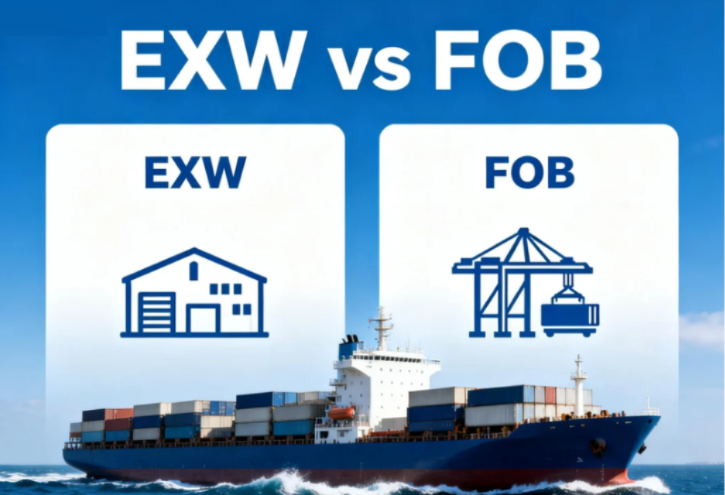
What Are EXW and FOB? Key Definitions in International Shipping
International trade relies heavily on standardized terms to clarify the roles, costs, and risks between buyers and sellers. Two of the most important Incoterms (International Commercial Terms) are EXW (Ex Works) and FOB (Free on Board). Understanding these terms is crucial for importers, exporters, and logistics professionals to avoid costly misunderstandings and ensure smooth cross-border transactions.
Understanding Incoterms: The Role of EXW and FOB
Incoterms are a set of globally recognized rules published by the International Chamber of Commerce (ICC). As defined in the official Incoterms® 2020 by the ICC, they establish the responsibilities of buyers and sellers for the delivery of goods under sales contracts, specifically clarifying who pays for shipping, insurance, customs clearance, and who assumes risk at each stage of the journey. For U.S. importers, these terms also intersect with compliance rules enforced by U.S. Customs and Border Protection (CBP).
Among all Incoterms, EXW and FOB are the most widely used for sea freight, especially when shipping from manufacturing hubs like China. Choosing between them has a direct impact on your shipping cost, risk exposure, and operational control.
Related reading: If you’re considering shipping from China to USA, understanding the difference between EXW and FOB is crucial for calculating total landed cost and risk allocation.
EXW (Ex Works): Meaning and How It Works
EXW (Ex Works) means the seller makes the goods available at their premises (factory, warehouse, or another agreed place). From this point, the buyer assumes almost all responsibilities, including:
- Loading the cargo onto the collection vehicle at the seller’s premises
- Inland transportation to the port of export
- Export customs clearance and documentation
- International freight (sea, air, or other modes)
- Unloading at the destination port and import customs clearance
- Final delivery to the buyer’s location
Key features of EXW:
- Minimal seller responsibility – Seller only packs the goods and makes them available for pickup.
- Maximum buyer responsibility – Buyer manages and pays for all steps from pickup to final destination.
- Higher buyer control – Useful if the buyer has strong logistics partners, such as Dantful.US International Logistics, and wants to optimize costs.
Scenario Example: If you are purchasing from a manufacturer in Shenzhen, China, under EXW terms, you (the buyer) are responsible for all logistics and export processes from the manufacturer’s warehouse onwards.
FOB (Free on Board): Meaning and How It Works
FOB (Free on Board) means the seller is responsible for getting the goods from their warehouse to the port of departure (such as Shanghai Port) and loading them onto the vessel nominated by the buyer. The transfer of responsibility and risk happens once the goods are loaded “on board” the vessel.
FOB responsibilities:
| Party | Seller (up to…) | Buyer (from…) |
|---|---|---|
| Inland transport to port | ✔️ | |
| Export customs clearance | ✔️ | |
| Terminal handling charges (origin) | ✔️ | |
| Ocean freight | ✔️ | |
| Insurance (optional) | ✔️ | |
| Destination charges, import customs | ✔️ | |
| Final delivery | ✔️ |
Key features of FOB:
- Seller handles local procedures – The seller takes care of export customs and terminal charges at the port of origin.
- Buyer assumes risk at loading – After goods are loaded onto the vessel, all costs and risks shift to the buyer.
- Balanced responsibilities – Reduces the buyer’s burden in the export country, particularly valuable if the buyer is unfamiliar with local regulations.
Scenario Example: Purchasing machinery from Ningbo, China under FOB terms means the seller will handle everything up to and including loading the cargo onto the vessel at Ningbo Port, after which you take over responsibility.
Further reading: Explore FOB shipping from China to USA for a breakdown of workflows, documents, and recommended practices for importers.
EXW vs FOB: Cost Structure Comparison
Choosing between EXW and FOB significantly impacts your logistics cost structure. It’s critical to understand who pays for each segment of the journey and budget accordingly.
Who Pays for What? Cost Responsibilities Under EXW
Under EXW, the buyer bears nearly all costs from the moment goods are made available at the seller’s premises. Here’s a typical breakdown:
| Shipping Step | Paid by Seller | Paid by Buyer |
|---|---|---|
| Packing and marking | ✔️ | |
| Loading at seller’s warehouse (optional)** | ✔️ | |
| Inland freight to export port | ✔️ | |
| Export customs clearance & documentation | ✔️ | |
| Terminal handling (origin) | ✔️ | |
| International freight (sea/air/rail) | ✔️ | |
| Insurance | ✔️ | |
| Destination port charges & import customs | ✔️ | |
| Final inland delivery | ✔️ |
Note: Sometimes, the seller may assist with loading, but unless expressly agreed, this is the buyer’s responsibility.
Key Takeaway:
EXW shifts almost all logistics and customs tasks to the buyer. This can offer greater flexibility and potentially lower costs if you work with a reliable freight forwarder, such as Dantful.US International Logistics, who can manage origin services efficiently.
Who Pays for What? Cost Responsibilities Under FOB
Under FOB, cost and responsibility are shared, with the seller handling export-side tasks and the buyer responsible from the vessel onwards.
| Shipping Step | Paid by Seller | Paid by Buyer |
|---|---|---|
| Packing and marking | ✔️ | |
| Inland freight to export port | ✔️ | |
| Export customs clearance & documentation | ✔️ | |
| Terminal handling (origin) | ✔️ | |
| Loading onto vessel | ✔️ | |
| International freight (sea/air/rail) | ✔️ | |
| Insurance | ✔️ | |
| Destination port charges & import customs | ✔️ | |
| Final inland delivery | ✔️ |
Key Takeaway:
With FOB, the seller manages local logistics and export formalities, reducing risk and complexity for the buyer, especially in countries with intricate export procedures.
Real-World Cost Estimate: EXW vs FOB (Shenzhen to Los Angeles, 1x40HQ)
To give you a clearer picture, here is a typical cost breakdown when importing a 40ft container (40HQ) from a factory in Shenzhen, China to Los Angeles Port, USA.
(Note: These are estimated ranges for illustrative purposes only and fluctuate based on peak season, port congestion, and carrier pricing. Ocean freight and destination charges remain the buyer’s responsibility in both scenarios.)
| Fee Component (Origin) | EXW (Buyer Pays) | FOB (Seller Pays) |
|---|---|---|
| Factory to Port Trucking | $250 – $400 | $250 – $400 |
| Export Customs Clearance | $50 – $100 | $50 – $100 |
| Terminal Handling Charge (THC) | $150 – $250 | $150 – $250 |
| Documentation & Port Fees | $100 – $150 | $100 – $150 |
| Total Estimated Origin Cost | $550 – $900 (Added to your freight bill) | $0 (Included in the supplier’s FOB price) |
Key Takeaway: If a supplier’s FOB quote is only $300 higher than their EXW quote, it is mathematically smarter to choose FOB, as handling origin logistics yourself under EXW will likely cost you $550–$900 plus administrative hassle.
Hidden and Additional Fees to Consider with EXW and FOB
Whether you select EXW or FOB, it’s essential to be aware of potential hidden or additional charges:
| Fee Type | Applies to EXW | Applies to FOB | Description |
|---|---|---|---|
| Local handling/Terminal Fees | ✔️ | ✔️ (to seller) | At origin port—must check if included in quotes; under EXW buyer pays, under FOB seller pays. |
| Export customs documentation | ✔️ | ✔️ (to seller) | EXW: buyer may face delays if lacking local contacts. FOB: included in seller’s obligation. |
| Inland transportation add-ons | ✔️ | ✔️ (to seller) | EXW: all at buyer’s expense. FOB: included up to port. |
| Container demurrage/detention | ✔️ | ✔️ | Both scenarios, if containers are not returned on time at destination. |
| Insurance premiums | ✔️ | ✔️ | Buyers often arrange insurance; under EXW, more critical as risk transfers earlier. |
| Customs exams, inspections | ✔️ | ✔️ | Buyer pays at destination; also applies at origin if EXW. |
| Port congestion surcharge | ✔️ | ✔️ | Applied during busy periods, can impact total cost. |
Tip: When comparing quotes, always request a full breakdown of costs from your freight provider. At Dantful.US International Logistics, we provide transparent, itemized quotes for both EXW and FOB shipments, helping you avoid unpleasant surprises.
By understanding the key differences between EXW and FOB, and who is responsible for each cost, you can make informed decisions that save money, reduce risk, and streamline your supply chain operations to the Americas. If you need further guidance or end-to-end logistics support—including sea freight, air freight, customs clearance, and insurance—our team at Dantful.US International Logistics is ready to assist you.
For a practical example of how cost and responsibility allocation works, especially for North American routes, you might find our article on Shipping Container from China to USA valuable.
Risk and Liability: Who Bears the Risk in EXW and FOB?
Transfer of Risk Under EXW: When Does the Buyer Take Responsibility?
When shipping under EXW (Ex Works) terms, the transfer of risk is very clear but places significant responsibility on the buyer. Under EXW, the seller makes the goods available at their premises or another named place (factory, warehouse, etc.). The risk transfers from the seller to the buyer immediately when the goods are placed at the disposal of the buyer, typically before loading onto any collecting vehicle.
This means that the buyer assumes all risks and costs from the moment the goods are ready for collection. From transportation to export formalities, loading, and beyond, all liabilities rest with the buyer. For importers and exporters, this can mean a higher level of control over the logistics process but also exposure to more risk if issues arise during collection or local transport at origin.
Key Takeaways:
- Risk transfers to buyer at seller’s premises or agreed location.
- Buyer is responsible for inland transport, export customs, loading, and all subsequent logistics.
- EXW is often chosen by highly experienced buyers with robust logistics partners.
Transfer of Risk Under FOB: When Does the Seller’s Risk End?
For FOB (Free on Board) shipments, the transfer of risk differs significantly. Here, the seller is responsible for all costs and risks until the goods are loaded onboard the vessel at the named port of shipment. Once the cargo is on board, risk passes from the seller to the buyer.
This means that, compared to EXW, the seller must handle export customs, transportation to the port, and loading onto the carrier. The buyer assumes responsibility only after the goods are safely on the vessel. This arrangement is more balanced for less experienced buyers, reducing risk exposure at origin.
Key Takeaways:
- Risk remains with the seller until goods are loaded onboard at the port of shipment.
- Buyer takes over risk and cost from the moment of vessel loading.
- FOB is often preferred by buyers seeking less complexity at origin.
Table: Comparison of Risk Transfer Point
| Shipping Term | Risk Transfer Point | Seller’s Risk Ends | Buyer’s Risk Starts |
|---|---|---|---|
| EXW | Seller’s premises | At goods handover | Upon collection at origin |
| FOB | On board vessel at port | Upon loading ship | Once on vessel, at port |
Insurance Considerations for Each Shipping Term
Understanding insurance is essential in international shipping, especially when comparing EXW and FOB. Since risk transfers at different stages, the party holding the risk should secure appropriate insurance coverage for their portion of the journey.
- EXW: As the buyer assumes risk even before goods leave the seller’s premises, they should arrange insurance to cover the entire journey from the factory/warehouse to the final destination. This includes any inland transportation, export handling, sea, air, or rail leg, and import handling.
- FOB: Here, the seller is liable until the goods are loaded onboard. The buyer should arrange insurance from the moment the cargo is loaded on the vessel onward. The seller may still want insurance for the pre-shipment phase, especially in high-risk regions.
Tip: Work with a professional freight forwarder like Dantful.US International Logistics to coordinate seamless cargo insurance—covering all risks at competitive rates worldwide.
Documentation and Customs Clearance: EXW vs FOB Differences
Export Documentation and Responsibilities
Correct and timely documentation is a cornerstone of international shipping. The division of documentation responsibilities varies between EXW and FOB:
| Document Type | Under EXW: Buyer’s Responsibility | Under FOB: Seller’s Responsibility |
|---|---|---|
| Commercial Invoice | ✔ | ✔ |
| Packing List | ✔ | ✔ |
| Export Declaration | ✔ (buyer arranges/exporter signs) | ✔ (seller arranges) |
| Bill of Lading / AWB | ✔ (buyer arranges) | ✔ (seller arranges up to loading) |
| Export License/Certificates | ✔ | ✔ |
| Customs Clearance at Origin | ✔ | ✔ |
- EXW: The buyer takes on nearly all documentation, including export customs clearance. This can be complex if the buyer is unfamiliar with local regulations or not physically present in the country of export.
- FOB: The seller manages export customs and documentation up to the vessel loading point, making the process easier for buyers.
For step-by-step country-specific guidance, such as How to Ship from China to Canada: Step-by-Step guide, make sure you understand the paperwork and compliance rules involved.
Import Customs and Clearance Under EXW and FOB
Regardless of the Incoterm, the buyer is always responsible for import customs clearance, duties, and taxes at the destination country. However, the preparation and transmission of certain documents may differ:
- EXW: Since the buyer handles most processes, they must ensure all required documents are obtained from the seller promptly to avoid delays in customs clearance at the destination.
- FOB: The seller usually provides a complete document pack—including the Bill of Lading, Commercial Invoice, and Packing List—which the buyer then uses for import clearance.
Crucial U.S. Compliance Notice: ISF (10+2) and AMS Filings
For shipments entering the USA, CBP strictly requires the Importer Security Filing (ISF) to be submitted 24 hours before the cargo is loaded onto the vessel at the origin port.
- Under FOB: The supplier is usually highly cooperative in providing the necessary factory and manufacturer details on time because they are managing the export process.
- Under EXW: The buyer’s forwarder must scramble to collect this data from a supplier who has “washed their hands” of the shipment once it left their factory door. Delays in gathering this information can result in a $5,000 CBP penalty or a “Do Not Load” order.
Pro Tip: Importers should verify their destination country’s requirements for documents such as Certificates of Origin, Phytosanitary Certificates, or other local permits to ensure smooth customs clearance. Working with a reliable freight forwarder like Dantful.US International Logistics ensures all paperwork (especially ISF and AMS) is compliant and submitted on time, minimizing the risk of customs delays or penalties.
How Dantful.US Solves Your EXW & FOB Headaches
Simply knowing the difference between EXW and FOB isn’t enough—you need a logistics partner who can execute flawlessly at both origin and destination. Unlike generic forwarders, Dantful.US International Logistics specializes in the China-to-US and Americas dedicated lines, transforming complex trade terms into seamless logistics solutions:
- Transparent, Zero-Hidden-Fee Quotes: Whether your supplier quotes EXW or FOB, we provide a complete line-by-line cost breakdown. No surprise THC, document fees, or origin trucking surcharges.
- Origin Control in China & Southeast Asia: If you buy EXW, our local teams in Shenzhen, Shanghai, and Vietnam step in immediately. We handle factory pickups, export licenses, and customs clearance on your behalf.
- U.S. Customs Compliance & ISF Protection: We coordinate directly with your suppliers (even uncooperative ones) to ensure ISF and AMS are filed 24 hours before loading, protecting you from $5,000 CBP fines.
- Seamless Door to Door Transition: We easily convert complex EXW or FOB terms into a simple Door to Door service, managing the Sea Freight or Air Freight, import customs, and final delivery straight to your commercial address or Amazon FBA warehouse.
Don’t let shipping terms dictate your success. Let us manage the risk and paperwork while you focus on growing your business.
Choosing Between EXW and FOB: Which Is Better for Your Business?
When selecting between EXW (Ex Works) and FOB (Free on Board) shipping terms, it is essential to evaluate your business requirements, risk tolerance, logistics expertise, and control preferences. The decision impacts costs, risk allocation, and operational complexity. Below, I provide a comprehensive overview to help you make an informed choice.
Factors to Consider: Buyer’s and Seller’s Perspective
| Factor | EXW (Ex Works) | FOB (Free on Board) |
|---|---|---|
| Control | Buyer has full control over logistics from the seller’s premises onward. | Seller is responsible until goods are loaded onto the vessel at the port of shipment. |
| Cost Responsibility | Buyer bears all costs from the seller’s door, including inland transport, export customs, and freight. | Seller covers local charges (inland transport to port, export customs), buyer pays from port onwards. |
| Risk Transfer Point | Risk passes to buyer at the seller’s site, before export clearance. | Risk transfers to buyer once goods are loaded onboard at the named port of shipment. |
| Required Expertise | Buyer must have strong logistics capabilities in the seller’s country (e.g., China, USA). | Seller handles export and local logistics; buyer deals with import and main carriage. |
| Transparency | Buyer may face hidden costs and less transparency with local agents. | Costs tend to be more predictable as seller manages origin charges. |
| Customs Clearance | Buyer responsible for both export and import clearance, which may be complex. | Seller handles export clearance; buyer manages import process. |
| Suitable For | Large enterprises with in-house logistics or reliable freight partners in the seller’s country. | SMEs, new importers/exporters, or those seeking predictable costs and less operational complexity. |
Buyers Should Consider:
- Shipping Knowledge and Resources: Do you have a trusted freight forwarder (like Dantful.US International Logistics) who can manage local pickups, customs, and compliance in the origin country?
- Desire for Control vs. Simplicity: Do you want to control costs and schedules, or prefer the seller to handle origin logistics?
- Potential Hidden Charges: Are you prepared for possible additional charges, such as terminal handling, customs inspection, or local taxes?
Sellers Should Consider:
- Willingness to Support Buyers: Are you capable of managing export procedures and delivery to the port?
- Market Competitiveness: Does offering FOB terms make your products more attractive to overseas buyers?
- Risk Appetite: Are you comfortable with holding responsibility until the goods are loaded onto the vessel?
Case Studies: Real-World Scenarios (China to USA)
Case Study 1: The “Cheap” EXW Trap for a New Amazon FBA Seller
- Scenario: A U.S. seller sourcing 5 pallets of electronics from a factory in Dongguan, China for Amazon FBA (Dallas, TX). The factory offered a very low EXW price.
- The Problem: The seller didn’t realize they had to arrange a local truck in China, handle Chinese export customs, and file the U.S. ISF (10+2). The factory refused to provide export documents without extra payment, leading to a week of delays and near CBP penalties.
- The Solution: The seller switched to a Door to Door solution with Dantful.US. We sent our own truck to the Dongguan factory, handled all origin paperwork, and shipped it via Sea Freight directly to the FBA warehouse.
- Lesson: If you lack a strong agent in China, EXW can cause severe hidden costs and compliance nightmares.
Case Study 2: Multi-Supplier Consolidation Using FOB
- Scenario: A U.S. construction company buying materials from three different suppliers across Zhejiang Province, China.
- Choice: FOB Ningbo
- The Strategy: The buyer required all three suppliers to deliver their goods to Ningbo Port and clear export customs themselves (fulfilling their FOB obligations). The buyer’s forwarder (Dantful.US) received the goods at our Ningbo warehouse, consolidated them into a single 40HQ container, and shipped it to Los Angeles Port.
- Benefit: The buyer avoided paying three separate LCL shipping fees and didn’t have to manage three different Chinese export customs processes, optimizing both cost and time.
Tips for Negotiating Favorable Shipping Terms
- Understand All Local Charges: Always ask for a detailed breakdown of origin and destination charges under both terms. Many disputes arise from unexpected terminal and handling fees.
- Clarify Responsibility for Documentation: Specify who manages export licenses, compliance certificates, and customs filings.
- Use Reputable Freight Forwarders: Partner with specialized logistics providers like Dantful.US International Logistics. We offer reliable service, transparent pricing, and expertise in sea freight, air freight, warehousing, customs clearance, and more for the Americas routes.
- Plan Insurance Coverage: Discuss and arrange cargo insurance based on the risk transfer point. For EXW, buyers should insure from the seller’s door; for FOB, from the port of shipment.
- Document Everything: Include agreed Incoterms, handover locations, and responsibilities in your sales contract to avoid ambiguity.
- Stay Updated with Incoterms Changes: Use the latest version (e.g., Incoterms® 2020) for legal consistency.
Explore more: For those seeking the fastest and most efficient Door to Door Shipping solutions for EXW or FOB terms, understanding the scope of service is key to seamless imports.
Common Mistakes and How to Avoid Them When Selecting EXW or FOB
Misunderstanding Cost and Risk Allocation
Mistake: Many businesses confuse when costs and risk transfer between parties, leading to disputes, unplanned expenses, and uninsured periods.
Solution: Use a clear table to visualize the transfer:
| Term | Cost Transfer Point | Risk Transfer Point |
|---|---|---|
| EXW | Seller’s premises | Seller’s premises (before export) |
| FOB | Port of shipment (on board) | Port of shipment (on board) |
Always confirm and document responsibilities for each step.
Overlooking Local Charges and Terminal Fees
Mistake: Importers often focus only on freight rates, neglecting origin or destination charges, such as China export customs fees, terminal handling charges (THC), and documentation fees.
Solution: Request a full cost breakdown from your suppliers and logistics provider. At Dantful.US International Logistics, we provide transparent quotes, detailing every fee from pickup to delivery.
Relying on Incorrect Incoterm Interpretations
Mistake: Using outdated or misunderstood Incoterm definitions (e.g., assuming EXW includes export clearance, which it does not).
Solution: Always reference the full Incoterm (e.g., FOB Shanghai, Incoterms® 2020). Train your team on the latest rules or consult with an experienced freight forwarder, such as Dantful.US International Logistics.
Making the Right Choice for Your International Shipments
Selecting between EXW and FOB is not just about cost; it’s about aligning shipping terms with your business’s operational strengths, risk strategy, and growth plans. For many importers—especially those new to international trade—FOB offers a balanced approach, letting you leverage the seller’s expertise at origin, while retaining control from the port onward.
If you are an experienced importer with robust logistics partners in the origin country, EXW can provide more control and potentially better rates, but it requires detailed oversight and risk management.
For optimal results, I recommend:
- Consulting with a professional freight forwarder. Dantful.US International Logistics delivers end-to-end solutions: from sea freight, air freight, Amazon FBA, warehousing, and customs clearance, to insurance and door-to-door services.
- Comparing total landed costs for both terms, including all surcharges and local fees.
- Ensuring your contract clearly defines Incoterms, handover points, and responsibilities.
With tailored guidance and transparent service, you can minimize risks, control costs, and ensure your international shipments arrive on time and in perfect condition.
If you need a reliable partner for your next shipment from China, USA, or anywhere globally, contact Dantful.US International Logistics—your one-stop, professional, and cost-effective freight forwarder China to US solution.
Leave a reply