

Shipping from China to Brazil presents a unique set of challenges—from complex customs regulations (Receita Federal) to long transit times and fluctuating freight rates.
This comprehensive guide breaks down everything you need to know about logistics on this route, including
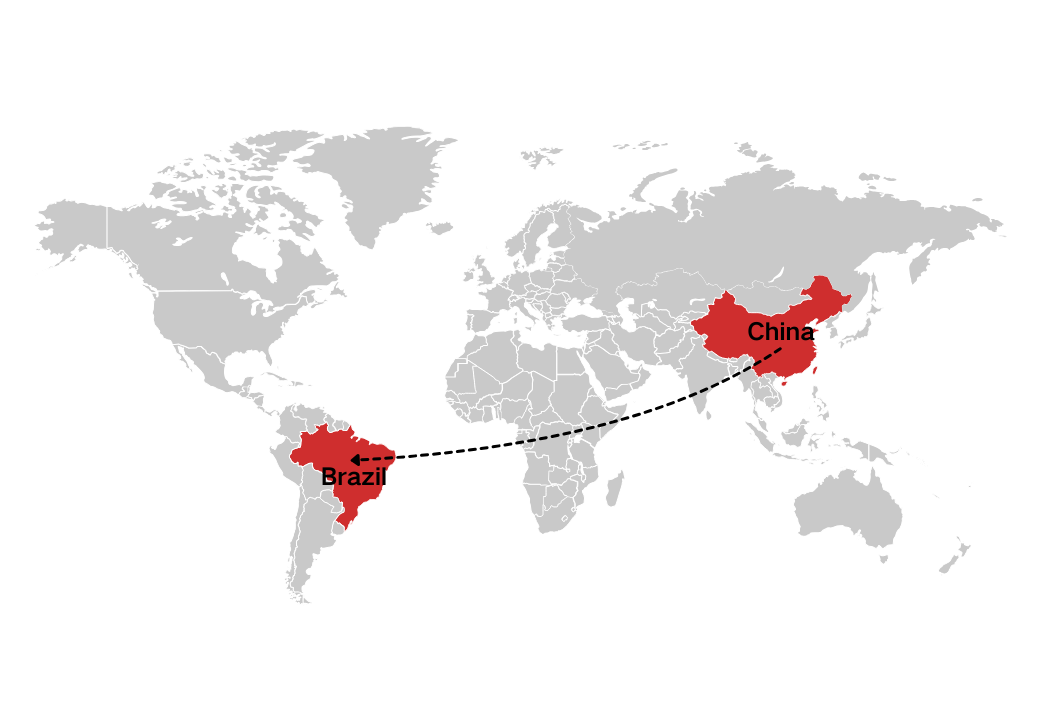
China is Brazil’s top trading partner, supplying machinery, electronics, textiles, and chemicals. While the trade lane is bustling, it is notoriously difficult due to Brazil’s strict customs clearance
-
Bureaucracy: The “Custo Brasil” (Brazil Cost) often refers to the operational costs associated with doing business, including complex tax structures like II, IPI, PIS, COFINS, and ICMS.
-
Port Congestion: Major ports like Santos and Paranaguá can experience significant delays during peak agricultural export seasons.
-
Documentation: A single error on the Commercial Invoice or Packing List can lead to heavy fines and weeks of delay.
Partnering with an experienced freight forwarder like Dantful International Logistics
Sea freight from China to Brazil is the most common method, handling over 90% of cargo. It offers the best balance between cost and capacity.
-
FCL (Full Container Load): Hiring a 20’GP or 40’HQ container is the most economical choice for bulk shipments. It provides better security and faster clearance than LCL.
-
LCL (Less than Container Load): For shipments between 1–15 CBM, LCL shipping allows you to share container space. Note that LCL clearance in Brazil can be slower due to deconsolidation processes.
Best suited for: Heavy machinery, furniture, textiles, and large-scale inventory.
Air Freight from China to Brazil
When time is of the essence, is the answer. While expensive, it reduces transit time from 40+ days to under a week.
-
Standard Air Cargo: Ideal for high-value electronics or urgent spare parts.
-
Charter Services: Available for oversized project cargo or massive urgent shipments.
Best suited for: Electronics, medical devices, fashion samples, and urgent automotive parts.
Express Shipping from China to Brazil
For small parcels (under 30kg), couriers like DHL, FedEx, and UPS offer fast delivery. However, be aware that Brazilian customs taxes on courier shipments (60% flat import tax + ICMS) can be very high.
Best suited for: Documents, samples, and small e-commerce prototypes.
DDP Shipping from China to Brazil
is a premium service where the forwarder handles the entire logistics chain—pickup, export, freight, import clearance, and final delivery.
Note: Due to Brazil’s strict regulations, true “DDP” (Delivered Duty Paid) is difficult for foreign companies to arrange without a local Brazilian entity (RADAR license). Dantful can assist in coordinating DDU (Delivered Duty Unpaid)
Freight rates fluctuate based on fuel prices (BAF), currency exchange rates, and seasonal demand. Below are estimated ranges for April 2026.
Estimated Shipping Rates (April 2026)
| Shipping Mode | Origin (China) | Destination (Brazil) | Estimated Cost Range | Key Factors |
|---|---|---|---|---|
| FCL 20′ Container | Shanghai / Shenzhen | Santos / Paranaguá | $2,100 – $2,800 | General Rate Increases (GRI) |
| FCL 40′ Container | Shanghai / Shenzhen | Santos / Paranaguá | $3,200 – $4,500 | Peak Season Surcharges |
| LCL (Sea Freight) | Major Ports | Santos | $60 – $110 per CBM | Min 1 CBM; Deconsolidation fees apply |
| Air Freight | PVG / SZX / HKG | GRU / VCP | $5.50 – $9.50 per kg | Fuel & Security Surcharges |
How to Determine if Your Freight Rate is Reasonable
-
Check Local Charges: In Brazil, destination port charges (Capatazia, THC) can be high. Ensure your quote separates freight from local fees.
-
Demurrage & Detention: Negotiate more “Free Time” at the destination port (e.g., 14-21 days) to account for slow customs clearance.
-
Validity:
Distance is a major factor. The voyage from East Asia to South America is one of the longest in global shipping.
Typical Transit Time Ranges
-
Sea Freight (East Coast – Santos): 35 – 45 days
-
Sea Freight (North – Manaus): 40 – 50 days (often via transshipment in Panama)
-
Air Freight: 3 – 7 days
-
Express Courier: 3 – 6 days
Factors That Impact Transit Time
-
Transshipment: Many vessels stop in Singapore or Europe, adding time. Direct services are faster but rarer.
-
Customs Strikes: Strikes by Brazilian customs auditors (Receita Federal) can cause weeks of delay.
-
Port Congestion:
-
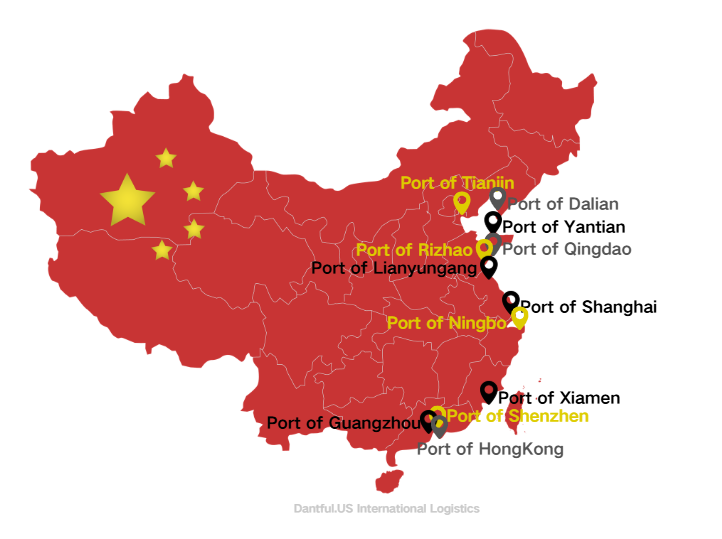
Shanghai Port: The global hub for general cargo.
-
Shenzhen Port (Yantian/Shekou): Ideal for electronics from Southern China.
-
Ningbo-Zhoushan Port: Key for heavy industrial goods.
-
Hong Kong (HKG):
-
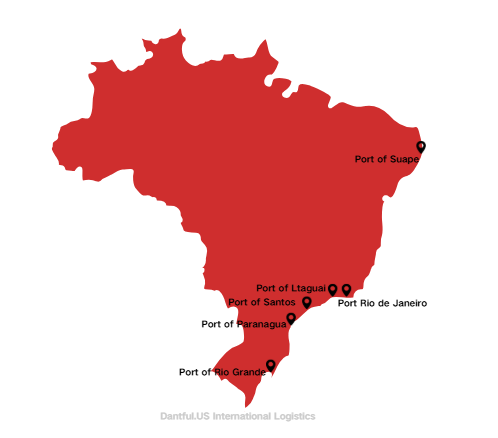
Santos Port (SP): The largest port in Latin America, handling the majority of Brazil’s imports. Best for cargo destined for São Paulo and the South.
-
Paranaguá Port (PR): A major alternative to Santos, often used for machinery and fertilizers.
-
Itajaí / Navegantes (SC): Key for the textile and frozen food industries.
-
Manaus Port (AM): Located in the Amazon, serving the Free Trade Zone (Zona Franca de Manaus).
-
Guarulhos Airport (GRU) & Viracopos (VCP): The main gateways for air cargo.
Typical Shipping Routes
Most vessels sail via the Cape of Good Hope (South Africa) or transit through the Panama Canal
-
Secure space 2-3 weeks in advance.
-
RADAR Check: Ensure the Brazilian importer has an active RADAR license (Siscomex access) to import.
-
Documentation Approval: Crucial Step. The importer must approve the draft BL and Commercial Invoice before the cargo leaves China to avoid fines.
-
Export & Transit: Cargo departs China.
-
Mercante System: The forwarder registers the BL in Brazil’s Mercante system 48 hours before arrival.
-
Import Clearance (DI): Importer files the Declaração de Importação (DI) and pays taxes.
-
Canal Parametrização: Customs assigns a channel: Green (Clear), Yellow (Doc check), or Red (Physical inspection).
-
Delivery:
Navigating Customs Clearance in Brazil is often cited as the most challenging part of the logistics process due to its bureaucracy and strict adherence to regulations.
Essential Requirements
-
RADAR License (Siscomex): Before shipping, the Brazilian importer must have an active RADAR license to access the Siscomex system. Without this, customs clearance is impossible, and cargo may be seized or returned.
-
NCM Code Accuracy: The Nomenclatura Comum do Mercosul (NCM) is the Brazilian HS Code. Incorrect classification can lead to heavy fines (minimum 1% of customs value) and delays. It determines the applicable tax rates and administrative requirements.
Duties and Taxes Structure
Brazilian import taxes are cumulative and calculated on the CIF value (Cost + Insurance + Freight):
-
II (Import Duty): Ranges from 0% to 35% depending on the product.
-
IPI (Industrialized Product Tax): Federal tax on manufactured goods.
-
PIS & COFINS: Federal social contributions.
-
ICMS (State VAT): The final tax applied, varying by state (e.g., São Paulo is usually 18%). It is calculated on top of all other duties and costs.
Required Documentation
Discrepancies between documents can cause shipments to be held for months.
-
Commercial Invoice: Must be signed and include specific details like NCM codes, unit prices, and freight costs.
-
Packing List: Must match the invoice and physical cargo exactly.
-
Bill of Lading (BL): Must show the exact NCM code and CNPJ (Tax ID) of the importer.
-
Wooden Packaging: Any wood pallets or crates must be fumigated and stamped with ISPM 15
Dantful International Logistics understands the nuances of the Brazil trade lane.
-
Documentation Review: We double-check drafts to ensure compliance with Brazilian standards.
-
Free Time Negotiation: We secure extended container free time to buffer against clearance delays.
-
Cost-Effective Freight: Competitive rates for .
-
End-to-End Support:
1. How long does shipping take from China to Brazil?
Sea freight typically takes 35 to 45 days to main ports like Santos. Air freight takes 3 to 7 days. Delays can occur due to transshipments or customs clearance.
2. What is the cheapest way to ship to Brazil?
Sea freight (FCL) is the most economical for large shipments. For smaller volumes (under 15 CBM), LCL is cost-effective, though destination charges should be monitored.
3. What is the cost of container shipping from China to Brazil?
Freight rates fluctuate, but generally, a 20ft container costs between $2,100 and $2,800, and a 40ft container ranges from $3,800 to $4,500. Factors affecting the price include the season (Peak Season Surcharges), fuel costs, and the specific route (e.g., Shenzhen to Santos).
4. What is the import tax from China to Brazil?
Brazil imposes a complex tax structure including Import Duty (II) (0%–35%), IPI (Industrialized Product Tax), PIS and COFINS, plus the state tax ICMS (typically 17%–19%). The total tax burden is calculated on the CIF value and can often exceed 60%–100% of the product cost.
Request a Quote
Navigate the complexities of the China-Brazil route with confidence.
Contact Dantful International Logistics today
Request
A Free Shipping Quote
Get a fast, free shipping quote from Dantful.US Logistics — your reliable partner for cost-effective, hassle-free global delivery.