

How long does it really take for shipments to travel from Vietnam to Mexico, and what factors determine the shipping time from Vietnam to Mexico? Whether you’re a business owner or an individual shipper, understanding key terms like ocean freight, air freight, and customs clearance is crucial for timely delivery. In this comprehensive guide, we’ll break down the transit times, compare major shipping methods, and reveal expert tips for reducing delays on this popular international trade route.
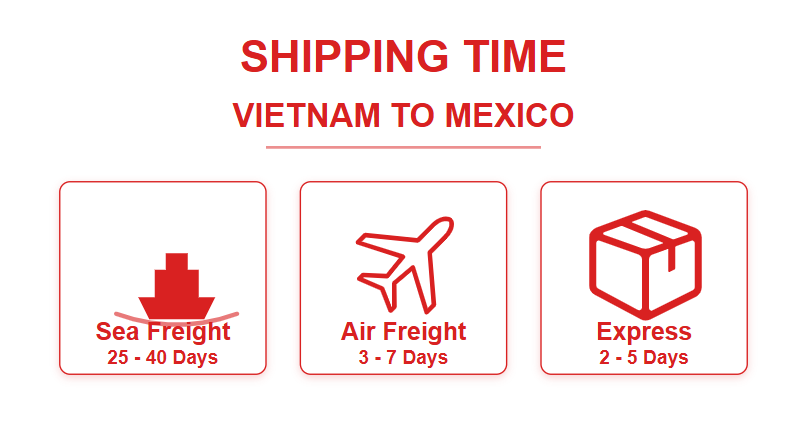
Overview of Shipping Time from Vietnam to Mexico
When shipping goods from Vietnam to Mexico, understanding the expected shipping time is essential for effective supply chain planning and customer satisfaction. Transit time can vary widely depending on your chosen shipping method, origin and destination points, and external factors such as customs procedures or weather. As an experienced freight forwarder, a professional logistics partner supports clients with tailored shipping solutions and transparent timelines to ensure your cargo arrives safely and efficiently.
Key Factors Influencing Shipping Time Between Vietnam and Mexico
Several key factors directly impact how long it takes to ship cargo between Vietnam and Mexico:
- Shipping Mode: Choosing between sea freight, air freight, or express courier affects delivery times dramatically. For example, air freight is much faster than ocean freight but at a higher cost.
- Port Selection: Major ports in Vietnam (like Ho Chi Minh City or Hai Phong) and in Mexico (Manzanillo, Veracruz, Altamira) have different handling capacities and schedules, influencing overall transit time.
- Cargo Type: FCL (Full Container Load) is generally quicker than LCL (Less than Container Load), which requires cargo consolidation and deconsolidation.
- Customs Clearance: Delays may occur if documents are incomplete or regulations are not met in either country.
- Shipping Schedule & Routing: Direct routes are faster than transshipment routes, which may involve more stops and handling.
- Weather & Seasonal Trends: Typhoons, hurricanes, and peak shipping seasons (e.g., pre-holiday periods) can disrupt schedules.
- Freight Forwarder’s Efficiency: Working with an experienced and reliable logistics partner can help minimize delays and optimize shipping time.
Related reading: If you’re also considering other American markets, check out the Shipping from China to USA and Shipping from China to Mexico guides for in-depth regional insights.
Typical Transit Times for Major Shipping Methods
Below is a comparison table of estimated transit times for different shipping options from Vietnam to Mexico:
| Shipping Method | Estimated Transit Time | Best For |
|---|---|---|
| Ocean Freight (FCL) | 25–35 days | Large shipments, cost-effective |
| Ocean Freight (LCL) | 28–40 days | Small shipments, less urgent |
| Air Freight | 3–7 days | Urgent, high-value goods |
| Express Courier | 2–5 days | Samples, small parcels, documents |
Note: Transit times are estimates and may fluctuate due to customs, weather, and carrier schedules.
Ocean Freight Shipping Duration from Vietnam to Mexico
Ocean freight is the most common and economical option for transporting large volumes between Vietnam and Mexico. However, transit times are longer compared to air or express services. With a professional logistics partner, you can optimize your ocean shipping routes, reduce bottlenecks, and ensure more predictable delivery schedules.
Standard Sea Freight Transit Times: FCL vs. LCL
- FCL (Full Container Load): Your cargo occupies an entire container. This method often provides faster handling and shorter transit times—usually around 25 to 35 days—thanks to minimized stops and direct shipping.
- LCL (Less than Container Load): Your goods share space in a container with cargo from other shippers. While more affordable for smaller loads, LCL shipments typically take longer—28 to 40 days—due to extra steps in cargo consolidation and deconsolidation at both ends.
| Mode | Container Size | Capacity (CBM) | Estimated Transit Time |
|---|---|---|---|
| FCL | 20FT | 28 | 25–35 days |
| FCL | 40FT | 56 | 25–35 days |
| FCL | 40HQ | 68 | 25–35 days |
| FCL | 45HQ | 78 | 25–35 days |
| LCL | Shared | N/A | 28–40 days |
Major Ports and Their Impact on Shipping Time
Vietnam’s main export seaports:
- Ho Chi Minh City (Cat Lai Port): The busiest and offers frequent departures.
- Hai Phong: Serves northern Vietnam; slightly longer inland transit for some factories.
- Da Nang: Suitable for central Vietnam but with fewer direct sailings.
Mexico’s main import seaports:
- Manzanillo: Primary Pacific gateway, offers the best connectivity for Asian imports.
- Veracruz: Major Atlantic port, used for cargo headed toward central and eastern Mexico.
- Altamira: Another important Gulf port, preferred for specific trade lanes.
Shipping times vary depending on port pairs and directness of vessel routes. For example, Ho Chi Minh City to Manzanillo is typically the fastest major route, with fewer transshipments.
| Vietnam Port | Mexico Port | Typical Route Type | Estimated Transit Time |
|---|---|---|---|
| Ho Chi Minh City | Manzanillo | Direct/Transshipment | 25–30 days |
| Hai Phong | Veracruz | Transshipment | 30–40 days |
| Da Nang | Altamira | Transshipment | 32–42 days |
Note: Transshipment may involve stops in ports like Singapore, Hong Kong, or Los Angeles.
How Weather and Seasonal Trends Affect Sea Freight Schedules
Ocean shipping schedules are highly sensitive to external conditions:
- Typhoon Season: From June to November in the Western Pacific, ports in Vietnam may experience temporary closures or vessel delays due to storms.
- Hurricane Season: Similar disruptions can occur at Mexican ports during the Atlantic hurricane season (June–November).
- Peak Shipping Seasons: Higher demand before holidays (such as Christmas, Lunar New Year) can lead to vessel space shortages, port congestion, and longer handling times.
- Global Events & Disruptions: Unexpected events like labor strikes, pandemics, or geopolitical tensions can also affect routing and transit time.
To minimize risks, work closely with a professional freight forwarder that provides real-time schedule updates and contingency planning for your shipments.
By understanding these key factors and typical transit times, you can select the most suitable shipping solution from Vietnam to Mexico, balancing urgency, cost, and reliability. For tailored logistics support and up-to-date scheduling, contact Dantful.US International Logistics—your specialized partner for logistics from Asia to the Americas.
If you’re comparing Asian–America routes, you may also find our Sea Freight from Vietnam to USA guide useful for benchmarking transit times and logistics practices.
Air Freight Shipping Times from Vietnam to Mexico
Air freight offers the fastest shipping option for transporting goods from Vietnam to Mexico, making it an ideal solution for urgent or time-sensitive shipments. On average, the estimated transit time for standard air freight ranges from 3 to 7 days, depending on factors such as the specific origin and destination airports, airline schedules, cargo type, and whether the shipment is handled as direct or indirect (transshipment) service.
Below is a comparison table highlighting typical air freight transit times between major airports in Vietnam and Mexico:
| Origin Airport (Vietnam) | Destination Airport (Mexico) | Transit Time (Direct) | Transit Time (Indirect/Transshipment) |
|---|---|---|---|
| Tan Son Nhat International Airport (SGN, Ho Chi Minh City) | Mexico City International Airport (MEX) | 3-5 days | 5-7 days |
| Noi Bai International Airport (HAN, Hanoi) | Mexico City International Airport (MEX) | 4-6 days | 6-8 days |
| Da Nang International Airport (DAD, Da Nang) | Guadalajara International Airport (GDL) | 4-7 days | 6-9 days |
Transit times include air carriage and standard ground handling at airports, but do not account for customs clearance delays.
Direct vs. Indirect Flights: How Routing Impacts Delivery Speed
Currently, there are no direct commercial cargo flights between Vietnam and Mexico. Most air shipments require at least one transshipment, commonly at international hubs such as Incheon (ICN), Hong Kong (HKG), Los Angeles (LAX), or Dallas (DFW).
- Direct/Non-Stop Flights: If available, direct flights minimize transit times and reduce the risk of delays due to missed connections or handling errors. However, due to route limitations, direct flights are rare for this lane.
- Indirect Flights (Transshipment): Most shipments are routed through major hubs, adding 1-2 days to transit time. The routing often depends on airline partnerships, cargo volume, and connectivity. Although slightly slower, indirect flights are generally more flexible and widely available.
Routing Example:
- SGN → HKG → LAX → MEX (Vietnam → Hong Kong → United States → Mexico)
Key Takeaway: When speed is critical, prioritize carriers and freight forwarders who offer the shortest connection times and proven performance on this trade lane.
Air Freight vs. Sea Freight: Pros and Cons for Time-Sensitive Shipments
When comparing air freight and sea freight from Vietnam to Mexico, several factors must be considered, especially for time-sensitive cargo.
| Criteria | Air Freight | Sea Freight |
|---|---|---|
| Transit Time | 3-7 days | 25-35 days (FCL/LCL) |
| Cost | Higher | Lower |
| Reliability | High (less affected by weather/port congestion) | Variable (prone to port and weather delays) |
| Capacity | Limited (weight/volume restrictions) | Extensive (ideal for bulk shipments) |
| Best For | Urgent, high-value, perishable, or time-critical cargo | Non-urgent, heavy, or large-volume shipments |
Air freight is ideal when speed outweighs cost. For businesses requiring regular, reliable, and fast replenishment of inventory—or for e-commerce sellers managing rapid order fulfillment—air freight is the preferred choice.
Professional logistics providers offer tailored air freight solutions, including door-to-door, customs clearance, and insurance, ensuring your urgent shipments from Vietnam to Mexico arrive on time and in perfect condition.
Express and Courier Shipping Options
Express Delivery Times: DHL, FedEx, UPS from Vietnam to Mexico
Express courier services like DHL, FedEx, and UPS are the fastest shipping methods for small parcels, samples, and urgent documents. These global integrators offer reliable, trackable, and door-to-door delivery services between Vietnam and Mexico.
Typical Express Transit Times:
| Express Carrier | Standard Delivery Time (Business Days) | Priority/Express Service (Fastest) |
|---|---|---|
| DHL Express | 3-5 | 2-3 |
| FedEx International Priority | 3-5 | 2-3 |
| UPS Express Saver | 3-6 | 2-4 |
Delivery times may vary depending on origin city, time of booking, and customs clearance.
Key Features:
- Real-time online tracking
- End-to-end customs brokerage
- Option for delivery duty paid (DDP) services
When to Choose Express Shipping for Urgent Deliveries
Express shipping is recommended in the following scenarios:
- Samples, documents, and small parcels requiring delivery within 2-5 business days
- E-commerce shipments with tight customer delivery expectations
- Critical spare parts or high-value items where delays could cause significant business disruption
- Situations where customs clearance support and proactive shipment monitoring are essential
Top-tier logistics providers partner with leading global couriers to offer competitive rates, consolidated booking, and full-service logistics support for your express shipments from Vietnam to Mexico. Whether you need to meet a product launch deadline or manage urgent procurement, we ensure your cargo arrives as fast as possible, with full transparency and professional care.
Conclusion: Selecting the right shipping mode—air freight or express courier—depends on your specific timeline, budget, and cargo requirements. At Dantful.US International Logistics, our expert team can help you balance cost, speed, and reliability to meet your business goals. Contact us today for a personalized quote and discover how we can streamline your supply chain from Vietnam to Mexico.
Customs Clearance and Its Impact on Shipping Time
When considering the overall shipping time from Vietnam to Mexico, customs clearance at both the origin (Vietnam) and the destination (Mexico) plays a pivotal role. Efficient customs processes can significantly reduce transit time, while delays can disrupt entire supply chains, impacting business operations and customer satisfaction.
Common Causes of Delays at Vietnamese and Mexican Customs
Understanding the most frequent reasons for customs delays helps shippers take proactive steps. Below are the leading causes:
| Cause of Delay | Description & Impact |
|---|---|
| Incomplete or Incorrect Documentation | Missing invoices, packing lists, or certificates can lead to cargo holds and inspections. |
| Non-compliance with Import/Export Laws | Violating regulations, such as restricted goods or lacking required permits, results in confiscation or lengthy reviews. |
| Customs Duties and Tax Discrepancies | Inaccurate declaration of cargo value or HS codes can trigger audits and payment disputes. |
| Random or Targeted Inspections | Both countries perform random checks or target shipments based on risk profiles, causing unpredictable delays. |
| Language or Translation Issues | Mistakes in translation of shipping documents, especially between Vietnamese, English, and Spanish, can confuse customs officials. |
| Inadequate Packaging or Labeling | Improperly labeled goods or unsafe packaging can result in repackaging orders or rejections at customs. |
Vietnamese customs are strict on export documentation, while Mexican customs enforce rigorous inspections, especially for certain product categories (electronics, food, textiles).
Tips for Smooth Customs Clearance and Faster Transit
Proactive planning and compliance are essential to minimize customs-related disruptions and optimize shipping time from Vietnam to Mexico. Here are proven strategies:
- Ensure Complete and Accurate Documentation: Double-check commercial invoices, packing lists, bills of lading/air waybills, certificates of origin, and any required permits. Ensure all information matches across documents.
- Use the Correct HS Codes: Properly classify all commodities with harmonized system (HS) codes and ensure declared values are accurate to avoid audits or penalties.
- Partner with an Experienced Freight Forwarder: Work with a reputable logistics provider. Experienced teams can guide you through customs procedures in both Vietnam and Mexico, reducing the risk of errors and delays.
- Stay Updated on Regulations: Monitor changes in customs laws, import quotas, and restricted/prohibited items for both countries. Regular updates help you stay compliant and avoid surprise delays.
- Provide Proactive Communication: Notify your logistics provider and customs broker of any special requirements or cargo sensitivities prior to shipment.
- Leverage Digital Systems: Use digital documentation and e-filing whenever possible to streamline submissions and reduce paperwork errors.
How to Choose the Fastest Shipping Method from Vietnam to Mexico
Selecting the right shipping mode can have a profound impact on both cost and delivery speed. Here is a comprehensive comparison to help you identify the optimal solution for your needs.
Comparing Cost, Speed, and Reliability for Different Shipping Options
The main modes for shipping from Vietnam to Mexico are sea freight, air freight, and express/courier services. The right choice depends on your shipment’s urgency, volume, budget, and type of goods.
Shipping Methods Comparison Table
| Shipping Method | Typical Transit Time (Port to Port/Airport to Airport) | Best For | Cost Estimate (Jan 2026) | Reliability |
|---|---|---|---|---|
| Sea Freight (FCL) | 25-35 days | Large, heavy, or bulky cargo | $1,800 – $2,800 / Container | High for scheduled; subject to delays from weather/port congestion |
| Sea Freight (LCL) | 28-40 days | Small consignments, less urgent | $80 – $120 / CBM | Slightly lower, as consolidation/deconsolidation adds time |
| Air Freight | 3-7 days | Time-sensitive, valuable goods | $3.50 – $5.50 / kg | Very High |
| Express/Courier | 2-5 days | Samples, documents, urgent items | $6.00 – $9.00 / kg | Highest |
| Multimodal (Sea + Air) | 12-18 days | Faster than sea, cheaper than air | $2.50 – $4.00 / kg | High |
Key Notes:
- FCL (Full Container Load) offers economies of scale and higher security for large shipments.
- LCL (Less than Container Load) is cost-effective for smaller volumes but slightly longer due to extra handling.
- Air Freight is ideal for perishable, high-value, or urgent cargo.
- Express Services (DHL, FedEx, UPS) are the fastest but suited only for small, urgent shipments due to high costs.
For more insights into multimodal and regional options, see our Sea Freight from China to Mexico resource.
Factors to Consider When Selecting a Logistics Partner
Choosing the right logistics partner is as critical as the shipping mode itself. Here are essential criteria:
- Service Portfolio: Opt for a provider offering a complete range of logistics solutions: Sea Freight, Air Freight, Rail Freight, Road Freight, Amazon FBA, Warehouse, Customs Clearance, Insurance, Door to Door, OOG Freight, Consolidated Freight, and Breakbulk Freight.
- Experience & Local Expertise: Ensure your partner has proven experience with the Vietnam-Mexico trade lane, understands compliance requirements, and has established local networks in both countries.
- Transparency and Communication: Reliable updates on shipment status, customs process, and any disruptions are vital for peace of mind and supply chain planning.
- Cost-effectiveness: Balance price with service quality. Watch for hidden fees and ensure the quoted price includes ALL services you need.
- Customs Clearance Support: Your forwarder should offer dedicated customs assistance, helping prevent documentation errors and guiding you through complex procedures.
- Track Record and References: Look for client testimonials, case studies, or industry certifications that demonstrate trustworthiness and service excellence.
Why Expertise Matters for Your Vietnam-Mexico Shipments
Shipping between Vietnam and Mexico involves more than just moving boxes; it requires navigating complex trade regulations, fluctuating freight rates, and specific customs requirements in both countries. A generic approach often leads to unexpected delays or hidden costs.
At Dantful.US International Logistics, we position ourselves as your strategic trade partner. With over 10 years of experience focusing on the American market, we understand the specific challenges of this route—whether it’s handling Bill of Lading discrepancies or securing space during peak seasons. We don’t just offer competitive rates; we provide reliable solutions and transparent communication, ensuring you are never left in the dark about your cargo’s status.
Success in international trade comes from preparation and partnership. By leveraging our deep local knowledge and logistics network, you can transform your supply chain into a competitive advantage. If you need a shipping solution that is as committed to your business goals as you are, reach out to the Dantful.US team for a consultation.
Tips to Reduce Shipping Time and Avoid Delays
Efficient international shipping from Vietnam to Mexico relies not just on the choice of transportation mode but also on a thorough understanding of best practices. By optimizing packing, documentation, scheduling, and partnering with a reputable freight forwarder, you can significantly reduce transit time and minimize unexpected delays.
Best Practices in Packing, Documentation, and Scheduling
Proper Packing
- Optimize Container Usage: Select the right container size—20FT (28 CBM), 40FT (56 CBM), 40HQ (68 CBM), or 45HQ (78 CBM)—based on your shipment volume. Maximizing space can help avoid partial shipments and unnecessary delays.
- Protect Goods: Use appropriate packaging materials to prevent damage during transit, which can result in customs holds or insurance claims.
- Label Clearly: Ensure all packages are labeled with correct details (destination, consignee, weight, and handling instructions) for quick identification during handling and customs inspection.
Accurate Documentation
- Complete and Accurate Paperwork: Missing or incorrect documents (such as Bill of Lading, Commercial Invoice, Packing List, and any required certificates) are the leading cause of customs delays. Double-check all paperwork before dispatch.
- Understand Import/Export Requirements: Regulations in Vietnam and Mexico can change. Stay updated on any changes to avoid compliance issues.
- Use Digital Copies: Digital documentation speeds up communication with stakeholders and customs authorities.
| Common Shipping Documents | Purpose |
|---|---|
| Bill of Lading | Shipping contract and proof of ownership |
| Commercial Invoice | Details value and contents for customs |
| Packing List | Details of package contents |
| Certificate of Origin | Verifies the origin of goods |
| Import/Export Licenses | Legal permission for trading goods |
Efficient Scheduling
- Book in Advance: Secure space on vessels or flights early, especially during peak seasons or holidays in Vietnam or Mexico, when capacity is limited.
- Monitor Holidays & Weather: Plan shipments around national holidays (e.g., Tet in Vietnam, Semana Santa in Mexico) and typhoon seasons to avoid port congestion and weather-related delays.
- Select Appropriate Cut-off Times: Ensure cargo is ready before carrier cut-off times to prevent missing scheduled departures.
Choose a Reliable Freight Forwarder
Selecting a professional and experienced freight forwarder is paramount for efficient shipping from Vietnam to Mexico. Here’s what to look for:
- Comprehensive Service Portfolio: Choose a provider offering Sea Freight, Air Freight, Rail Freight, Road Freight, Amazon FBA, Warehouse, Customs Clearance, Insurance, Door to Door, OOG Freight, Consolidated Freight, and Breakbulk Freight.
- Track Record: Look for a forwarder with proven expertise in handling shipments between Vietnam and Mexico, with positive customer testimonials and successful case studies.
- Transparent Communication: A reliable partner keeps you updated on your shipment’s status, proactively communicates potential issues, and offers solutions.
- Technology Integration: Advanced tracking systems and digital document management reduce the risk of miscommunication and delays.
- Customs Knowledge: Expertise in both Vietnamese and Mexican customs procedures ensures faster clearance and compliance.
For those looking to optimize localized delivery, consider exploring Door to Door Shipping services which further streamline cross-border logistics and reduce handling times.
FAQs
1. What is the fastest shipping option from Vietnam to Mexico? The fastest method is air freight, with estimated transit times of 3–7 days, depending on routing and service level. Express courier services (DHL, FedEx, UPS) can sometimes deliver in 2–5 days for urgent, small shipments.
2. How long does sea freight take from Vietnam to Mexico? Sea freight transit times typically range from 25 to 35 days for FCL (Full Container Load) shipments. LCL (Less than Container Load) shipments may take slightly longer, around 28 to 40 days, due to the consolidation and deconsolidation processes at ports.
3. What factors most commonly cause delays in shipping? Delays are frequently caused by incomplete documentation, customs inspections, port congestion, adverse weather, and missed carrier cut-off times.
4. How do I choose the right container size for my shipment? Select based on your cargo volume. Typical container capacities:
| Container Type | Capacity (CBM) |
|---|---|
| 20FT | 28 |
| 40FT | 56 |
| 40HQ | 68 |
| 45HQ | 78 |
5. What is the average transit time for air freight from Vietnam to Mexico? Air freight shipments generally take between 3 to 7 days. The exact time depends on whether you choose a direct flight (rare) or an indirect flight with transshipments in hubs like Hong Kong or Los Angeles.
6. When should I use express shipping instead of sea or air freight? Use express shipping when delivery speed is critical, shipment value justifies higher costs, and the cargo is small or urgent.
7. How does peak season affect shipping time from Vietnam to Mexico? Peak seasons—such as pre-holiday periods or global events—can lead to limited capacity and longer transit times. Booking early and working with an experienced logistics partner like Dantful.US can help you plan effectively.
If you have more questions or need personalized shipping solutions from Vietnam to Mexico, contact Dantful.US International Logistics. Our team is ready to optimize your supply chain and ensure worry-free international deliveries.
Leave a reply