

Shipping from China to Mexico has become a critical logistical artery for global businesses. Whether you are an electronics manufacturer in Shenzhen, an auto parts supplier in Shanghai, or an e-commerce seller targeting the growing Mexican market, understanding the nuances of this route is essential.
In this comprehensive guide, updated for January 2026, we provide a deep dive into shipping methods, transit times, freight costs, and customs clearance strategies. With Dantful.US International Logistics
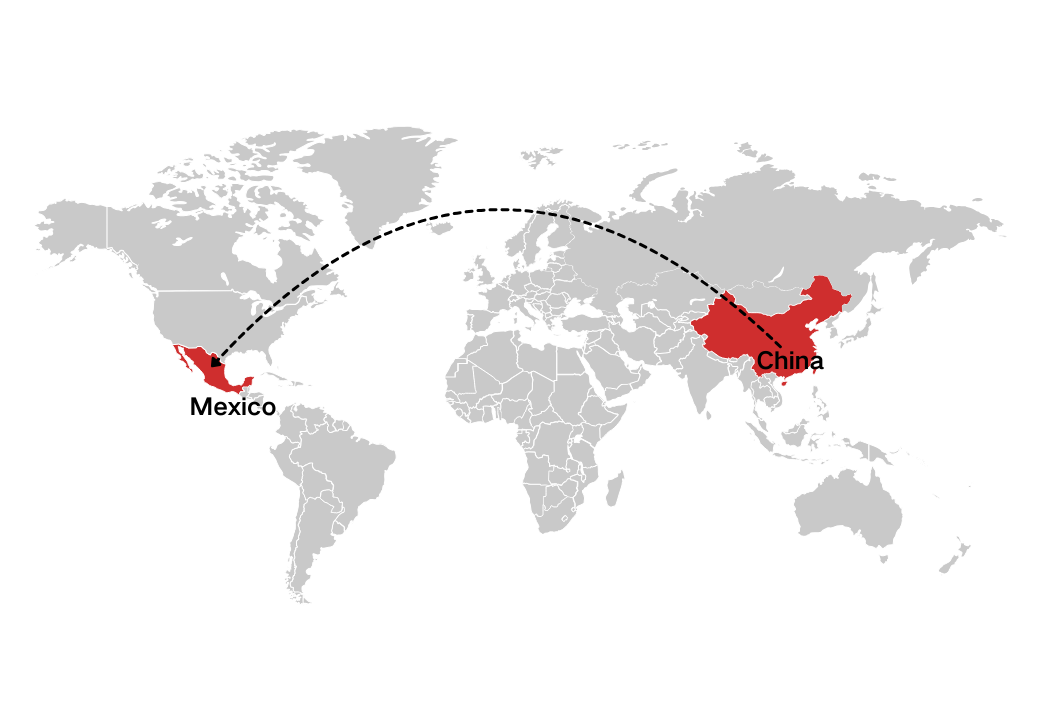
China remains Mexico’s second-largest trading partner, supplying everything from heavy machinery and raw materials to consumer electronics and textiles. However, the logistics landscape is dynamic, influenced by port congestion, fuel surcharges, and evolving trade regulations.
Success in shipping from China to Mexico depends on balancing three key factors: Cost, Speed, and Reliability.
-
: The trans-Pacific route to Manzanillo or Lazaro Cardenas is direct and faster, while shipping to Gulf ports like Veracruz via the Panama Canal takes longer.
-
Seasonality: Peak seasons (August-October) and holidays (Chinese New Year, Golden Week) significantly impact capacity and rates.
-
Regulations: Mexico’s strict NOM standards (Normas Oficiales Mexicanas) and import licensing (Padron de Importadores
is the backbone of trade between China and Mexico, handling over 90% of cargo volume. It is the most cost-effective solution for bulky, heavy, or non-urgent shipments.
-
FCL (Full Container Load): Ideal for high-volume shipments. You hire an entire 20ft or 40ft container. It offers better security and faster transit than LCL since there is no need for consolidation handling.
-
LCL (Less than Container Load): Perfect for smaller shipments (typically 1–15 CBM). Your cargo shares container space with other shippers. While cost-effective for small volumes, it takes slightly longer due to consolidation/deconsolidation at ports.
Standard Container Dimensions & Capacities
Choosing the right container size is crucial for optimizing shipping costs.
| Container Type | Internal Dimensions (L x W x H) | Capacity (CBM) | Max Payload (Approx) | Suitable For |
|---|---|---|---|---|
| 20′ Standard (20GP) | 5.90m x 2.35m x 2.39m | 33 CBM | 25,000 kg | Heavy cargo (metals, machinery), dense goods |
| 40′ Standard (40GP) | 12.03m x 2.35m x 2.39m | 67 CBM | 27,600 kg | Large volume goods, furniture, textiles |
| 40′ High Cube (40HQ) | 12.03m x 2.35m x 2.69m | 76 CBM | 28,500 kg | Tall or bulky items, maximum volume efficiency |
| 45′ High Cube (45HQ) | 13.56m x 2.35m x 2.69m | 86 CBM | 27,500 kg | Extra large volume shipments |
Air Freight from China to Mexico
When time is money, is the solution. It is best suited for high-value electronics, fashion samples, automotive components, or urgent documents.
-
Standard Air Freight: Cargo is shipped via commercial or cargo airlines to major hubs like Mexico City International Airport (MEX), Guadalajara (GDL), or Monterrey (MTY).
-
Charter Services: For massive or project cargo that requires a dedicated aircraft.
Express Shipping from China to Mexico
For parcels under 100kg or time-critical samples, Express Shipping
Freight rates fluctuate based on oil prices, demand-supply dynamics, and carrier availability. Below are estimated for January 2026.
Estimated Shipping Rates (January 2026)
| Shipping Method | Unit | Estimated Cost Range | Best For |
|---|---|---|---|
| Sea Freight (FCL) | 20′ GP Container | $1,800 – $2,800 | Large volume, non-urgent goods |
| Sea Freight (FCL) | 40′ HQ Container | $2,500 – $4,200 | Bulky goods, machinery, furniture |
| Sea Freight (LCL) | Per CBM | $80 – $150 | Small shipments (< 15 CBM) |
| Air Freight | Per Kg | $4.50 – $7.50 | Urgent cargo > 45kg |
| Express | Per Kg | $6.50 – $10.00 | Samples, Documents < 45kg |
> Note: These are estimated port-to-port or airport-to-airport costs. Door-to-door services will include additional charges for trucking, customs clearance, and duties.
How to Determine if Your Freight Rate is Reasonable
-
Compare Quotes: Always get quotes from multiple freight forwarders.
-
Check Inclusions: Ensure the quote covers all necessary surcharges (BAF, CAF, THC).
-
Validity
? It depends heavily on the origin and destination ports.
Typical Transit Time Ranges
| Origin Port (China) | Destination Port (Mexico) | Transport Mode | Est. Transit Time |
|---|---|---|---|
| Shanghai / Ningbo | Manzanillo / Lazaro Cardenas | Sea Freight | 16 – 22 Days |
| Shenzhen / Hong Kong | Manzanillo / Lazaro Cardenas | Sea Freight | 18 – 24 Days |
| Qingdao / Tianjin | Manzanillo | Sea Freight | 20 – 26 Days |
| Any Major Port | Veracruz / Altamira | Sea Freight | 30 – 40 Days |
| PVG / HKG / SZX | MEX / GDL | Air Freight | 3 – 7 Days |
| China Door | Mexico Door | Express | 3 – 5 Days |
Factors That Impact Transit Time
-
Port Congestion: Both Manzanillo and Shanghai can experience delays during peak seasons.
-
Customs Clearance: Mexican customs are notoriously strict. Missing documents can hold shipments for days or weeks.
-
Inland Transport
-
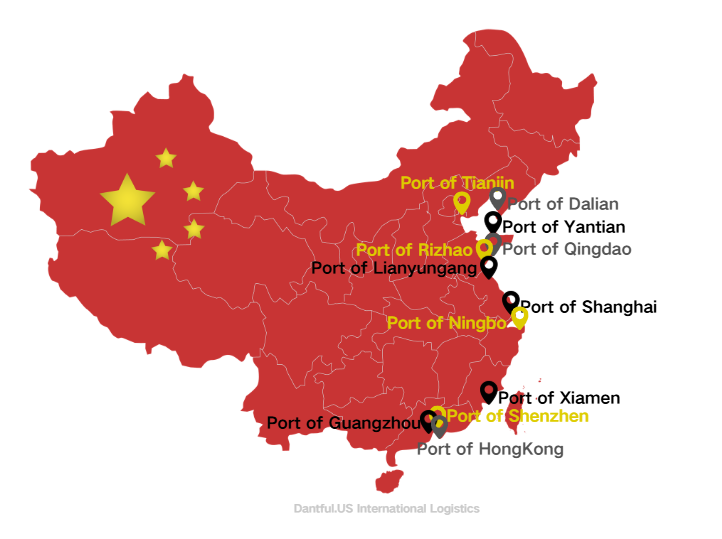
Shanghai Port: The world’s busiest container port, ideal for cargo from the Yangtze River Delta.
-
Ningbo-Zhoushan Port: A key alternative to Shanghai, often with slightly lower congestion.
-
Shenzhen Port (Yantian/Shekou): The gateway for electronics and manufacturing from the Pearl River Delta.
-
Qingdao Port: Major hub for Northern China industrial goods.
-
Hong Kong Port: Critical for transshipment and free trade advantages.
Major Ports in Mexico
-
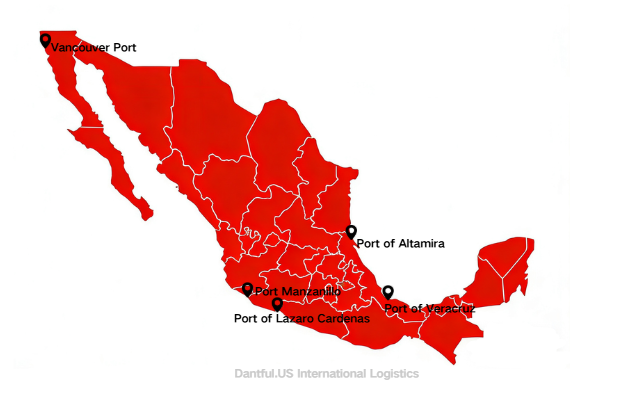
Manzanillo Port: The largest and busiest port on Mexico’s Pacific coast, handling the majority of Asian imports.
-
Lazaro Cardenas Port: A deep-water port with excellent rail connections to Mexico City and the US border.
-
Veracruz Port: The primary gateway on the Gulf coast, better for shipments destined for Eastern Mexico or transshipment to Europe/East Coast US (though slower from China).
-
Ensenada Port: Located in Baja California, strategic for the maquiladora industry near the US border.
Typical Shipping Routes
Most vessels follow the Trans-Pacific route, sailing directly from East Asian ports to Mexico’s Pacific coast. This is the fastest and most economical path. Routes to the Gulf coast (Veracruz) require traversing the Panama Canal
-
: Your forwarder books space and arranges pickup from the Chinese factory.
-
Export Clearance (China): Goods are declared to Chinese Customs. Required docs: Commercial Invoice, Packing List.
-
International Transport: Cargo moves via sea or air. Tracking is provided.
-
Arrival & Deconsolidation: Cargo arrives at the Mexican port. LCL shipments are deconsolidated.
-
Import Customs Clearance (Mexico): This is the most critical step. Your customs broker (Agente Aduanal) presents the Pedimento (customs declaration).
-
Duties & Taxes Payment: Import duties (IGI) and Value Added Tax (IVA – typically 16%) must be paid.
-
Inland Delivery
Shipping to Mexico requires navigating a complex regulatory environment.
-
Padron de Importadores: The consignee in Mexico MUST be registered in the Official Register of Importers. Without this, you cannot legally import commercial goods.
-
NOM Standards (Normas Oficiales Mexicanas): Many products (electronics, textiles, toys) must comply with specific safety and labeling standards. Certificates of compliance are often required before shipping.
-
Duties & Taxes:
-
IGI (General Import Tax): Varies by HS Code.
-
IVA (VAT): Generally 16%.
-
DTA (Customs Processing Fee): A small fixed or percentage fee.
-
Anti-Dumping Duties
-
Navigating the China-Mexico route requires a partner who understands both Asian logistics and Latin American bureaucracy.
Why Choose Dantful.US International Logistics?
-
End-to-End Visibility: We track your shipment from the factory floor in China to the door in Mexico.
-
Cost Efficiency: Our volume contracts with major shipping lines (COSCO, MSC, Maersk) ensure competitive rates.
-
Customs Expertise: We assist with documentation review to prevent costly delays at Mexican customs.
-
Flexible Solutions: From Door-to-Door delivery to DDP (Delivered Duty Paid)
1. What is the cheapest way to ship from China to Mexico? Sea Freight (LCL) is the cheapest for small shipments (1-15 CBM), while Sea Freight (FCL) is most economical for large volumes. Air freight is significantly more expensive.
2. How long does shipping take from Shanghai to Manzanillo? The port-to-port transit time is typically 16 to 22 days.
3. ? As of January 2026, shipping a 20ft container typically ranges from $1,250 to $1,950, while a 40ft container costs between $1,750 and $2,950. Rates depend on the port pair (e.g., Shanghai to Manzanillo) and seasonal demand.
4. What are the current air freight rates from China to Mexico? Air freight rates generally range from $3.20 to $5.30 per kg for standard cargo. For urgent or smaller shipments, Express Shipping (DHL/FedEx) costs approximately $4.50 to $7.00 per kg.
5. Do I need a specific license to import into Mexico? Yes, the Mexican importer must be registered in the Padron de Importadores. For certain sensitive sectors (textiles, steel), sector-specific registration is also required.
Ready to streamline your supply chain from China to Mexico? Don’t let logistics headaches slow down your business. Contact Dantful.US International Logistics
Request
A Free Shipping Quote
Get a fast, free shipping quote from Dantful.US Logistics — your reliable partner for cost-effective, hassle-free global delivery.