

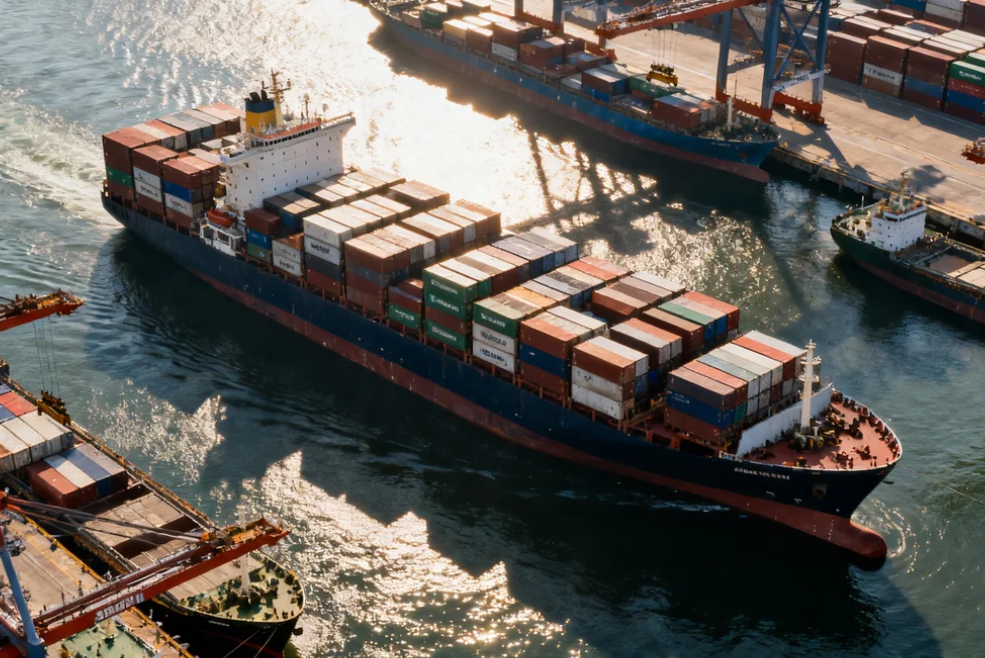
Are you wondering how long sea freight takes from China to the USA and what factors influence its transit time? In this comprehensive guide, we’ll explore key variables such as shipping routes, FCL vs. LCL options, and port-to-port versus door-to-door delivery. Discover how to choose the fastest and most cost-effective shipping method for your business needs.

Shipping Time from China to US West Coast vs. East Coast
When planning sea freight from China to the USA, understanding the difference in shipping time between the West Coast and East Coast is essential for effective supply chain management. The transit time varies significantly due to the sailing distance, the number of transshipment points, and the chosen shipping route.
Generally, shipping to the US West Coast is much faster than to the East Coast. Major West Coast ports—such as Los Angeles, Long Beach, and Oakland—are geographically closer to China. In contrast, shipments to the East Coast (e.g., New York, Savannah, Charleston) often involve passing through the Panama Canal or require rail/truck transport after arrival on the West Coast.
Here’s a comparison of estimated port-to-port transit times for standard sea freight shipments:
| Origin Port in China | US West Coast Port | Estimated Transit Time (Days) | US East Coast Port | Estimated Transit Time (Days) |
|---|---|---|---|---|
| Shanghai | Los Angeles/Long Beach | 13 – 16 | New York | 28 – 35 |
| Shenzhen | Los Angeles/Long Beach | 14 – 17 | Savannah | 30 – 36 |
| Ningbo | Oakland | 15 – 18 | Charleston | 29 – 36 |
| Qingdao | Seattle/Tacoma | 15 – 19 | Miami | 32 – 39 |
Please note: Actual transit times can fluctuate based on vessel schedules, port congestion, weather, and seasonal demand. These figures represent average sailing times and do not include time spent on documentation, customs clearance, or inland transport.
Key Takeaways:
- Shipping to the US West Coast is faster, often two weeks quicker than to the East Coast.
- If speed is a priority, consider using West Coast ports followed by domestic rail or trucking to the final destination in the East or Midwest.
- For shipments destined for the eastern US or nearby states, direct sea freight to East Coast ports may optimize total costs despite the longer sailing time.
At Dantful.US International Logistics, we help our clients choose the best routes tailored to their timeline and budget. Our expertise ensures transparent planning and reliable delivery for every shipment from China to the USA.
If you want to explore more details about the specific process, read our guide on Shipping from China to USA.
Port-to-Port vs. Door-to-Door: Understanding Total Transit Time
In international shipping, the terms Port-to-Port and Door-to-Door describe different scopes of service and impact the total time required for delivery.
Port-to-Port Shipping
- Definition: The carrier is responsible for transporting your cargo from the loading port in China to the destination port in the USA.
- Transit Time: Only includes the sailing time between ports.
- Additional Steps Needed: Requires you (or your agent/forwarder) to handle origin pick-up, export customs clearance, delivery to the origin port, destination customs clearance, and final delivery to the consignee’s address.
Door-to-Door Shipping
- Definition: The freight forwarder (like Dantful.US International Logistics) manages the entire process—from supplier’s address in China to your door in the USA. For a seamless logistics experience, see full service details on Door to Door Shipping.
- Transit Time: Includes pick-up, local transportation, export customs, ocean voyage, import customs, and final delivery.
- Benefits: Simplifies logistics for the shipper, minimizes risk of delays at transfer points, and often ensures more accurate arrival timelines.
The total door-to-door shipping time is longer than port-to-port due to the extra steps involved. The following table offers a clear comparison:
| Service Scope | Included Steps | Typical Time (Days) |
|---|---|---|
| Port-to-Port | Ocean sailing only | 13–18 (West Coast) <br> 28–36 (East Coast) |
| Door-to-Door | Pick-up, origin transport, export clearance, ocean, import clearance, delivery | 22–30 (West Coast) <br> 35–45 (East Coast) |
Additional Considerations:
- Customs clearance (both export and import) can vary from 1–7 days depending on the documentation, cargo type, and customs efficiency.
- Inland trucking or rail transport within China and the USA can add several days, depending on the pickup and delivery locations.
- LCL (Less than Container Load) shipments typically take longer than FCL (Full Container Load) due to consolidation and deconsolidation processes at warehouses.
Understanding the differences in shipping times and service scopes between China and the USA is critical for your logistics planning. If you need personalized consultation or a cost-effective quote, our team at Dantful.US International Logistics is ready to provide highly professional, one-stop international freight forwarding services tailored to your needs.
For more information about reliable services, visit our freight forwarder China to US resource.
FCL vs. LCL: Which Sea Freight Method is Faster?
When shipping from China to the USA, choosing between Full Container Load (FCL) and Less than Container Load (LCL) will significantly impact your overall transit time. Let’s break down the core differences, speed factors, and practical considerations of each shipping method.
FCL (Full Container Load):
- Definition: You book an entire container (such as 20FT, 40FT, 40HQ, or 45HQ) for your exclusive use, regardless of whether the container is fully loaded.
- Speed: FCL shipments are generally faster than LCL. That’s because your cargo is loaded at the origin, sealed, shipped directly to the destination port, and then delivered to the consignee. There are fewer handling points and minimal delays.
- Transit Time: FCL typically takes 12–18 days from major ports in China (e.g., Shanghai, Shenzhen, Ningbo) to the US West Coast (Los Angeles, Long Beach), and 25–35 days to the US East Coast (New York, Savannah), depending on routing and carrier schedule.
LCL (Less than Container Load):
- Definition: Your cargo shares container space with goods from other shippers. Ideal for shipments too small to fill a whole container (generally less than 15 CBM).
- Speed: LCL is usually slower than FCL due to the extra time required for cargo consolidation at the origin and deconsolidation at the destination. Multiple handlings and stops can add days to the journey.
- Transit Time: LCL shipments may take an additional 3–7 days compared to FCL for the same routes, depending on warehouse efficiency, customs clearance, and local logistics.
The table below summarizes the typical transit times by sea freight method:
| Route (Port-to-Port) | FCL Transit Time | LCL Transit Time |
|---|---|---|
| China – US West Coast (e.g. LA) | 12–18 days | 15–25 days |
| China – US East Coast (e.g. NY) | 25–35 days | 28–42 days |
Key Takeaways:
- If your shipment is time-sensitive or high-volume, FCL is the faster option.
- LCL is cost-effective for smaller consignments but adds extra days due to consolidation processes.
- For maximum speed and reliability, work with a professional freight forwarder like Dantful.US International Logistics, which optimizes both FCL and LCL solutions, including customs clearance and last-mile delivery.
If you have shipments to other countries, you may also find our articles on Shipping from China to Canada or Shipping from China to Mexico useful for transit time comparisons.
Major Factors That Affect Sea Freight Shipping Time
Several variables can affect how long sea freight takes from China to the USA. Understanding these elements helps importers, exporters, and supply chain professionals anticipate possible delays and plan accordingly.
1. Port Locations and Shipping Routes
- Origin and destination ports: Shipping from major ports like Shanghai, Shenzhen, or Ningbo to main US gateways (Los Angeles, New York) is generally faster and more frequent.
- Direct vs. transshipment routes: Direct sailings are quicker. If your route involves transshipment stops (e.g., via Singapore or Panama), expect additional 3–7 days.
2. Seasonality and Peak Periods
- High seasons (such as pre-Chinese New Year, back-to-school, and holiday periods) can result in port congestion, vessel space shortages, and longer transit times.
- Off-peak seasons generally experience smoother and faster shipping.
3. Customs Clearance Delays
- Both Chinese and US Customs inspections can delay cargo release, especially if documentation is incomplete or if your goods are selected for a random inspection.
- Dantful.US International Logistics offers expert customs brokerage to minimize clearance delays.
4. Weather Conditions
- Severe weather, typhoons, or hurricanes in the Pacific cause vessel rerouting or delays.
- Plan extra buffer time during the rainy or typhoon seasons.
5. Carrier Schedules and Vessel Availability
- Not all carriers operate the same route schedules or transit speeds.
- Blank sailings (canceled sailings) or rollovers (when containers miss the intended vessel) can add several days to your shipment.
6. Port Congestion and Labor Issues
- Busy US ports like Los Angeles and Long Beach are prone to congestion, especially during peak periods or labor strikes, which can delay unloading and final delivery.
7. Type of Service: Port-to-Port vs. Door-to-Door
- Port-to-port services are faster but require the consignee to manage inland transportation themselves.
- Door-to-door services (managed by an experienced freight forwarder like Dantful.US International Logistics) streamline the entire process but may add time for domestic trucking and delivery.
8. Cargo Handling (FCL vs. LCL)
- As noted above, LCL shipments are delayed by consolidation and deconsolidation procedures, while FCL is more direct.
9. Documentation and Compliance
- Delays in paperwork, missing documents, or non-compliance with regulations can halt shipments at any stage.
- Proactive management by your freight forwarder ensures smooth documentation flow.
Summary Table: Key Shipping Time Factors
| Factor | Typical Impact on Transit Time |
|---|---|
| Port choice (major/minor) | ±1–5 days |
| Transshipment stops | +3–7 days |
| Peak season congestion | +5–14 days |
| Customs inspection | +1–7 days (or more, if flagged) |
| Weather delays | +2–10 days |
| Carrier schedule changes/rollover | +1–7 days |
| FCL vs. LCL | LCL adds +3–7 days |
By considering all these factors and working closely with a reputable freight forwarder like Dantful.US International Logistics, you can optimize your supply chain, minimize delays, and gain a clear picture of how long sea freight takes from China to the USA. Our team delivers professional, cost-effective, and high-quality logistics services for all your shipping needs—FCL, LCL, customs clearance, warehousing, and more. Contact us for expert guidance and a free quote tailored to your business!
Sea Freight vs. Air Freight: Speed Comparison
When selecting a shipping method from China to the USA, one of the most important considerations is transit time. Both sea freight and air freight have distinct advantages and are suitable for different shipping needs.
| Shipping Method | Typical Transit Time (China to USA) | Suitable For | Cost | Reliability |
|---|---|---|---|---|
| Sea Freight | 12–30 days (port-to-port) | Bulk goods, non-urgent | Low | High |
| Air Freight | 1–7 days | Urgent, small shipments | High | Very High |
Sea Freight Overview
Sea freight is the preferred choice for moving large volumes of cargo cost-effectively. The average port-to-port transit time from major Chinese ports (such as Shanghai, Shenzhen, or Ningbo) to the US West Coast (Los Angeles, Long Beach, etc.) generally ranges from 12 to 16 days. Shipments headed to the US East Coast (e.g., New York, Savannah) typically require transiting the Panama Canal, extending total transit time to 25–30 days.
Air Freight Overview
Air freight offers much faster transit times, typically delivering cargo from China to the USA within 1–5 days, depending on the origin and destination airports. This mode is ideal for high-value, time-sensitive, or perishable goods, but at a significantly higher cost compared to sea freight.
Key Takeaways for Choosing Between Sea and Air Freight
- For large or heavy shipments where cost savings are critical and lead time is flexible, sea freight is most suitable.
- If you need speed, or the cargo is valuable or perishable, air freight is the optimal choice.
- At Dantful.US International Logistics, our experts can provide tailored solutions—combining both sea and air freight where necessary—to optimize your international supply chain.
For deeper insight on expedited shipping, check our resource for Air freight from China to USA.
Top Shipping Routes and Estimated Transit Times
Understanding the most common shipping routes and expected transit times can help you make informed logistics decisions. Below is a comparison of the primary routes from China to various key ports in the USA.
| Origin Port (China) | Destination Port (USA) | Transit Time (Days, FCL) | Route Details |
|---|---|---|---|
| Shanghai | Los Angeles | 12–16 | Direct route via Pacific Ocean |
| Shenzhen | Long Beach | 13–17 | Direct sailing |
| Ningbo | Oakland | 14–18 | Calls at West Coast hub ports |
| Qingdao | Seattle/Tacoma | 13–17 | Fast sailings available |
| Shanghai | New York | 25–30 | Via Panama Canal, possible transshipment in US West Coast |
| Shenzhen | Savannah | 27–32 | Panama Canal route |
| Guangzhou | Houston | 26–31 | Via Panama Canal, typically with one transshipment |
LCL (Less than Container Load) shipments may require additional 3–7 days for consolidation and deconsolidation at origin and destination warehouses.
Factors Affecting Transit Time
- Port congestion and customs clearance delays can extend shipping time.
- Weather conditions and seasonal surges (e.g., before Chinese New Year or US holiday seasons) may affect schedules.
- Carrier schedules: Direct vs. transshipment routes impact overall time.
At Dantful.US International Logistics, we monitor all these variables closely, ensuring our clients receive reliable, up-to-date transit time estimates for each shipment.
Freight forwarder in China
Choosing the right freight forwarder in China is crucial for a seamless shipping experience. A professional freight forwarder like Dantful.US International Logistics can streamline your entire logistics chain—from booking cargo space, handling customs clearance, managing documentation, to organizing door-to-door delivery.
For a broader perspective on international shipping solutions, consider reviewing our Freight Forwarder overview.
Why Work with Dantful.US International Logistics?
- Professional Expertise: We are a highly experienced team specializing in sea freight, air freight, rail freight, and multimodal logistics between China and the USA.
- Comprehensive Services: Our one-stop solutions include Ocean Freight (FCL/LCL), Air Freight, Amazon FBA shipments, warehousing, customs brokerage, insurance, door to door, OOG (Out of Gauge) Freight, consolidated shipments, and breakbulk freight.
- Cost-Effective Solutions: We leverage our strong carrier relationships for competitive rates and guaranteed space.
- Transparent Communication: Our team provides end-to-end visibility, proactive updates, and 24/7 customer support.
- Strong Compliance: We ensure full compliance with Chinese and US customs regulations, minimizing risks and delays.
When you partner with Dantful.US International Logistics, you gain a trustworthy logistics partner dedicated to helping your business grow with efficient, cost-effective, and reliable shipping solutions from China to the USA. Contact us today for a personalized consultation and see how we can optimize your global supply chain.
Leave a reply