

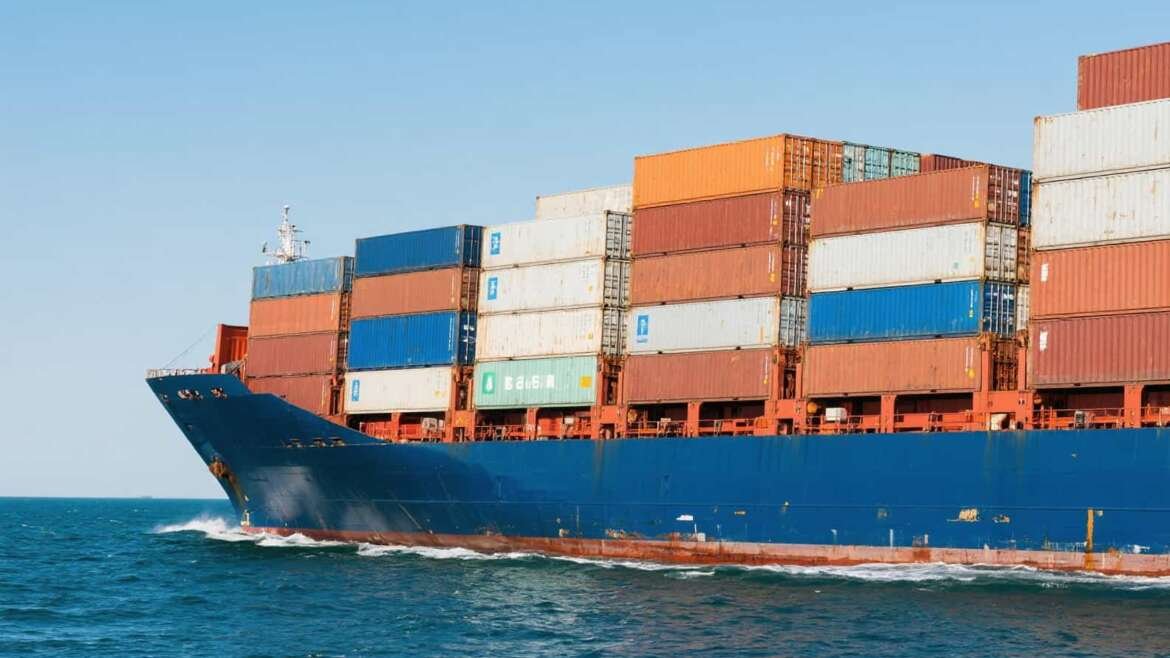
Finding the right freight forwarder from China to the US is one of the most critical decisions for your supply chain in 2026. While competitive rates are essential, experienced importers know that reliability and compliance are what truly protect profit margins.
Shipping from China to the US has evolved. It’s no longer just about booking a container; it’s about navigating a minefield of Section 301 tariffs, fluctuating General Rate Increases (GRI), and strict CBP compliance.
This isn’t a generic “how-to” article. This is a strategic blueprint for serious importers—Amazon FBA sellers, furniture brands, and electronics distributors—who need to cut Landed Cost, not just freight rates.
Here is what your current forwarder might not be telling you.
Table of Contents
The “Insider’s Advantage”: 3 Strategies Most Importers Miss
Most SMEs book “Port-to-Port” and hope for the best. Smart importers use these three strategies to outmaneuver the market.
1. The “Port Diversion” Play (Beat the Congestion)
Everyone ships to Los Angeles/Long Beach (LA/LB) because it’s the fastest route from China. But when labor strikes or peak season hits, LA/LB becomes a parking lot.
- The Strategy: For cargo destined for the Midwest or East Coast, we often route via Houston (for Texas/Central) or Savannah/New York (for East Coast).
- The Benefit: While the ocean transit is 10 days longer, you avoid the 14-day rail dwell times often seen on the West Coast, resulting in a net faster delivery and lower storage risks.
2. The “Continuous Bond” Math
If you import more than 3 times a year, buying single-entry bonds is throwing money away.
- The Math: A Single Entry Bond costs min. $50 per shipment + ISF Bond. A Continuous Bond costs ~$450 flat per year.
- The Break-Even: After your 4th shipment, the Continuous Bond is essentially free, and it speeds up customs clearance by approx. 24 hours.
3. “HS Code Engineering” (Legal Duty Optimization)
Many suppliers provide generic HS Codes that carry higher tariffs (e.g., 25% Section 301 duties).
The Fix: Dantful’s US licensed brokers review your product’s function and material. Sometimes, a “Desk with Built-in Light” (Furniture) has a different duty rate than “LED Lighting” (Electronics). Correct classification is the legal way to save thousands.r.
Why You Need a Specialized Freight Forwarder
The Real Role of a Freight Forwarder
Many importers assume they can book directly with shipping lines like COSCO or Maersk. While possible, it’s often not feasible for small to medium enterprises (SMEs). A freight forwarder acts as your supply chain architect. Unlike a simple carrier that moves boxes from Port A to Port B, a forwarder manages the entire lifecycle of your shipment.
Key Value Adds for China-US Trade:
- Compliance Shield: We handle ISF Filing, Customs Bond purchase, and HTS Code classification to prevent CBP fines.
- Cost Optimization: By consolidating shipments from multiple suppliers (Consolidated Freight), we can lower your per-unit cost significantly.
- Problem Solving: When a container is flagged for a random customs exam in Long Beach, we are the ones coordinating with the station, not the shipping line.
Dantful Insight: For businesses shipping under 15 CBM, working with a forwarder for LCL consolidation is typically 20-40% cheaper than trying to fill a 20ft container yourself.
Forwarder vs. Carrier: Who Should You Choose?
| Feature | Freight Forwarder (e.g., Dantful) | Shipping Line (e.g., COSCO/Maersk) |
|---|---|---|
| Ideal Customer | SMEs, Amazon Sellers, diverse product importers | Global giants (Walmart, Target) shipping 100+ containers/month |
| Service Scope | Door-to-Door (Factory to Warehouse) | Port-to-Port only |
| Flexibility | High (Compare multiple carriers for best price) | Low (Locked into one carrier’s schedule) |
| Customs Support | Full In-house Brokerage | usually None |
| LCL Options | Extensive (Weekly consolidations) | Limited or non-existent |
At Dantful International Logistics, we don’t just move cargo; we optimize your supply chain specifically for the China-to-Americas route, ensuring seamless entry into US ports.usted freight forwarder China to US for time-sensitive shipments.
Smart Selection: Shipping Methods Decision Matrix
Choosing the right shipping method is the biggest factor in your cost and timeline. Based on our 2026 operational data, here is how we recommend you choose between Sea Freight and Air Freight.
Sea Freight: FCL vs. LCL Decision Framework
Sea freight handles over 90% of global trade. But should you choose FCL or LCL? Use our rule of thumb:
- Choose LCL (Less than Container Load) if:
- Cargo volume is under 15 CBM.
- You are okay with a slightly longer transit time (5-7 days extra for consolidation/deconsolidation).
- You want to keep initial inventory costs low.
- Choose FCL (Full Container Load) if:
- Cargo volume is 15 CBM or more.
- You need higher security (less handling means less risk of damage).
- You have a strict delivery deadline (direct loading is faster).
Pro Tip: If your cargo is between 12-15 CBM, ask Dantful for a comparison quote. Sometimes, booking a 20′ container (FCL) is cheaper than paying LCL per-CBM rates due to lower destination handling charges.
For more details on sea transport, check our guide on Sea Freight from China to USA.
FCL vs. LCL Snapshot
| Feature | FCL (Full Container) | LCL (Shared Container) |
|---|---|---|
| Best Volume | > 15 CBM | 1 – 15 CBM |
| Risk of Damage | Low (Handled twice) | Medium (Handled multiple times) |
| Speed | Faster | Slower (+5-7 days) |
| Cost Strategy | Flat rate per container | Pay per CBM |
Air Freight: When Speed Justifies the Cost
Air freight is 10-15x more expensive than sea freight. We only recommend it in specific scenarios.
The “Golden Rule” for Air Freight:
- < 150 kg: Express Courier (DHL/FedEx/UPS) is usually cheaper and faster than Air Cargo.
- 150 kg – 500 kg: Standard Air Freight is the sweet spot.
- > 500 kg: Unless it’s an emergency, Sea Freight (LCL) offers massive savings.
Air vs. Sea Comparison (Real-World Example)
Shipment: 500 kg Electronics from Shenzhen to Los Angeles
| Mode | Transit Time | Approx. Cost (Index) | Recommendation |
|---|---|---|---|
| Air Freight | 5-7 Days | $$$$$ | Best for product launch or stockout emergency |
| Sea Freight (LCL) | 22-28 Days | $ | Best for regular restocking |
| Matson (Fast Sea) | 14-16 Days | $$ | The “Middle Ground” option for Amazon Sellers |
Dantful specializes in Matson CLX/CLX+ services, which offer air-like speeds at a fraction of the cost—perfect for Amazon FBA sellers needing quick replenishment.
Real-World Case Study: How an Electronics Brand Saved 18% on Landed Cost
Generic advice is easy. Let’s look at real data.
The Client: A consumer electronics brand importing Bluetooth speakers (with lithium batteries) from Shenzhen to Chicago. The Problem: They were shipping LCL via Air Freight to meet Amazon stock limits, paying $12/kg. Their margins were vanishing. The Dantful Solution:
- Hybrid Transport: We shifted 70% of their volume to Matson CLX (Fast Sea). It took 14 days (vs. 5 days for air) but cost only $2.50/kg.
- Customs Optimization: Their supplier used a generic HS code taxed at 7.5%. Our broker reclassified it based on specific technical specs to a duty-free code.
- Battery Compliance: We handled the UN38.3 battery certification and DG packaging, avoiding a $5,000 carrier rejection fee.
The Result:
- Freight Savings: $14,500 per shipment.
- Duty Savings: 7.5% reduction.
- Total Margin Impact: +18% net profit.
This is the difference between a “shipper” and a “logistics partner.”le routes and proactively manage your shipments.
Cost Factors: The “Iceberg” of International Shipping
A common rookie mistake is looking only at the “Freight Rate” (e.g., $1500/container). The real cost—Landed Cost—is an iceberg. 70% of the cost is visible (freight), but the 30% below the surface (duties, exams, chassis fees) sinks your profit.
Below is a typical cost structure comparison for FCL and LCL shipments, based on our team’s analysis of 2026 Q1 market data:
| Fee Category | FCL (40ft Container) | LCL (Per CBM) | Notes |
|---|---|---|---|
| Freight Charge | $1,400–$2,800 | $42–$84 | Base transport cost |
| Origin Documentation | $70–$140 | $21–$35 | Export declaration, BOL |
| Port Handling (China) | $105–$245 | $10–$18 | THC (Terminal Handling Charge) |
| Destination Handling (US) | $210–$420 | $21–$35 | Watch out: High in LCL |
| Customs Clearance | $70–$210 | $70–$210 | Does not include Duties/Taxes |
| Total (Estimate) | $1,855–$3,815 | $164–$382 | Excludes Duties & Trucking |
Note: Prices vary based on season, route, and carrier. For current rates, contact Dantful International Logistics.
The “Silent Profit Killers”: Hidden Costs Checklist
Experience has taught us that these fees often surprise importers who didn’t read the fine print:
- Chassis Split Fee ($50-$150): If the trucker has to pick up a chassis from a different location than the container terminal (common in LA/LB).
- Pier Pass (TMF) ($34.20/20′ – $68.40/40′): A mandatory traffic mitigation fee at Los Angeles/Long Beach ports for daytime pickups.
- Customs Exam Fees (VACIS/Intensive):
- X-Ray (VACIS): ~$300 (2-3 day delay).
- Intensive Exam: ~$1,000 – $2,500 (1-3 week delay). If your paperwork is vague, you are a target.
- Demurrage & Detention: Fees for not picking up (Demurrage) or returning (Detention) the container on time. Can hit $200+ per day.
- Dantful Strategy: We negotiate 14-21 days of free detention time for our clients to mitigate this risk.
- General Rate Increase (GRI): Carriers can hike rates on the 1st and 15th of the month. A quote is only valid until the next GRI date.
Tips for Reducing Shipping Costs
Optimize Packaging: Reducing volume by even 10% can save hundreds of dollars in LCL shipping. Avoid “Air Shipping Air” (empty space in boxes).vary due to customs, peak seasons, or unforeseen delays.
Consolidate Shipments (Buyer’s Consolidation): Instead of paying 3 separate LCL minimum charges, ask Dantful to combine cargo from 3 different suppliers into one FCL shipment. This saves ~30% on destination fees.
Ship During “Shoulder Season”: Rates drop significantly in March-April and post-October (after Golden Week).
Use Incoterms Wisely: Avoid CIF terms where suppliers control the freight. They often use cheap agents who charge you exorbitant “handover fees” at the US port. Choose FOB or EXW.
Transit Time: Managing Expectations
“How long does it take?” is the most common question. The honest answer is: It depends.
Based on Dantful’s 2026 Q1 operational data, here are realistic timelines from Port to Port and Door to Door.
Typical Transit Times (China to US)
| Shipping Method | Route Example | Port-to-Port Time | Door-to-Door Estimate* |
|---|---|---|---|
| Fast Sea (Matson) | Shanghai -> Long Beach | 11 Days | 16-20 Days |
| Standard Sea (FCL) | Shenzhen -> Los Angeles | 18-22 Days | 25-35 Days |
| Standard Sea (FCL) | Ningbo -> New York | 30-35 Days | 40-50 Days |
| Sea (LCL) | Shanghai -> LA | 18-22 Days | 30-40 Days (Consolidation adds time) |
| Air Freight | Guangzhou -> Chicago | 3-5 Days | 5-9 Days |
Door-to-Door estimates include customs clearance, trucking, and potential warehouse processing time.
Why Delays Happen and How We Avoid Them?
Even the best plans face reality. Here are the top 3 delay causes and how Dantful mitigates them:
Dantful Strategy: We perform a pre-shipment compliance audit on your packaging and labels before the cargo leaves China.
Customs Exams: US Customs (CBP) randomly inspects cargo.
Dantful Strategy: We ensure ISF 10+2 is filed 48h before departure and HTS codes are 100% accurate to reduce “red flags”.
Port Congestion: Common in LA/LB during Q4.
Dantful Strategy: We offer alternative routing via Houston or Seattle, or use “Fast Boat” services like Matson that have their own terminals.
Missing Docs: A missing “Country of Origin” label can hold up cargo for weeks.
7-Step Blueprint for Shipping from China to the US
Shipping isn’t just about booking a boat; it’s about compliance and coordination. Follow this blueprint used by our successful clients:
1. Incoterms Strategy
Decide between EXW (Ex Works) or FOB (Free on Board).
- Advice: FOB is usually best for importers. Your supplier handles China local costs, and you (via Dantful) take control from the Chinese port. Avoid CIF, as you lose control over costs and timelines.
- Pro Tip: If buying from inland China (e.g., Chengdu), negotiate FOB Shanghai, not FOB Chengdu, to save on local trucking.
2. Cargo Preparation & Compliance
- Packaging: Ensure cartons are strong (double-wall corrugated).
- Labeling: “Made in China” label is mandatory for US Customs. Missing it can lead to a “Marking Notice” and expensive relabeling at the port.
- Documentation: Prepare Commercial Invoice, Packing List, and Bill of Lading.
3. Booking & Consolidation
Contact Dantful 14 days before “Cargo Ready Date”. We book the space.
- Pro Tip: Book “Subject to Roll” (STR) protection during peak season if your deadline is strict.
4. Export Clearance (China)
We handle the Chinese customs declaration. Ensure your supplier has the export license or we can provide one.
5. International Transit
Your goods move via Sea or Air. You get a tracking number to monitor progress.
6. Import Clearance (US) – Critical Step
5 days before arrival, we file the Entry Summary (7501) with CBP.
- Requirement: You need a Customs Bond. Dantful can set up a Continuous Bond ($450/year) which is cheaper than Single Entry Bonds if you ship 3+ times/year.
7. Final Delivery
Once cleared, we arrange a truck (FTL/LTL) or courier (UPS/FedEx) to deliver to your warehouse or Amazon FBA center.
- Pro Tip: For Amazon FBA, we use “Preferred Carriers” to get guaranteed delivery slots, avoiding rejection at the fulfillment center.
Essential Documentation Checklist
Commercial Invoice (Real value, no undervaluing!)
Packing List (Accurate counts)
Bill of Lading (B/L)
Arrival Notice
ISF Filing (Sea freight only, filed before departure)al Logistics—your trusted freight forwarder China to US—for seamless, cost-effective, and reliable shipping between China and the United States. Contact us for a free consultation and competitive quote today!
The “Red Flag” Test: How to Spot a Bad Forwarder
Don’t just look for the cheapest rate—look for a partner. Ask these hard questions to filter out the amateurs:
- “Do you have your own Bond?”: If they hesitate, they might be double-brokering your shipment.
- “Can you provide a DDP Breakdown?”: If they give you a single “all-in” price without separating duties, they might be under-declaring your goods (risking your inventory).
- “What is your ‘Rolled Cargo’ Policy?”: In peak season, do they have “Protected Space” contracts with carriers like Matson or COSCO?
- “How do you handle Amazon FBA Appointments?”: If they don’t mention “Carrier Central” or “Preferred Carrier Program,” run.
At Dantful International Logistics, we welcome these questions. Our transparency is why we are the top choice for businesses shipping from China to the Americas.
FAQs
1. Is DDP (Delivered Duty Paid) actually cheaper?
Not always. DDP is convenient because the forwarder takes the risk, but they charge a premium (often 10-15%) for that risk. If you are an established business, DDU/DAP (Delivered Duty Unpaid) + your own Customs Bond is often 15% cheaper. Dantful offers both models and will show you the math.
2. Can I ship batteries or liquids?
Yes, but they are “Dangerous Goods” (DG). You need an MSDS and UN38.3 test report. We have specialized DG contracts with carriers like CZ Airlines and Matson to ship these legally. Never hide DG items—fines start at $15,000.
3. How do I avoid “Storage Fees” at the port?
Upload your documents (Invoice/Packing List) to Dantful 3 days before the ship arrives. We pre-clear customs so the trucker can pull the container the moment it becomes available (avoiding demurrage).
4. Can Dantful ship directly to Amazon FBA warehouses?
Yes. We are experts in FBA requirements. We handle appointment booking (via Carrier Central), palletization (according to Amazon standards), and labeling. We ship directly from China to popular FBA centers like ONT8 (California), FTW1 (Texas), and CLT2 (North Carolina).
5. How do I calculate my Import Duty?
US import duties depend on your product’s HS Code. Be careful: generic codes often trigger 25% Section 301 tariffs. Dantful’s team can help you “engineer” your classification (legally) to minimize tax liability before you ship.
Start Your Seamless Shipping Journey
Shipping from China to the US doesn’t have to be a gamble. With Dantful International Logistics, you get more than a service provider—you get a partner who understands the China-Americas route inside out.
Why 7-Figure Sellers Choose Dantful:
- Speed: Priority loading with Matson CLX (11-day transit).
- Savings: Volume-consolidated rates that beat individual carrier quotes.
- Safety: 100% Compliance record with US Customs (CBP).
Ready to optimize your supply chain? Stop paying for “surprises.” Get a quote that includes everything upfront.
Get Your “Landed Cost” Quote Today
Leave a reply