

Navigating the complexities of US customs clearance is one of the most critical challenges for businesses importing from China to the USA. In 2026, evolving trade policies, stricter compliance checks, and updated tariff structures demand a proactive approach to avoid costly delays and penalties. This comprehensive guide breaks down the 2026 customs landscape, providing you with actionable strategies to streamline your imports, whether you are shipping via Sea Freight or Air Freight, and whether you require a Port to Port or Door to Door solution.
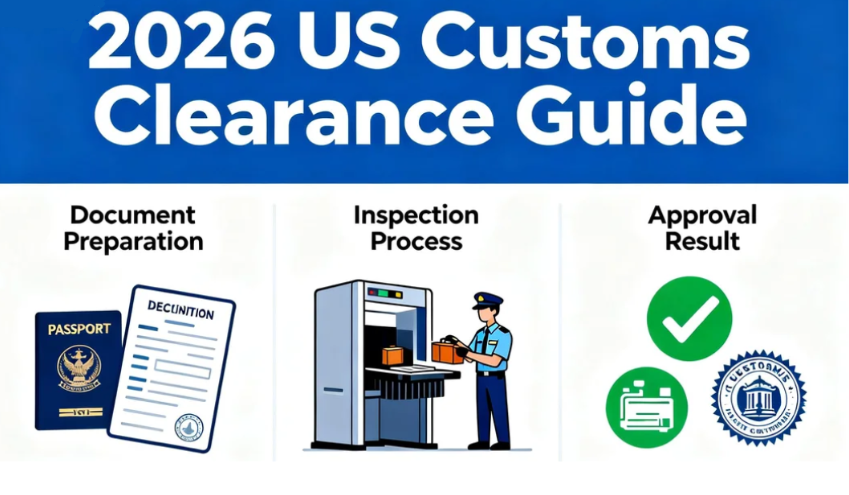
Overview of 2026 US Customs Clearance for Imports from China
What’s New in US Customs Regulations for 2026
In 2026, the CBP has intensified its focus on digital supply chain visibility and strict enforcement of origin tracing. The implementation of advanced data screening means that vague product descriptions or inaccurate HS codes will trigger automatic cargo holds. Importers must now provide highly detailed commercial invoices and ensure absolute consistency across all shipping documents.
Key Changes Affecting Chinese Imports
Chinese imports face continued scrutiny under Section 301 tariffs, alongside rigorous enforcement of the Uyghur Forced Labor Prevention Act (UFLPA). Importers are required to map their entire supply chain, proving that no components originate from restricted regions. Failure to provide this documentation can result in immediate cargo seizure.
Expert Insight from Dantful.US: In early 2026, we handled a significant increase in Sea Freight containers flagged for intensive exams at the Los Angeles Port. The primary trigger? Generic descriptions on the packing list (e.g., “Apparel”). By updating our clients’ documentation to include precise material compositions (e.g., “80% polyester / 20% cotton women’s knit sweater”), we reduced their port delays from an average of 10 days to under 48 hours, saving hundreds of dollars in demurrage fees.
Step-by-Step Guide to the US Customs Clearance Process
Essential Import Documentation Required in 2026
To ensure a smooth release at high-volume ports like the Long Beach Port or New York Port, your documentation must be flawless. The essential documents include:
- Commercial Invoice: Must detail the exact product, value, origin, and manufacturer name/address.
- Packing List: Accurate weight, volume, and packaging details matching the invoice exactly.
- Bill of Lading (B/L) or Air Waybill (AWB): The primary transport contract.
- Customs Bond: Required for commercial imports valued over $2,500. A Continuous Bond is highly recommended if importing more than 3 times annually.
- Importer Security Filing (ISF 10+2): Must be filed 24 hours before Sea Freight departure from China.
- CBP Form 3461 (Entry/Immediate Delivery) & CBP Form 7501 (Entry Summary): Filed electronically by your customs broker via the ABI (Automated Broker Interface).
Stages of Customs Clearance: From Arrival to Release
- Document Submission: The customs broker submits entry documents (CBP Form 3461) to the CBP.
- Review & Targeting: CBP reviews the data. High-risk cargo may be flagged for an X-ray (VACIS exam) or a physical intensive exam.
- Duty Payment: Duties and taxes are calculated (CBP Form 7501) and paid.
- Release: If compliant, the cargo is released for final Door to Door delivery or transfer to a Warehouse, such as an Amazon FBA fulfillment center.
Updated Tariffs, Duties, and Taxes for Chinese Imports
How to Calculate Customs Duties and Fees
Customs duties are primarily based on the product’s 10-digit Harmonized System (HS) code, the declared customs value (usually the FOB value), and the country of origin. Additional fees include the Merchandise Processing Fee (MPF) (currently capped at roughly $614 per entry, subject to annual adjustment) and the Harbor Maintenance Fee (HMF) for Sea Freight (0.125% of the cargo value).
Latest Tariff Updates and Trade Policy Impacts
In 2026, Section 301 tariffs remain a significant cost driver for Chinese imports, adding 7.5% to 25% or more on top of standard duty rates depending on the HS category. Importers must regularly audit their HS codes to ensure they are not overpaying duties. Working with a reliable Customs Clearance partner like Dantful.US International Logistics can help identify potential tariff exclusions or legal duty-saving strategies.
Compliance and Customs Regulations: Avoiding Delays and Penalties
Key Compliance Requirements for Importers in 2026
Compliance is non-negotiable. Importers are legally required to maintain meticulous customs records for at least five (5) years. The CBP actively audits companies for valuation accuracy, correct classification, and anti-dumping/countervailing duty (AD/CVD) compliance.
How to Avoid Common Customs Clearance Mistakes
- Never under-declare value: Attempting to lower the commercial invoice value to save on duties is the most common trigger for severe penalties and permanent flagging by CBP.
- File ISF on time: Late or inaccurate ISF filing incurs a standard $5,000 fine per violation.
- Verify AD/CVD status: If your product (e.g., steel, certain plastics) falls under an Anti-Dumping order, duty rates can exceed 100%. Check with your broker before ordering.
Customs Clearance for Different Shipping Methods
Ocean Freight Customs Procedures
Sea Freight involves strict ISF filing requirements prior to departure from ports like Shanghai Port or Shenzhen Port. Due to the massive volume of containers arriving daily at the Los Angeles Port, CBP relies heavily on targeted risk assessment. Delays here are often caused by port congestion or random CET (Contraband Enforcement Team) exams.
Air Freight and Express Shipping Customs Steps
Air Freight arriving at major hubs like Los Angeles International Airport (LAX) or Chicago O’Hare International Airport (ORD) requires rapid processing. While there is no ISF requirement for air cargo, the Air Manifest must be filed prior to arrival. Express shipments (under $800) often clear under Section 321 (de minimis), avoiding duties, though this exemption is facing tighter regulatory limits and increased scrutiny in 2026.
Transport Mode & Customs Clearance Comparison Table
| Transport Mode | Best For | Typical Transit Time | Customs Clearance Focus | Risk Level |
|---|---|---|---|---|
| Sea Freight (FCL/LCL) | Large, heavy, or non-urgent cargo | 14–30 Days | ISF filing, HMF fees, intensive exams | Medium to High (due to volume) |
| Air Freight | High-value, urgent, or perishable goods | 3–7 Days | Rapid documentation, Air Manifest | Low to Medium |
| Express/Courier | Small parcels under $800 | 2–5 Days | Section 321 (De minimis) compliance | Low (but tightening) |
Note: Transit times and customs processing speeds are estimates and can fluctuate based on peak season, weather, and port congestion.
Best Practices for Fast and Efficient US Customs Clearance
Tips to Speed Up Customs Processing
- Secure a continuous customs bond rather than purchasing single-entry bonds.
- Pre-clear your cargo by submitting all documentation to your broker 3-5 days before arrival at the destination port.
- Ensure your supplier in China strictly adheres to US labeling and packaging standards, especially for Amazon FBA shipments (e.g., exact carton dimensions and weights, correct FNSKU labels).
Recommended Customs Brokers and Logistics Partners
Choosing the right partner makes all the difference. A one-stop provider like Dantful.US International Logistics handles the entire process—from Booking in China to Customs Clearance, Insurance, and final Door to Door delivery—ensuring seamless communication and reducing the risk of document discrepancies.
Preparing for Future Changes in US-China Trade and Customs Policy
Importers should conduct quarterly compliance audits and subscribe to official CBP CSMS (Cargo Systems Messaging Service) updates. Diversify your sourcing where possible, but if remaining in China, build buffer times into your supply chain. Maintain healthy margins to absorb potential tariff hikes, and always classify your goods precisely to avoid unexpected duty bills.
Why Dantful.US is Your Expert for US Customs Clearance and Americas Logistics
As a specialized freight forwarder focusing exclusively on the Americas dedicated lines, Dantful.US International Logistics possesses an in-depth understanding of the complex USA regulatory environment. Navigating US customs clearance requires more than just moving freight; it demands proactive tariff management and strict CBP compliance.
Our dedicated customs team stays ahead of the curve on Section 301 tariffs, anti-dumping regulations (AD/CVD), and trade policy shifts. By leveraging our deep expertise in US import policies, we help importers identify legal duty-saving opportunities, ensure flawless entry filings, and prevent costly port holds. Whether you are shipping via Sea Freight or Air Freight, our compliance-first Door to Door solutions are designed to reduce your import uncertainties, optimize your supply chain, and protect your bottom line.
Get a Compliance-Checked Quotation Today (Copy & Paste): Provide the details below, and our customs experts will evaluate your optimal shipping and clearance strategy:
- Product Name & Precise HS Code (for tariff evaluation):
- Piece Count & Packaging Type:
- Gross Weight & Volume (CBM):
- Is it a battery/liquid/powder product? (Yes/No):
- Origin (City/Port in China):
- Destination Zip Code (USA):
- Trade Terms (e.g., FOB, EXW):
- Do you need Insurance? (Yes/No):
- Do you need our all-in Door to Door customs and delivery service? (Yes/No):
Official Resources & References
- U.S. Customs and Border Protection (CBP) Basic Importing and Exporting
- CBP Section 301 Trade Remedies
- Uyghur Forced Labor Prevention Act (UFLPA) Guidance
FAQs
1. How long does US customs clearance take in 2026?
If documents are perfectly filed and submitted 5 days before arrival, clearance can take just a few hours. However, if flagged for a CET or agricultural exam, it can delay your shipment by 3 to 15 days.
2. Who pays the customs duties, the buyer or the seller?
It depends on the trade terms (Incoterms). Under DDP terms, the seller pays. Under FOB or EXW, the US buyer (importer of record) is responsible.
3. What happens if my HS code is wrong?
You may overpay duties or face severe penalties for underpayment. CBP may also issue a formal Request for Information (CBP Form 28) and hold your cargo until the correct classification is legally determined.
4. How does customs clearance work for Amazon FBA?
Goods must clear customs before being delivered to an Amazon FBA warehouse. Amazon will not act as the Importer of Record. Dantful.US International Logistics provides specialized Door to Door solutions, acting as your partner to handle customs, duty payments, and final FBA appointment delivery.
Contact us today for a free quote and a customized Door to Door logistics scheme!
Leave a reply